

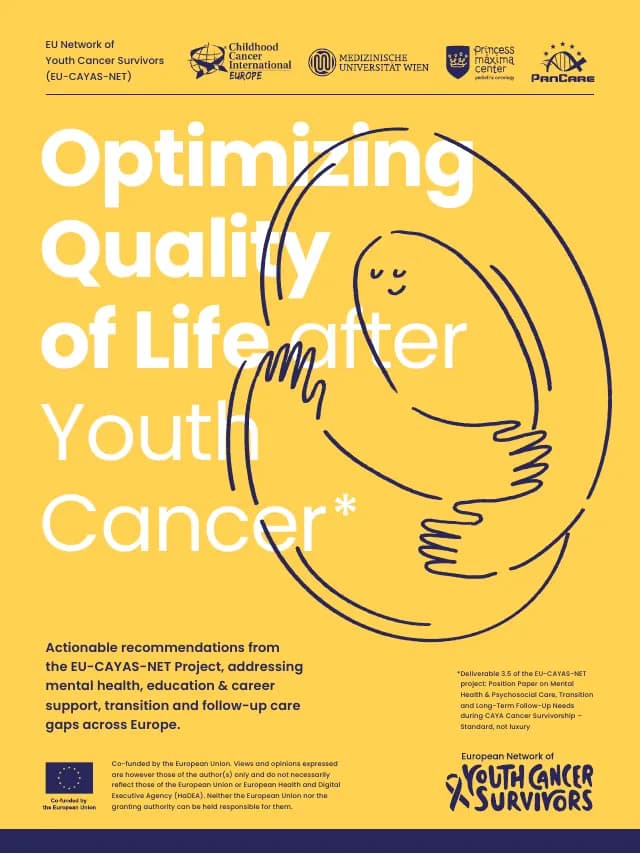
Informazioni su questa pubblicazione
Deliverable 3.5 del progetto EU-CAYAS-NET: Documento di posizione sulla salute mentale e l'assistenza psicosociale, la transizione e i bisogni di follow-up a lungo termine durante la sopravvivenza al cancro in età CAYA – uno standard, non un lusso.
Grant Agreement No. 101056918, Programma EU4Health.
Editore: Childhood Cancer International – Europe, per conto del progetto EU-CAYAS-NET
Autori e affiliazioni: Carina Schneider [1], Barbara Brunmair [1], Hannah Gsell [1], Anna Zettl [1], Mihael Severinac [1], Ulrike Leiss [2], Kerstin Krottendorfer [2], Jikke Wams [3], Jaap den Hartogh [3], Jeroen te Dorsthorst [4], Tessa Fuchs [4], Heleen van der Pal [3], Leontien Kremer [5], Cherine Mathot [4], Begonya Nafria [6], Giorgia Manuzi [7]
[1] Childhood Cancer International - Europe, Vienna, Austria; [2] Università di Medicina di Vienna, Dipartimento di Pediatria e Medicina dell'Adolescenza, Vienna, Austria; [3] Princess Máxima Center for Pediatric Oncology, Utrecht, Paesi Bassi; [4] PANCARE, Bussum, Paesi Bassi; [5] Princess Máxima Center for pediatric oncology, Utrecht, Paesi Bassi; [6] Fundacio Privada per a la Recerca i la Docència Sant Joan de Déu, Barcellona, Spagna; [7] SIOPE, Bruxelles, Belgio
Redazione: Barbara Brunmair, Carina Schneider
Concept & Design: The Graphic Society
Vienna, 2025
1. Prefazione
Nonostante il crescente riconoscimento, negli ultimi anni, dell'importanza della salute mentale e del benessere psicosociale nelle diverse età e popolazioni, la qualità della vita dei sopravvissuti al cancro infantile, adolescenziale e dei giovani adulti rimane un aspetto sottovalutato dell'assistenza oncologica nei sistemi sanitari. Grazie ai progressi nei trattamenti, i tassi di sopravvivenza sono significativamente migliorati negli ultimi decenni. Tuttavia, la sopravvivenza comporta una serie di sfide proprie che richiedono la nostra urgente attenzione.
L'impatto del cancro si estende ben oltre il periodo di trattamento attivo. I sopravvissuti si trovano spesso ad affrontare per tutta la vita sfide fisiche, emotive e sociali, che vanno dalle difficoltà di salute mentale e dagli ostacoli nel percorso educativo fino alle difficoltà nel passaggio ai sistemi sanitari per adulti e nel raggiungimento di un benessere fisico ed emotivo/psicosociale a lungo termine. Queste problematiche sono particolarmente pressanti per i giovani sopravvissuti, i cui traguardi di sviluppo risultano profondamente compromessi dal cancro.
Con il progetto EU-CAYAS-NET intendiamo colmare queste lacune promuovendo la collaborazione e la co-creazione tra rappresentanti dei pazienti, ricercatori e professionisti sanitari in tutta Europa, al fine di implementare pratiche basate sulle evidenze, migliorare l'assistenza di follow-up e rispondere ai bisogni insoddisfatti in materia di salute mentale e istruzione. Attraverso lo sforzo collettivo e l'innovazione, ci impegniamo affinché i giovani sopravvissuti al cancro non solo vivano, ma prosperino — dotati delle risorse, delle cure e del supporto necessari per condurre una vita piena e soddisfacente.
Sono profondamente grata ai partner del progetto, ai ricercatori, ai professionisti sanitari e ai rappresentanti dei pazienti che si stanno unendo in questa missione. Insieme, stiamo ridefinendo la sopravvivenza, dando priorità alla qualità della vita e costruendo un futuro in cui ogni giovane sopravvissuto al cancro possa realizzare appieno il proprio potenziale.
Carina Schneider, Direttrice Generale di CCI – Europe e rappresentante dei pazienti per conto dei partner del Work Package Qualità della Vita di EU-CAYAS-NET
2. Sintesi esecutiva
Ottimizzare la qualità della vita dopo un cancro in giovane età
Il progetto EU-CAYAS-NET evidenzia il bisogno critico di un supporto permanente e centrato sulla persona per affrontare le sfide fisiche, psicologiche e sociali vissute dai sopravvissuti al cancro infantile, adolescenziale e dei giovani adulti (CAYA). Sono necessari approcci personalizzati alla salute mentale, all'istruzione, allo sviluppo della carriera, alla transizione e all'assistenza di follow-up a lungo termine affinché i sopravvissuti possano prosperare e raggiungere la migliore qualità di vita possibile dopo il cancro.
Salute mentale e assistenza psicosociale
Ricevere una diagnosi di cancro in giovane età comporta un carico molto pesante e può causare molta sofferenza nei giovani, così come nelle loro famiglie e in chi se ne prende cura. Occorre riconoscere che il benessere psicosociale ha un impatto rilevante sulla qualità della vita correlata alla salute dei sopravvissuti. Pertanto, il supporto per la salute mentale e l'assistenza psicosociale devono essere implementati per i sopravvissuti al cancro CAYA come pratica ordinaria, indipendentemente dal loro background o reddito.
Risultati del progetto che affrontano le lacune nella salute mentale e nell'assistenza psicosociale
- Abbiamo sviluppato uno standard europeo unificato, basato sulle evidenze [1], per l'assistenza di follow-up sulla salute mentale e psicosociale attraverso sforzi collaborativi, garantendo che i bisogni dei sopravvissuti siano soddisfatti in modo coerente in tutta Europa.
- Abbiamo prodotto una serie di risorse, come un Pocket Card Set e video educativi, che forniscono strumenti pratici per migliorare la consapevolezza, il dialogo e l'erogazione dell'assistenza.
La strada da seguire
- L'assistenza di follow-up psicosociale deve essere inclusa nei Piani Nazionali di Controllo del Cancro come componente fondamentale di un'assistenza permanente centrata sulla persona.
- I centri di trattamento dovrebbero integrare l'assistenza psicosociale nei programmi di follow-up permanente per garantire un supporto completo ai sopravvissuti al cancro.
- Tutti gli stakeholder coinvolti (rappresentanti dei pazienti, professionisti sanitari, decisori politici e organismi regolatori) devono sostenere l'implementazione nazionale di uno standard europeo, basato sulle evidenze, per l'assistenza di follow-up psicosociale.
Supporto all'istruzione e alla carriera
I sopravvissuti al cancro CAYA incontrano spesso difficoltà nel trovare lavoro a causa delle interruzioni nel percorso educativo o nella storia lavorativa provocate dalla malattia e dal trattamento. Queste sfide possono portare a frequenti battute d'arresto, cambi di carriera e potenziale discriminazione rispetto alle persone senza una storia di cancro.
Risultati del progetto che rafforzano le opportunità educative e professionali
- Abbiamo sviluppato una mappa interattiva e materiali formativi digitali specificamente adattati per affrontare le barriere nell'istruzione e nell'occupazione.
- Abbiamo creato un curriculum Train-the-Trainer per fornire a educatori e professionisti gli strumenti necessari a offrire un supporto efficace e a ridurre al minimo l'impatto dirompente del cancro sull'istruzione e sulla professione.
La strada da seguire
- I sistemi educativi nazionali, insieme ai centri di trattamento, dovrebbero fornire supporto durante l'intero percorso di istruzione/formazione, ove necessario. Ciò richiede un riferimento nei piani educativi nazionali.
- Tutti gli stakeholder coinvolti dovrebbero garantire un facile accesso alle informazioni su tutte le opzioni di supporto legale e pratico.
- I centri di trattamento dovrebbero mettere a disposizione e formare professionisti dedicati all'assistenza di follow-up a lungo termine (LTFU), assicurando che dispongano delle conoscenze, delle competenze e del tempo necessari per coordinare efficacemente la comunicazione tra giovane/famiglia, scuola/luogo di lavoro, équipe sanitaria e fornitori di supporto.
Transizione
Il processo di transizione dall'assistenza orientata all'infanzia a quella orientata all'età adulta richiede maggiore attenzione per garantire che i sopravvissuti al cancro CAYA ricevano un'assistenza di follow-up completa e a lungo termine.
Risultati del progetto che facilitano transizioni sanitarie senza soluzione di continuità
- Abbiamo sviluppato la prima linea guida sulla transizione per i giovani sopravvissuti al cancro basata sulle evidenze (sintesi visiva). Se implementata, garantirà la continuità dell'assistenza dall'oncologia pediatrica ai servizi di follow-up a lungo termine per adulti.
- Abbiamo condotto diverse Peer Visits e workshop che hanno identificato buone pratiche e fornito indicazioni preziose su come migliorare i sistemi di assistenza alla transizione.
La strada da seguire
- Tutti gli stakeholder coinvolti [2] dovrebbero promuovere l'inclusione dei temi legati alla transizione come priorità nelle politiche sanitarie nazionali e dell'UE.
- La leadership istituzionale dovrebbe garantire l'allineamento delle politiche e un ampio sostegno alla linea guida sulla transizione sviluppata.
- Tutti gli stakeholder coinvolti [2] dovrebbero promuovere lo sviluppo e l'utilizzo di materiali sulla transizione per i sopravvissuti e le famiglie, incluso un piano di transizione e risorse di facile comprensione in vari formati.
Effetti tardivi e assistenza di follow-up a lungo termine (LFTU)
Un'assistenza LTFU personalizzata è fondamentale per mitigare il carico degli effetti tardivi e il loro impatto sulla qualità della vita dei sopravvissuti. Un'assistenza LTFU basata su linee guida consente l'identificazione precoce e la gestione degli effetti tardivi, riducendone le conseguenze a lungo termine.
Risultati del progetto sull'assistenza di follow-up (LTFU)
- Sondaggi e workshop hanno rivelato lacune critiche nell'assistenza LTFU, sottolineando la necessità di servizi accessibili e multidisciplinari.
- Raccomandazioni sviluppate specificamente e una sintesi visiva offrono passaggi concreti per implementare un'assistenza LTFU efficace in tutta Europa.
- Le sintesi in linguaggio PLAIN (Person-Centred, Lay Language, Accessible, International, and Navigable) forniscono ai sopravvissuti informazioni accessibili sugli effetti tardivi e sull'assistenza LTFU raccomandata.
- Una mappa virtuale delle strutture di assistenza LTFU fornisce una panoramica aggiornata dei servizi disponibili in tutta Europa e contribuisce a facilitarne l'accessibilità per i sopravvissuti.
La strada da seguire
- Tutti i gruppi di stakeholder coinvolti devono continuare a sostenere l'integrazione dell'assistenza LTFU basata sulle evidenze nei Piani Nazionali di Controllo del Cancro.
- I centri di trattamento dovrebbero fornire servizi di assistenza alla survivorship per garantire un supporto personalizzato e proattivo che copra tutti gli aspetti della vita dei sopravvissuti e permetta loro di gestire autonomamente i propri bisogni di cura.
- Gli ospedali universitari e le società professionali dovrebbero investire nella formazione specialistica e nell'assistenza multidisciplinare per garantire cure all'avanguardia ai sopravvissuti.
- Tutti gli stakeholder coinvolti [3] dovrebbero promuovere una collaborazione internazionale continua tra assistenza sanitaria, ricerca, decisori politici e sopravvissuti per il miglioramento costante dei piani di assistenza LTFU.
3. Introduzione e contesto
Negli ultimi decenni, significativi progressi nella scienza medica hanno migliorato notevolmente i tassi di sopravvivenza di bambini, adolescenti e giovani adulti (CAYA) affetti da cancro in Europa. I tassi di sopravvivenza sono aumentati da un mero 20% a circa l’80%, sebbene questi tassi varino in base al tipo di tumore e alla posizione geografica, con notevoli discrepanze tra i Paesi dell’Europa occidentale e orientale. Si stima che attualmente vivano in Europa più di 500.000 persone con una storia di cancro infantile (PMID: 24706509). Ogni individuo affronta sfide uniche, compresi i potenziali effetti a lungo termine del cancro e del suo trattamento.
EU-CAYAS-NET è un progetto guidato da organizzazioni di pazienti, sostenuto dal programma EU4Health dell’Unione europea (Grant Agreement numero 101056918), che integra il lavoro di rappresentanti dei pazienti, ricercatori e operatori sanitari per istituire una rete a livello europeo, con l’obiettivo di migliorare la qualità della vita dei sopravvissuti e l’assistenza ai pazienti AYA con cancro.
Fattori che incidono sulla qualità della vita
Fino al 75% dei sopravvissuti al cancro in età CAYA sperimenta effetti a lungo termine correlati al cancro e al suo trattamento, rendendo necessario un follow-up assistenziale per tutta la vita (PMID: 34462344). Anche coloro che non presentano effetti a lungo termine evidenti necessitano di monitoraggio per la diagnosi precoce degli effetti tardivi e, pertanto, dovrebbero ricevere cure di follow-up a lungo termine (LTFU).
La qualità della vita dei sopravvissuti al cancro in età CAYA è multidimensionale e comprende il benessere fisico, emotivo e sociale. Nonostante i significativi progressi nei tassi di sopravvivenza, molti sopravvissuti affrontano sfide persistenti, come problemi di salute cronici, stress psicologico e difficoltà nel percorso educativo e nello sviluppo professionale. Anche la transizione dall’assistenza sanitaria pediatrica a quella per adulti può essere impegnativa, richiedendo un supporto continuo e cure di follow-up a lungo termine personalizzate per affrontare gli effetti tardivi e promuovere un recupero olistico. Garantire un’elevata qualità della vita ai sopravvissuti al cancro in età CAYA implica affrontare in modo completo queste diverse esigenze.
Nell’ambito del progetto EU-CAYAS-NET, sopravvissuti e caregiver hanno identificato insieme i temi chiave con un approccio senza precedenti, che successivamente ha costituito la base del lavoro di EU-CAYAS-NET sulla qualità della vita:
- Salute mentale e assistenza psicosociale
- l’importanza del supporto all’istruzione e alla carriera
- le sfide della transizione da sistemi sanitari centrati sul bambino a sistemi orientati all’adulto, e
- il ruolo cruciale del LTFU nel mantenimento del benessere complessivo.
Questo White Paper esplora le varie dimensioni della qualità della vita dopo il cancro. Inoltre, sottolineiamo la necessità di interventi mirati sulle problematiche relative alla qualità della vita, con l’obiettivo di informare i decisori politici, gli operatori sanitari e i portatori di interesse sulla natura multidimensionale della sopravvivenza al cancro e sulle misure essenziali necessarie per migliorare la qualità della vita dei sopravvissuti CAYA in tutta Europa.
4. Approccio e risultati
4.1 Area di impatto 1: Affrontare le lacune nella salute mentale e nell'assistenza psicosociale
Ricevere una diagnosi di cancro in giovane età, sia da bambini, adolescenti o giovani adulti, è estremamente gravoso e può causare molta sofferenza ai giovani, così come alle loro famiglie e ai caregiver. Vari problemi emotivi e/o sociali possono manifestarsi lungo tutto l'arco della vita, derivanti da trattamenti prolungati e tossici con numerose degenze ospedaliere, dal confronto con una malattia potenzialmente letale, dalle interruzioni della vita sociale, dell'istruzione o della vita professionale, e da un'elevata probabilità di sviluppare effetti tardivi fisici. Ansia correlata al cancro, depressione, fatigue o problematiche neuropsicologiche sono solo alcune delle sfide psicosociali comunemente riscontrate dai survivor e che richiedono un supporto specializzato.
Per i survivor di cancro CAYA, le sfide legate alla salute mentale e agli aspetti psicosociali sono spesso affrontate in modo inadeguato, perché sottostimate o trascurate, oppure perché risposte emotive appropriate vengono erroneamente interpretate come patologiche.
Un fattore chiave che contribuisce all'insufficienza del supporto psicosociale è la mancanza di ambulatori specializzati per i survivor, che forniscano un follow-up psicosociale personalizzato.
Considerando il modello di trattamento biopsicosociale (PMID: 847460, PMID: 7369396, PMID: 20669419), è essenziale tenere conto delle specifiche esigenze di salute mentale dei survivor di cancro CAYA e di come queste influiscano sulla loro qualità di vita. Pertanto, il supporto alla salute mentale e il supporto psicosociale devono essere garantiti come assistenza di routine e adeguatamente finanziati dai sistemi sanitari.
4.1.1 Come abbiamo affrontato le sfide
Sviluppo di materiali di sensibilizzazione
Attraverso un'ampia collaborazione con tutti gli stakeholder, è stato adottato un approccio olistico per identificare le migliori pratiche e comprendere le esigenze specifiche dei giovani survivor di cancro in relazione alla salute mentale e all'assistenza psicosociale. Gli effetti tardivi più comuni sono stati descritti sulla base della letteratura attuale, dei materiali di sensibilizzazione e, aspetto cruciale, delle esperienze tra pari. Molteplici riunioni di consenso online con rappresentanti dei survivor e professionisti sanitari di tutta Europa hanno garantito che i temi selezionati riflettessero le sfide della vita reale. Gli elementi emersi da queste discussioni hanno guidato lo sviluppo dei contenuti, che sono stati poi riesaminati dal gruppo di consenso.
Individuazione delle lacune nell'assistenza psicosociale per i survivor di cancro CAYA in Europa
Un sondaggio online rivolto ai survivor di cancro CAYA ha valutato lo stato attuale e le lacune dell'assistenza LTFU, con un focus sul supporto alla salute mentale e sull'assistenza psicosociale. Gli obiettivi della ricerca sono stati definiti dai rappresentanti dei survivor in una riunione di consenso online, supportata dalla letteratura attuale e dalle linee guida per l'assistenza psicosociale. Dopo una fase pilota, il sondaggio finalizzato comprendeva 41 domande relative a esperienze personali, bisogni e aspirazioni rispetto al follow-up psicosociale nelle dimensioni psicologica, sociale e fisica. Il sondaggio è stato reso disponibile online in 13 lingue.
Standard congiunto per la salute mentale e l'assistenza psicosociale
Un gruppo di lavoro composto da rappresentanti dei survivor di cancro CAYA e professionisti sanitari ha esaminato le linee guida e gli standard esistenti per l'assistenza psicosociale. Nel corso di due riunioni di consenso, è stata valutata la rilevanza di ciascuno standard, sono state individuate le lacune e sono state proposte modifiche. Sulla base di queste discussioni, della recente letteratura scientifica e dei risultati del sondaggio, il gruppo ha sviluppato uno standard unificato per l'assistenza psicosociale nella sopravvivenza al cancro CAYA.
4.1.2 Principali risultati
Valutazione dello stato attuale e delle lacune nell'assistenza psicosociale per i survivor di cancro CAYA in Europa
Il sondaggio condotto su 194 survivor provenienti da 24 Paesi europei ha rivelato significative lacune nel monitoraggio della salute mentale e nel supporto psicosociale dopo un cancro CAYA (Figura 1).
Figura 1. È stato/a informato/a che possono verificarsi effetti tardivi psico-sociali correlati alla malattia o al trattamento? (n = 183)
| Risposta | Percentuale |
|---|---|
| No | 62.8 |
| Sì | 27.9 |
| Non lo so | 9.3 |
I survivor hanno evidenziato bisogni insoddisfatti in aree quali ansia, fatigue, finanze, relazioni e problematiche neuropsicologiche, insieme a un'attenzione insufficiente agli effetti tardivi psicosociali nell'assistenza LTFU e soprattutto a una mancanza di informazioni sul rischio di sviluppare effetti tardivi psicosociali e sulle opzioni di supporto psicosociale esistenti. Tra le barriere comuni figuravano vincoli economici e la limitata disponibilità di strutture di follow-up che offrono supporto psicosociale.
I risultati chiave di questo sondaggio evidenziano il bisogno di supporto rispetto al supporto effettivamente ricevuto per:
- Implicazioni della malattia o del trattamento sulla dimensione sociale:
- Isolamento: il 51% aveva bisogno di supporto – tra questi solo il 5.7% ha ricevuto supporto
- Aumento dell'ansia, disturbo d'ansia: il 57% aveva bisogno di supporto – tra questi solo l'8.2% ha ricevuto supporto
- Paura della recidiva del cancro: il 54% aveva bisogno di supporto – tra questi solo il 4.9% ha ricevuto supporto
- Vincoli economici: il 52% aveva bisogno di supporto – tra questi solo il 4.1% ha ricevuto supporto
- Carico psico-sociale dovuto agli effetti tardivi fisici della malattia o del trattamento:
- Fatigue: il 52% aveva bisogno di supporto – tra questi solo il 4.1% ha ricevuto supporto
- Problematiche neuropsicologiche (ad es. memoria, attenzione):
- Il 50% aveva bisogno di supporto – tra questi solo il 4.1% ha ricevuto supporto
Materiali di sensibilizzazione
EU-CAYAS-NET Pocket Cards per la sensibilizzazione e l'orientamento sulla salute mentale
Il set di EU-CAYAS-NET Pocket Card è rivolto ai giovani survivor di cancro, ai caregiver, agli HCPs, agli educatori e ai pari. Team di professionisti sanitari e rappresentanti dei survivor hanno redatto e progettato congiuntamente le pocket card finali, promuovendo inclusività e pertinenza. Pensata per la psicoeducazione, il dialogo e il lavoro sulle politiche, ogni card affronta un tema chiave, delineando il problema, i bisogni, le azioni e le raccomandazioni. Le card includono punti chiave, un campo di contatto per invii specialistici, spiegazioni dei termini e un link alla Piattaforma EU-CAYAS-NET per ulteriori dettagli.
Il set di Pocket Card attualmente comprende nove card, con la flessibilità di ampliarsi secondo necessità:
- 10 punti chiave sulla salute mentale
- Parlare di questioni serie
- Cosa fare e cosa non fare nella comunicazione
- Dimensione sociale
- Supporto educativo
- Supporto alla carriera
- Neuropsicologia
- Paura e speranza
- Lutto e depressione
- Il mio diritto al lutto
Video educativo sulla salute mentale nella sopravvivenza
Per rafforzare la sensibilizzazione, è stato creato un video educativo che sottolinea l'importanza di dare priorità alla salute mentale e fisica durante e dopo il trattamento oncologico. Con consigli di esperti di psicologia e assistenza sociale, il video offre strategie per il benessere mentale, evidenzia il valore dell'aiuto professionale e sottolinea il ruolo dell'istruzione e di reti sociali di supporto nel recupero.
Webinar su salute mentale e assistenza psicosociale
Il webinar esplora strategie sane di elaborazione, rischi per la salute mentale e comunicazione con i survivor di cancro CAYA. I temi includono l'equilibrio tra speranza e paura, lutto vs. depressione, opzioni di supporto psicosociale, lacune assistenziali e comunicazione sensibile, ad esempio con un intervento su Cosa (non) dire ai survivor di cancro CAYA. La sessione include anche una tavola rotonda con rappresentanti dei pazienti e HCPs. Aperta a survivor, famiglie, HCPs e a chiunque sia interessato al tema, la registrazione del webinar è disponibile su YouTube.
Standard congiunto per la salute mentale e l'assistenza psicosociale
Un gruppo di lavoro eterogeneo composto da survivor di cancro CAYA, esperti di salute mentale e professionisti sanitari ha esaminato approfonditamente le linee guida esistenti per l'assistenza psicosociale. Nel corso di due riunioni di consenso, ha valutato la rilevanza degli standard attuali, individuato le lacune e proposto i cambiamenti necessari. Attraverso l'analisi congiunta degli standard e delle linee guida esistenti per l'assistenza psicosociale, insieme alle discussioni nel gruppo di consenso, è stato riconosciuto che la maggior parte delle linee guida è focalizzata sui pazienti e survivor pediatrici e non tiene conto dei pazienti e survivor adolescenti e giovani adulti. Inoltre, per la popolazione di cancro CAYA mancavano anche temi importanti, ad esempio: comunicazione, supporto tra pari, preservazione della fertilità e comunicazione sulla fertilità. Integrando la recente letteratura scientifica e i risultati del sondaggio, il gruppo ha sviluppato uno standard unificato per l'assistenza psicosociale nella sopravvivenza al cancro CAYA. Questo standard europeo sarà pubblicato su www.beatcancer.eu al completamento del progetto (giugno 2025).
Dichiarazione di Vienna sui bisogni di salute mentale e psicosociale
A Vienna si è tenuto un simposio di politica sanitaria intitolato "Surviving Survival", nel corso del quale è stata presentata una dichiarazione e firmata da tutti gli stakeholder nazionali partecipanti, che propone una serie di azioni per migliorare la salute psicosociale dopo un cancro CAYA.
4.1.3 La strada da seguire
Attraverso EU-CAYAS-NET, abbiamo identificato sfide chiave, barriere e fattori facilitanti che incidono sull'accesso e sull'erogazione dell'assistenza psicosociale. Utilizzando un approccio collaborativo e multi-stakeholder co-guidato da rappresentanti dei pazienti e professionisti sanitari, abbiamo creato risorse pratiche e accessibili su misura per i giovani survivor di cancro, da condividere tramite la piattaforma della rete.
Sulla base dei nostri risultati, chiediamo l'attuazione delle seguenti azioni politiche volte ad affrontare le lacune critiche nell'assistenza psicosociale, garantendo un supporto equo e personalizzato ai giovani survivor di cancro in tutta Europa:
- Il follow-up psicosociale deve essere incluso nei Piani Nazionali di Controllo del Cancro come componente centrale di un'assistenza centrata sulla persona e lungo tutto l'arco della vita.
- I centri di trattamento dovrebbero integrare l'assistenza psicosociale nei programmi di follow-up lungo tutto l'arco della vita per un supporto completo ai survivor di cancro.
- Tutti gli stakeholder coinvolti [4] devono sostenere l'implementazione nazionale di uno standard europeo evidence-based per il follow-up psicosociale.
4.2 Area di impatto 2: Rafforzare le opportunità educative e di carriera
Il cancro e il suo trattamento possono influire significativamente sull'istruzione e sulle opportunità di carriera, portando spesso ad assenze prolungate e a istituzioni non adeguatamente preparate a offrire il supporto necessario.
Quando non vengono forniti istruzione domiciliare, apprendimento a distanza o istruzione in ospedale, i giovani pazienti oncologici spesso faticano a rimanere motivati e possono perdere connessioni sociali fondamentali con amici, insegnanti e pari. Il cancro e il suo trattamento possono inoltre causare cambiamenti fisici, cognitivi ed emotivi che rendono più difficile imparare e lavorare. Dopo il trattamento, i survivor di cancro CAYA possono trovare difficile recuperare il lavoro scolastico perso se ritornano nella stessa classe o affrontare difficoltà sociali se ripetono un anno in una nuova classe. Possono sentirsi sotto pressione per tenere il passo con i propri pari e dimostrare il proprio recupero. Compromissioni legate alla malattia e al trattamento possono inoltre determinare bisogni di supporto non soddisfatti, la necessità di passare a un diverso percorso formativo o la consapevolezza che alcuni percorsi professionali non sono più praticabili.
Eventuali lacune nel percorso educativo o nella storia lavorativa possono rendere difficile per i survivor di cancro CAYA ottenere un impiego. Anche anni dopo il trattamento, gli effetti tardivi possono richiedere ulteriore tempo lontano dal lavoro o dalla scuola oppure comportare una ridotta capacità a causa di fatigue, bassa energia e altre difficoltà. Questi ostacoli persistenti possono richiedere ai survivor di cambiare carriera e possono portare a discriminazione lavorativa a causa delle differenze tra i survivor di cancro e coloro che non hanno vissuto tali esperienze.
Dal lato delle istituzioni educative e occupazionali, spesso manca consapevolezza e informazione su ciò che può ancora essere fattibile durante il trattamento o su quale supporto aggiuntivo potrebbe essere necessario e potrebbe essere offerto per aiutare i giovani pazienti a realizzarsi e avere successo nei loro percorsi educativi e professionali.
4.2.1 Come abbiamo affrontato le sfide
Materiali formativi digitali sul supporto educativo e di carriera
Supporto e risorse personalizzati possono sostenere efficacemente i survivor nel superare queste barriere e realizzarsi. Per affrontare queste sfide specifiche e mettere in evidenza le opportunità di crescita, nell'ambito di questo progetto sono stati sviluppati materiali formativi digitali, tra cui un video educativo e un webinar registrato, per fornire orientamento e promuovere un supporto educativo e professionale personalizzato per i giovani survivor di cancro.
Raccolta di materiali di buone pratiche/guida per il supporto educativo e di carriera
Attraverso una ricerca documentale e contattando i membri del consorzio, inclusi gli Associated Partners e le reti estese in tutta Europa, sono stati raccolti e categorizzati materiali esistenti di buone pratiche per il supporto educativo e di carriera in varie lingue europee, rendendoli così disponibili al pubblico.
Sviluppo di un curriculum Train-the-Trainer
Il concetto Train-the-Trainer di EU-CAYAS-NET è adattato ai bisogni dei survivor di cancro CAYA e mira a fornire ai partecipanti le conoscenze, l'atteggiamento e le competenze necessarie per approfondire le proprie conoscenze ed essere in grado di diffondere informazioni o costruire un supporto educativo e di carriera nelle proprie strutture nazionali/locali.
Discussioni in focus group per raccogliere insight e informare i nostri materiali/strumenti
Sono stati organizzati due focus group con survivor di cancro CAYA che hanno ricevuto supporto professionale (Vienna, Utrecht). Le due conversazioni hanno fornito esperienze di prima mano e uno scambio su buone e cattive pratiche, che hanno ulteriormente informato i materiali sviluppati.
4.2.2 Principali risultati
Materiali digitali di informazione, sensibilizzazione e formazione sul supporto educativo e di carriera
Video educativo
Il video fa luce sulle sfide specifiche affrontate dai survivor, mettendo al contempo in evidenza le loro capacità e le potenziali opportunità di avanzamento educativo e professionale.
Webinar
Il webinar esplora le barriere al supporto educativo e di carriera, presenta buone pratiche e condivide gli elementi emersi da survivor e professionisti sanitari. Vengono presentati i risultati preliminari delle discussioni nei focus group di Vienna e Utrecht, offrendo spunti preziosi per sviluppare concetti di supporto professionale migliorati per i survivor di cancro CAYA.
Mappa delle buone pratiche per il supporto educativo e di carriera
Non è sempre necessario reinventare la ruota: una mappa interattiva sulla Piattaforma EU-CAYAS-NET offre materiali specifici per Paese sul supporto educativo e di carriera in lingue locali, raccolti sistematicamente nell'ambito del progetto. Queste risorse includono opuscoli, link a siti web e programmi di supporto su misura per giovani survivor di cancro, genitori e insegnanti.
Curriculum Train-the-Trainer
Il curriculum Train-the-Trainer è un manuale che comprende nove moduli, che coprono temi quali punti di forza e di debolezza personali, fattori ambientali e condizioni del luogo di lavoro. Ogni modulo delinea i propri obiettivi, metodi e materiali necessari. Il manuale fornisce inoltre approfondimenti teorici sui concetti Train-the-Trainer, sulla psicologia dello sviluppo ed esempi di lavoro di gruppo e input.
Pensato per persone con precedente esperienza Train-the-Trainer, il manuale consente ai partecipanti di condurre sessioni future, idealmente co-facilitate da rappresentanti dei pazienti e professionisti sanitari. Il programma si rivolge a persone che lavorano nel supporto educativo e di carriera, a coloro che desiderano avviare iniziative nel settore e a chiunque desideri collaborare e sensibilizzare.
4.2.3 La strada da seguire
Per supportare efficacemente i survivor di cancro CAYA, è necessario un approccio multilivello - che affronti sia i bisogni individuali sia le più ampie lacune sistemiche nell'istruzione e nell'occupazione, comprese le seguenti azioni chiave:
- I sistemi educativi nazionali, insieme ai centri di trattamento, dovrebbero fornire supporto durante l'intero percorso di istruzione/formazione ove necessario. Ciò richiede una menzione nei piani educativi nazionali.
- Tutti gli stakeholder coinvolti [5] dovrebbero consentire un facile accesso alle informazioni su tutte le opzioni di supporto legale e pratico.
- I centri di trattamento dovrebbero prevedere e formare professionisti dedicati nell'assistenza di follow-up a lungo termine (LTFU), garantendo che dispongano delle conoscenze, competenze e del tempo necessari per coordinare efficacemente la comunicazione tra il giovane/la famiglia, la scuola/il luogo di lavoro, il team sanitario e i fornitori di supporto.
4.3 Area di impatto 3: Facilitare transizioni sanitarie senza soluzione di continuità
La transizione è definita come "un processo attivo, pianificato, coordinato, completo e multidisciplinare per consentire ai survivor di cancro infantile e adolescenziale di trasferirsi in modo efficace e armonioso da sistemi sanitari centrati sul bambino a sistemi orientati all'adulto. Il processo di transizione dell'assistenza dovrebbe essere flessibile, appropriato allo stadio di sviluppo e considerare i bisogni medici, psicosociali, educativi e professionali dei survivor, delle loro famiglie e dei caregiver, oltre a promuovere uno stile di vita sano e l'autogestione." (PMID: 26735352).
Questo processo è essenziale per garantire la continuità assistenziale, poiché i survivor di cancro CAYA spesso necessitano di assistenza LTFU a causa dei potenziali effetti tardivi del trattamento oncologico. Questi effetti tardivi possono includere problemi di salute cronici, tumori secondari, difficoltà psicologiche o difficoltà socioeconomiche che possono emergere anni dopo il trattamento.
Tuttavia, la mancanza di programmi di transizione formalizzati lascia molti survivor a doversi orientare in sistemi sanitari complessi senza un supporto adeguato. Questa lacuna interrompe la continuità assistenziale e pone sfide significative, influenzando profondamente la qualità della vita dei survivor. L'assenza di un quadro strutturato per la transizione evidenzia la necessità di soluzioni mirate per affrontare tali problematiche.
La questione non è limitata a regioni specifiche, ma è diffusa anche in tutta l'Unione europea, dove molti giovani survivor di cancro affrontano ostacoli simili. Senza programmi di transizione strutturati, i survivor si trovano spesso di fronte a un'assistenza frammentata, a una mancanza di servizi coordinati o perfino all'assenza di un punto di riferimento verso cui effettuare la transizione. In molti casi, non è disponibile alcun servizio o sistema dedicato a prenderli in carico, rendendo la transizione stessa irrealizzabile. Ne deriva un supporto inadeguato per affrontare l'evoluzione dei loro bisogni medici, psicologici e sociali. Queste sfide sottolineano l'urgenza di strategie complete per sostenere i giovani survivor durante questo periodo critico.
Un processo di transizione senza soluzione di continuità mette i giovani survivor nelle condizioni di realizzarsi e raggiungere il proprio pieno potenziale. Facilita inoltre lo sviluppo di competenze di autogestione, essenziali per mantenere salute e benessere nell'età adulta. Investendo in solidi programmi di transizione, i sistemi sanitari possono garantire ai survivor la continuità assistenziale di cui hanno bisogno, con benefici finali sia per i singoli individui sia per la società nel suo complesso.
4.3.1 Come abbiamo affrontato le sfide
Linea guida per la pratica clinica
Abbiamo sviluppato una linea guida evidence-based per la pratica clinica al fine di standardizzare l'assistenza alla transizione in tutta Europa.
Seguendo la metodologia dell'International Late Effects of Childhood Cancer Guideline Harmonization Group (IGHG), un gruppo di 33 stakeholder internazionali con competenze in oncologia pediatrica, survivorship, psicologia, infermieristica, oncologia radioterapica, epidemiologia e metodologia delle linee guida è stato coinvolto nell'intero processo. Il gruppo comprendeva tre rappresentanti dei pazienti che hanno partecipato attivamente a tutte le fasi.
Nel processo di sviluppo della linea guida, abbiamo utilizzato tre fonti di dati per elaborare le raccomandazioni:
- Evidenze scientifiche,
- Raccomandazioni tratte da linee guida esistenti per popolazioni con malattie croniche, e
- Esperienze e valori di pazienti, genitori e clinici.
L'obiettivo della linea guida è fornire raccomandazioni europee armonizzate per migliorare le transizioni sanitarie dei survivor di cancro infantile e adolescenziale nel passaggio dall'assistenza di follow-up a breve termine all'assistenza di survivorship a lungo termine e dai servizi pediatrici ai servizi per adulti.
Sono state formulate complessivamente 44 raccomandazioni, suddivise in tre sezioni: 1. Principi generali, 2. Processo di transizione e 3. Altre condizioni per un processo di transizione di successo e momento del trasferimento.
Workshop su bisogni e preferenze
Organizzazione di molteplici workshop con survivor di cancro CAYA, professionisti sanitari e caregiver per identificare bisogni e preferenze per una transizione ottimale dall'assistenza centrata sul bambino a quella orientata all'adulto.
Un workshop si è svolto online, coinvolgendo 10 survivor e 2 genitori provenienti da 7 Paesi dell'UE. Utilizzando la metodologia Open Space, i partecipanti hanno proposto e guidato discussioni su temi chiave. I punti d'azione e le conclusioni sono stati documentati in tempo reale da una persona appositamente incaricata di prendere appunti. Le discussioni hanno fornito preziosi elementi sulle sfide e sulle opportunità per migliorare l'assistenza alla transizione. Gli altri workshop si sono svolti in presenza, nell'ambito dei Peer Visits.
Peer Visits ai centri di buone pratiche
Visite tra pari di 2 giorni hanno riunito 30 partecipanti ai peer visits, inclusi survivor, genitori e operatori sanitari, provenienti da 15 Paesi dell'UE.
Tali Peer Visits rappresentano una forma di apprendimento e ricerca innovativa. Abbiamo visitato tre rinomati centri oncologici europei:
- Princess Máxima Center for Pediatric Oncology (Paesi Bassi)
- Sant Joan de Déu Pediatric Cancer Center (Spagna)
- Medical University of Vienna (Austria)
Le visite si sono concentrate su due aspetti chiave: l'assistenza di Long-Term Follow-Up (LTFU) e le pratiche di transizione. I partecipanti hanno osservato le attuali buone pratiche, identificato le lacune e condiviso esperienze per migliorare i modelli di assistenza alla transizione.
4.3.2 Principali risultati
Linea guida sulla transizione
È stata sviluppata la prima linea guida evidence-based sulla transizione per i giovani survivor di cancro, che garantirà la continuità assistenziale dall'oncologia pediatrica ai servizi di follow-up a lungo termine per adulti.
Questa linea guida copre i seguenti componenti fondamentali: in generale, il processo di transizione deve dare priorità ai bisogni dei pazienti, assicurando che le loro voci e preferenze siano al centro. I componenti essenziali del piano di transizione dovrebbero includere:
- Una politica di transizione formalizzata che guidi il processo.
- Un coordinamento della transizione ben definito e strutturato.
- Una pianificazione graduale e intenzionale della transizione, adattata a ciascun individuo.
- Un piano di transizione individualizzato che rifletta i bisogni e gli obiettivi specifici del survivor.
- Garantire che il trasferimento avvenga solo quando l'individuo dimostra una prontezza alla transizione, valutata attraverso criteri stabiliti.
Le condizioni per una transizione di successo sono:
- Educazione e coinvolgimento dei survivor e delle loro famiglie/caregiver per fornire loro le competenze e le conoscenze necessarie a orientarsi nel sistema di assistenza per adulti.
- Formazione per i fornitori di assistenza sanitaria, per migliorare la loro comprensione dei bisogni specifici dei survivor e la loro competenza nel fornire supporto alla transizione.
- Sfruttare i sistemi informativi di e-health per consentire una comunicazione e una condivisione dei dati fluide ed efficienti durante la transizione.
- Effettuare una valutazione regolare del processo di transizione utilizzando indicatori chiave di performance per garantire miglioramento continuo e successo.
- Promuovere l'inclusione dei temi legati alla transizione come priorità nelle politiche sanitarie nazionali e dell'UE.
- Coinvolgere la leadership istituzionale e gli stakeholder per garantire l'allineamento delle politiche e un ampio sostegno alla linea guida sulla transizione.
- Promuovere lo sviluppo e l'uso di materiali sulla transizione per survivor e famiglie, inclusi un piano di transizione e risorse di facile comprensione in vari formati.
- Incoraggiare e sostenere ulteriori visite ai centri di buone pratiche per facilitare la condivisione delle conoscenze e migliorare le strategie di transizione.
Materiali di sensibilizzazione
Video educativo sulla transizione
Questo video per i giovani colpiti dal cancro spiega in cosa consiste la transizione dalle cure mediche pediatriche a quelle per adulti, quali aspetti devono essere considerati per rendere la transizione il più fluida possibile e come proseguire con l'assistenza di follow-up a lungo termine.
Webinar per diffondere risultati e raccomandazioni agli stakeholder
Il webinar ha lo stesso obiettivo del video educativo, vale a dire avvicinare il tema della transizione a tutti gli stakeholder e discutere dove permangono ancora criticità e cosa si possa fare per affrontarle.
Dichiarazione di Vilnius sui bisogni di transizione
A Vilnius, in Lituania, si è tenuto anche un simposio di politica sanitaria sul tema della transizione, nel corso del quale è stata presentata una dichiarazione e firmata da tutti gli stakeholder partecipanti, proponendo una serie di misure per migliorare la transizione dei bambini e degli adolescenti con o oltre il cancro verso l'assistenza per adulti.
4.3.3 La strada da seguire
Per garantire la continuità assistenziale e il benessere a lungo termine dei survivor di cancro CAYA, sono essenziali programmi di transizione strutturati e multidisciplinari. Per raggiungere questo obiettivo sono necessari sforzi coordinati da parte di tutti gli stakeholder, inclusi decisori politici, istituzioni sanitarie e gruppi di advocacy. Le azioni chiave includono:
- Tutti gli stakeholder coinvolti [6] dovrebbero promuovere l'inclusione dei temi legati alla transizione come priorità nelle politiche sanitarie nazionali e dell'UE.
- La leadership istituzionale dovrebbe garantire l'allineamento delle politiche e un ampio sostegno alla linea guida sulla transizione sviluppata.
- Tutti gli stakeholder coinvolti [6] dovrebbero promuovere lo sviluppo e l'uso di materiali sulla transizione per survivor e famiglie, inclusi un piano di transizione e risorse di facile comprensione in vari formati.
4.4 Area di impatto 4: Effetti tardivi e assistenza di follow-up a lungo termine
Circa il 75% dei survivor di cancro CAYA sviluppa problemi di salute tardivi che richiedono assistenza LTFU. Questi effetti tardivi variano ampiamente a seconda del tipo e dello stadio del cancro, nonché del trattamento ricevuto, incidendo non solo sulla salute fisica ma anche sul benessere psicosociale, sulla funzione neurocognitiva e sulla partecipazione alla vita quotidiana e alla società.
Un'assistenza LTFU personalizzata è fondamentale per mitigare il carico degli effetti tardivi e il loro impatto sulla qualità di vita dei survivor. Un'assistenza LTFU basata su linee guida consente l'individuazione precoce e la gestione degli effetti tardivi, riducendone le conseguenze a lungo termine. Tuttavia, molti survivor in Europa non hanno accesso a un'assistenza LTFU adeguata, con significative disparità tra i Paesi. Di conseguenza, numerosi survivor vengono "persi al follow-up", mancando opportunità critiche di monitoraggio e intervento.
Affrontare queste lacune richiede sforzi coordinati per implementare l'assistenza LTFU in tutta Europa. Fornire cure coerenti e complete garantisce migliori esiti di salute e migliora la qualità complessiva della vita dei survivor di cancro CAYA.
4.4.1 Come abbiamo affrontato le sfide
Sondaggi per identificare buone pratiche e lacune nell'assistenza LTFU
Un sondaggio, progettato in versioni differenti per i survivor di cancro CAYA e i professionisti sanitari, è stato condotto in tutta Europa per comprendere lo stato dell'assistenza LTFU.
Il sondaggio ha esplorato:
- Come l'assistenza LTFU è organizzata ed erogata nei vari Paesi.
- Barriere e lacune nell'implementazione di un'assistenza LTFU efficace.
- Esperienze dei survivor, inclusi i livelli di soddisfazione e i bisogni insoddisfatti.
- Le prospettive dei professionisti sanitari sul loro ruolo, sulle risorse e sulle sfide nell'erogazione dell'assistenza.
I survivor hanno fornito elementi sull'assistenza ricevuta o mancata, mentre i professionisti hanno descritto l'assistenza erogata, evidenziando problematiche sistemiche quali accesso, coerenza e risorse.
Workshop: "Mettere sulla giusta strada l'assistenza di survivorship a lungo termine"
Sono stati realizzati quattro workshop con survivor, professionisti sanitari e caregiver, utilizzando una peculiare metafora dei binari ferroviari:
- I partecipanti hanno immaginato un punto di partenza (lo stato attuale dell'assistenza LTFU) e una destinazione ideale (l'assistenza ottimale).
- Hanno mappato collaborativamente il "percorso", identificando gli elementi, le barriere e i fattori facilitanti necessari per raggiungere il modello di assistenza ideale.
I temi chiave includevano: i) garantire un'assistenza LTFU accessibile e appropriata per tutti i survivor, ii) fornire un supporto olistico che copra aspetti medici, psicologici e sociali, iii) rafforzare il supporto ai caregiver e la formazione dei professionisti sanitari.
Peer Visits ai centri di buone pratiche
Come già menzionato, tre rinomati centri oncologici europei hanno ospitato i Peer Visits:
- Princess Máxima Center for Pediatric Oncology (Paesi Bassi)
- Sant Joan de Déu Pediatric Cancer Center (Spagna)
- Medical University of Vienna (Austria)
Trenta partecipanti, inclusi survivor, genitori e professionisti provenienti da 15 Paesi dell'UE, hanno osservato: i) come l'assistenza LTFU è organizzata e personalizzata, ii) la formazione e le competenze richieste ai fornitori di assistenza LTFU, iii) l'integrazione di approcci multidisciplinari e del processo decisionale condiviso, e iv) strumenti quali i piani di assistenza alla survivorship e il tracciamento digitale della storia dei trattamenti.
Webinar sulle sfide della survivorship a lungo termine
Sono stati tenuti due webinar per educare e coinvolgere gli stakeholder.
Sintesi in linguaggio PLAIN
Per colmare le lacune nell'accesso alle cure specialistiche, sono state sviluppate ed estese sintesi accattivanti in linguaggio PLAIN (Person-Centred, Lay Language, Accessible, International, and Navigable) basate sulle linee guida IGHG e PanCare. Questi materiali di facile utilizzo permettono ai survivor di:
- Comprendere gli effetti tardivi e le raccomandazioni per la sorveglianza degli effetti tardivi.
- Sostenere i propri bisogni di cura con fornitori non specialisti.
Workshop per raccomandazioni sulla comunicazione con i survivor per prepararli agli effetti tardivi e fornire supporto
I survivor desiderano informazioni chiare e oneste sulla propria salute, sulle opzioni di cura e sugli effetti a lungo termine per vivere con fiducia e indipendenza. Purtroppo, molti survivor restano inconsapevoli degli effetti tardivi, il che può portare ad ansia, isolamento o depressione. Una comunicazione inadeguata può peggiorare la salute mentale, ostacolare l'aderenza terapeutica e mettere a dura prova le relazioni. Per poter assumere il controllo della gestione della propria salute, i survivor devono essere ben informati sulle conseguenze potenziali e reali del proprio cancro e del relativo trattamento.
Pertanto, sono essenziali discussioni aperte tra survivor e HCPs su temi così difficili; l'approccio e l'atteggiamento influenzano notevolmente gli esiti.
I partecipanti al workshop hanno discusso la necessità di informazioni chiare e oneste sugli effetti tardivi e condiviso le loro preferenze per un'efficace comunicazione paziente - professionista sanitario.
4.4.2 Principali risultati
Raccomandazioni
Raccomandazioni per l'assistenza LTFU
Sulla base delle attività descritte sopra, degli elementi emersi dall'IGHG, dei precedenti progetti PanCare, [7] e delle linee guida sui modelli di cura, sono state sviluppate raccomandazioni per ottimizzare l'assistenza di follow-up a lungo termine (LTFU) per i survivor di cancro CAYA in Europa. Organizzate in aree tematiche chiave, queste raccomandazioni costituiscono un quadro chiaro e completo per istituire ed erogare un'assistenza LTFU che migliori la qualità di vita dei survivor. Le aree tematiche chiave sono:
- Accesso alle cure, che descrive la necessità di un accesso appropriato alle cure per tutti i survivor di cancro CAYA
- Organizzazione dell'assistenza, che descrive i requisiti per l'organizzazione di un'assistenza ottimale
- Assistenza personalizzata, che mette in evidenza l'importanza della personalizzazione dell'assistenza
- Collaborazione, rappresentanza e miglioramento, che sostiene la collaborazione (internazionale) e la formazione professionale degli HCPs
- Sistema di supporto per i survivor di cancro CAYA CS e le loro famiglie, che affronta l'importanza di un adeguato sistema di supporto.
Una sintesi visiva delle raccomandazioni per l'assistenza LTFU, che evidenzia la fase finale di un trattamento oncologico di successo, è disponibile sulla Piattaforma del Progetto in otto lingue dell'UE. Questa sintesi fornisce una panoramica accessibile della roadmap e delle linee guida chiave per supportare i giovani survivor di cancro.
Raccomandazioni sulla comunicazione efficace riguardo agli effetti tardivi (in preparazione)
I survivor hanno condiviso le loro preferenze per una comunicazione efficace sugli effetti tardivi in una discussione aperta, da cui sono scaturite raccomandazioni per i fornitori di assistenza sanitaria in quattro aree chiave:
- Assistenza centrata sul survivor
- Comunicazione e condivisione delle informazioni fin dall'inizio
- Supporto emotivo e psicosociale
- Rispetto ed empowerment
Mappa virtuale dell'assistenza LTFU in Europa
Aggiornata durante il progetto EU-CAYAS-NET come uno dei principali risultati del sondaggio LTFU condotto, una mappa virtuale delle strutture di assistenza LTFU fornisce una panoramica aggiornata dei servizi disponibili in tutta Europa e contribuisce a facilitare l'accessibilità per i survivor.
Materiali di sensibilizzazione
Webinar
- "Assistenza di survivorship a lungo termine": mette in evidenza strumenti, soluzioni e passaggi per migliorare l'assistenza alla survivorship e condivide elementi da esperti e survivor.
- "Orientarsi nelle sfide legate alla fertilità e all'intimità": affronta l'impatto del trattamento oncologico sui progetti di fertilità e sull'intimità nelle relazioni, fornendo indicazioni pratiche e incoraggiando un dialogo aperto con i survivor.
Sintesi PLAIN
Migliorate durante il progetto EU-CAYAS-NET, le sintesi ora includono grafici e riquadri informativi con informazioni aggiuntive. Per maggiori dettagli e per accedere a queste sintesi in linguaggio PLAIN, visitare la pagina dedicata alle risorse di PanCare.
Dichiarazione di Barcellona sui bisogni LTFU
Seguendo l'approccio adottato per altri temi, si è tenuto anche a Barcellona un simposio di politica sanitaria, questa volta sul tema dell'assistenza di follow-up a lungo termine. Anche in questo caso, è stata emanata una dichiarazione che propone una serie di misure per migliorare l'assistenza di follow-up a lungo termine e che deve essere firmata dagli stakeholder partecipanti.
4.4.3 La strada da seguire
Un'assistenza LTFU ottimale migliora la qualità di vita dei giovani survivor di cancro in Europa, consentendo loro di raggiungere il proprio pieno potenziale e al contempo alleggerendo il carico sui sistemi sanitari nazionali attraverso un utilizzo efficiente delle risorse.
Per raggiungere questo obiettivo, l'assistenza LTFU deve essere integrata nei Piani Nazionali di Controllo del Cancro e allineata alle linee guida europee evidence-based, come quelle di PanCare e IGHG, che offrono chiare raccomandazioni per il monitoraggio e la gestione degli effetti tardivi. Programmi personalizzati dovrebbero affrontare i diversi bisogni dei survivor, inclusi supporto psicosociale, educazione alla gestione della salute a lungo termine e transizioni senza soluzione di continuità tra cure pediatriche e cure per adulti. I piani di assistenza alla survivorship dovrebbero costituire la base, consentendo un supporto personalizzato e proattivo.
La collaborazione tra la Commissione europea e i governi nazionali è fondamentale per istituire un'assistenza LTFU completa con un finanziamento pubblico sostenibile. Investire nella formazione dei fornitori e in sistemi accessibili e multidisciplinari garantirà benefici duraturi per i survivor e per la società nel suo complesso.
- Tutti i gruppi di stakeholder coinvolti [8] devono continuare a sostenere l'integrazione dell'assistenza LTFU evidence-based nei Piani Nazionali di Controllo del Cancro.
- I centri di trattamento dovrebbero fornire servizi di assistenza alla survivorship per garantire un supporto personalizzato e proattivo che copra tutti gli aspetti della vita dei survivor e consenta loro di gestire i propri bisogni di cura.
- Gli ospedali universitari e le società professionali dovrebbero investire nella formazione specialistica e nell'assistenza multidisciplinare per garantire cure all'avanguardia ai survivor.
- Tutti gli stakeholder coinvolti [8] dovrebbero promuovere una continua collaborazione internazionale tra sanità, ricerca, decisori politici e survivor per il miglioramento continuo dei piani di assistenza LTFU.
Approcci su misura alla salute mentale, all'istruzione, allo sviluppo di carriera, alla transizione e all'assistenza di follow-up a lungo termine consentono ai survivor di cancro CAYA di raggiungere la migliore qualità di vita possibile.
5. Conclusione
I tassi di sopravvivenza dei pazienti oncologici CAYA in Europa sono migliorati significativamente, ma la sopravvivenza a lungo termine comporta sfide persistenti. Fino al 75% dei sopravvissuti affronta effetti tardivi che incidono sul loro benessere fisico, mentale e sociale, eppure l'assistenza di follow-up rimane disomogenea in Europa. Il progetto EU-CAYAS-NET evidenzia l'urgente necessità di sistemi di supporto completi e standardizzati per garantire un'elevata qualità della vita ai sopravvissuti.
Principali raccomandazioni politiche
1. Salute mentale e assistenza psicosociale
- Integrare l'assistenza psicosociale di follow-up nei Piani Nazionali di Controllo del Cancro (NCCPs) con finanziamenti dedicati e strategie di attuazione.
- Rendere obbligatoria l'adozione di linee guida europee basate sull'evidenza per l'assistenza psicosociale.
- Istituire il supporto alla salute mentale come componente fondamentale dell'assistenza oncologica, garantendo l'accesso ai servizi psicologici come standard universale di cura.
2. Supporto all'istruzione e alla carriera
- Sviluppare politiche nazionali che garantiscano un supporto educativo e professionale personalizzato per i sopravvissuti al cancro infantile.
- Adottare e attuare una legislazione antidiscriminatoria per proteggere i sopravvissuti da discriminazioni nell'istruzione e nel luogo di lavoro, garantendo pari opportunità di carriera.
- Formare professionisti dedicati a coordinare le esigenze dei sopravvissuti nei settori dell'istruzione, dell'occupazione e della sanità.
3. Supporto alla transizione nell'assistenza sanitaria
- Attuare programmi di transizione strutturati nelle politiche sanitarie nazionali per garantire una transizione senza interruzioni dall'oncologia pediatrica all'assistenza oncologica per adulti.
- Garantire la continuità dell'assistenza ai sopravvissuti attraverso l'integrazione formale di percorsi assistenziali appropriati dal punto di vista dello sviluppo e incentrati sui sopravvissuti.
- Allineare le politiche nazionali al quadro di transizione basato sull'evidenza di EU-CAYAS-NET per garantire coerenza tra gli Stati membri.
4. Assistenza di follow-up a lungo termine (LTFU)
- Includere l'assistenza LTFU nei Piani Nazionali di Controllo del Cancro con meccanismi sostenibili di finanziamento pubblico.
- Garantire l'accesso a cliniche LTFU specializzate con team multidisciplinari formati nell'assistenza alla sopravvivenza.
- Migliorare la consapevolezza e l'accessibilità dei servizi LTFU attraverso strumenti digitali e strategie di comunicazione incentrate sui sopravvissuti.
Invito all'azione
Invitiamo tutte le parti interessate, compresi i responsabili politici a livello nazionale e dell'UE, ad agire ora e a:
- Dare priorità al benessere dei giovani sopravvissuti al cancro nelle strategie sanitarie nazionali.
- Legiferare un'assistenza di follow-up completa e standardizzata in tutta Europa.
- Assegnare finanziamenti e risorse alla formazione professionale, alla collaborazione intersettoriale e a modelli di cura innovativi
I sopravvissuti al cancro CAYA hanno bisogno di un'assistenza permanente, centrata sulla persona, non solo per sopravvivere, ma per prosperare.
Note
- Standard pubblicato alla fine del progetto (giugno 2025) e disponibile per il download all'indirizzo https://beatcancer.eu/resources/quality-of-life/article/quality-of-life-project-outputs/
- Rappresentanti dei pazienti, professionisti sanitari, responsabili politici e organismi di regolamentazione
- Rappresentanti dei pazienti, professionisti sanitari, responsabili politici e organismi di regolamentazione
- Rappresentanti dei pazienti, professionisti sanitari, responsabili politici e organismi di regolamentazione
- Rappresentanti dei pazienti, professionisti sanitari, responsabili politici e organismi di regolamentazione
- Rappresentanti dei pazienti, professionisti sanitari, responsabili politici e organismi di regolamentazione
- PanCareSurFup, https://www.pancare.eu/projects/project-pancaresurfup/, PanCareLIFE, www.pancarelife.eu, PanCareFollowUp, www.pancarefollowup.eu e PanCareSurPass, www.pancaresurpass.eu
- Rappresentanti dei pazienti, professionisti sanitari, responsabili politici e organismi di regolamentazione
Informazioni sul progetto EU-CAYAS-NET
EU-CAYAS-NET è un progetto cofinanziato dalla Commissione europea che riunisce organizzazioni leader di 18 paesi attive nel campo del cancro infantile e giovanile per mappare le risorse esistenti utili ai giovani pazienti oncologici, ai sopravvissuti e ai loro caregiver, creare nuove linee guida europee e rafforzare la capacità dei sopravvissuti al cancro di sostenere i propri diritti e bisogni.
Contattaci: info@beatcancer.eu
Finanziamento e clausola di esclusione della responsabilità
Cofinanziato dall'Unione europea. Le opinioni e i punti di vista espressi sono tuttavia esclusivamente quelli dell'autore o degli autori e non riflettono necessariamente quelli dell'Unione europea o dell'Agenzia esecutiva europea per la salute e il digitale (HaDEA). Né l'Unione europea né l'autorità che concede il finanziamento possono esserne ritenute responsabili.
Questa pubblicazione fa parte di EU-CAYAS-NET – EU Network of Youth Cancer Survivors.