

Háttérinformációk
Európában több mint 500 000, 14–39 év közötti fiatal daganatos túlélő él. Az orvosi kezelések fejlődésének köszönhetően a túlélési arány a fejlett európai országokban biztató, 85%-os. Ugyanakkor a gyermekkori, serdülőkori és fiatal felnőttkori (CAYA) daganatot túlélők kortársaikhoz képest nagyobb kockázattal szembesülnek a túléléssel összefüggő egészségügyi problémák és pszichoszociális következmények tekintetében, ezért ennek a növekvő populációnak életkorának megfelelő, átfogó, hosszú távú utánkövető ellátásra és szociális támogatásra van szüksége ahhoz, hogy optimális életminőséget és egészséges túlélést élvezhessen.
A mentális egészséggel kapcsolatos és pszichoszociális kihívások a CAYA daganatos túlélés alábecsült és gyakran elhanyagolt területei, noha a túlélők jelentős része súlyos problémáktól szenved, például depressziótól, szorongástól, fáradtságtól, neuropszichológiai károsodásoktól és öngyilkossági gondolatoktól. A CAYA daganatos túlélők kisebb valószínűséggel szereznek felsőfokú végzettséget vagy rendelkeznek teljes munkaidős foglalkoztatással. Emellett a pszichoszociális ellátás minősége nagymértékben eltérhet – nemcsak az országok között, hanem az országokon belül is, a helyi kórházaktól függően. Ez hangsúlyozza a pszichoszociális támogató szolgáltatások fejlesztésének sürgető szükségességét annak érdekében, hogy megfelelően kezelhetők legyenek a CAYA daganatos túlélők mentális egészséggel kapcsolatos szükségletei, beleértve az oktatási és pályatámogatást is.
Az Európai Unió társfinanszírozásával megvalósuló, 18 országból több mint 40 szervezetet magában foglaló EU-CAYAS-NET projekt ezért a következő célokat követi a pszichoszociális ellátás területén:
- Felhívni a figyelmet a mentális egészség és a pszichoszociális ellátás jelentőségére a CAYA daganatos túlélők számára.
- Jobban megérteni a pszichoszociális ellátás jelenlegi helyzetét és hiányosságait Európa-szerte.
- Szabvány kidolgozása a CAYA daganatos túlélők mentális egészségével és pszichoszociális ellátásával kapcsolatban, beleértve a megvalósítást támogató anyagokat is
Az optimális pszichoszociális ellátáshoz való hozzáférés javítja minden európai gyermek, serdülő és fiatal felnőtt életminőségét a daganatkezelés után, és támogatja őket abban, hogy teljes mértékben kibontakoztathassák lehetőségeiket. Emellett a hatékony pszichoszociális ellátásba történő befektetés nemcsak az egyéni túlélő számára előnyös, hanem az erőforrások hatékonyabb felhasználása révén csökkenti a nemzeti egészségügyi rendszerre és a társadalom egészére nehezedő terheket is.
A mentális egészséggel és pszichoszociális ellátással kapcsolatos munka módszertana az EU-CAYAS-NET projekt részeként
Az EU-CAYAS-NET keretében 2023–2024 során, átfogó, több érdekelt felet bevonó részvétellel, holisztikus megközelítést alkalmaztak a meglévő bevált gyakorlatok azonosítása, valamint a fiatal daganatos túlélők mentális egészséggel és pszichoszociális ellátással kapcsolatos árnyalt szükségleteinek és preferenciáinak megértése érdekében.
A jelenlegi helyzet és a hiányosságok jobb megértése: Európa-szerte felmérés készült a CAYA daganatos túlélők körében annak érdekében, hogy ismereteket szerezzenek a jelenlegi hosszú távú utánkövető ellátásról (LTFU), különös tekintettel a mentális egészségre és a pszichoszociális ellátásra Európában. Emellett azonosítani kellett az e területeken meglévő bevált gyakorlatokat és hiányosságokat. Annak érdekében, hogy a lehető legátfogóbb képet kapják, külön felmérés készült az egészségügyi szakemberek (HCP-k) számára is.
A felmérést 24 országból 195 túlélő töltötte ki. Az eredmények azt mutatták, hogy hiányzik a célcsoportunk mentális egészségi problémáira vonatkozó tájékoztatás és monitorozás. Emellett jelentős rés tátong a túlélők pszichoszociális problémákkal kapcsolatos szükségletei (pl. pénzügyi nehézségek, társas kapcsolatok/barátságok, szorongás, fáradtság vagy neuropszichológiai problémák) és a kapott támogatás között. A túlélők úgy érezték, hogy az LTFU ellátásban nem fordítanak kellő figyelmet a pszichoszociális késői hatásokra. A pszichoszociális ellátáshoz való hozzáférés leggyakrabban említett akadályai közé tartoznak a pénzügyi nehézségek és az olyan LTFU intézmények hiánya, amelyek pszichoszociális támogatást nyújtanak.
A HCP-k számára készült felmérést 7 országból 11 HCP (csapat) válaszolta meg. Közös témaként jelent meg a mentális egészséggel és a pszichoszociális problémákkal kapcsolatos stigma, valamint az elérhető támogató szolgáltatásokról szóló információ hiánya, ami megnehezítheti, hogy a fiatal túlélők segítséget kérjenek. A részt vevő HCP-k hozzáférhető, alacsony belépési küszöbű pszichoszociális ellátási szolgáltatásokat szeretnének, hogy minden túlélő megkaphassa a szükséges segítséget.
Figyelemfelkeltő anyagok fejlesztése: A projekt egyik fő eredménye egy zsebkártya-készlet kidolgozása, amelynek célja a mentális egészséggel és a pszichoszociális késői hatásokkal kapcsolatos tudatosság növelése. A rákkal élő, illetve azt túlélő fiatalok, valamint gondozóik, a HCP-k és a betegképviselők/szervezetek számára készült zsebkártyák felhasználhatók a párbeszéd támogatására és a szakpolitikai munka eszközeként is. Nyíltan elérhetők lesznek online, nyomtatott formában, és legalább 8 különböző európai nyelvre fordítják le őket.
Európára vonatkozó közös standard kidolgozása és terjesztése a CAYA daganatot követő pszichoszociális ellátásról: Az összes összegyűjtött adatot elemezték annak érdekében, hogy átfogó betekintést nyerjenek a szükségletekbe és preferenciákba, valamint a pszichoszociális ellátás megszervezését és megvalósítását befolyásoló akadályokba és elősegítő tényezőkbe. Az eredményeket a korábbi kezdeményezésekből származó meglévő ismeretekkel együtt integrálták a CAYA daganatot követő pszichoszociális ellátás közös standardjába. Megközelítésünk biztosította, hogy több érdekelt fél nézőpontjából származó meglátások is megjelenjenek. Ez lehetővé tette az európai helyzet széles körű áttekintését, figyelembe véve az egyes túlélők egyedi szükségleteit és körülményeit, valamint az európai pszichoszociális ellátási szolgáltatásokat.
Javasolt intézkedéscsomag
Az alább felsorolt javasolt intézkedéscsomag a fiatal daganatos túlélők pszichoszociális ellátásának kritikus hiányosságaira reagál, és célja a megfelelő támogatáshoz való hozzáférés javítása Európa-szerte, az egyes nemzeti és egészségügyi környezetekhez igazítva.
-
A pszichoszociális utánkövető ellátásról szóló részt be kell építeni a Nemzeti Rákkontroll Tervekbe, mint a fiatal daganatos túlélők személyközpontú, egész életen át tartó utánkövető ellátásának szerves részét.
-
A nemzeti egészségügyi rendszereknek be kell tartaniuk a meglévő, bizonyítékokon alapuló európai klinikai gyakorlati irányelveket annak érdekében, hogy biztosítsák a pszichoszociális szűrés és az utánkövető ellátás minimális standardját.
- A meglévő irányelvek útmutatást adnak többek között a mentális egészséggel, az oktatási és foglalkoztatási helyzettel, a fáradtsággal, valamint a daganat és kezelése fizikai hosszú távú mellékhatásainak pszichoszociális hatásaival összefüggő késői hatások monitorozásához és kezeléséhez.
- Az EU-CAYAS-NET European Joint Standard of Care mintául szolgál az egészségügyi szolgáltatók számára. Ismerteti a bevált gyakorlatokat, és integrálja a fiatal daganatos túlélők szükségleteinek és preferenciáinak bizonyítékokon, valamint konszenzuson alapuló elemzését.
- A közösen kidolgozott figyelemfelkeltő anyagok további tájékozódást nyújtanak a különféle pszichoszociális kihívások közötti eligazodáshoz. Céljuk a korszerű pszichoszociális ellátáshoz való hozzáférés javítása és a klinikai gyakorlatban történő megvalósítás elősegítése.
-
A pszichoszociális ellátást az egész életen át tartó utánkövető ellátási programok szerves részeként kell megvalósítani annak érdekében, hogy a fiatal daganatos túlélők holisztikus támogatásban részesüljenek.
- Annak érdekében, hogy megfeleljenek a legfrissebb európai standardoknak, az ilyen programokat a legújabb Európai Pszichoszociális Ellátási Standardokkal összhangban kell kialakítani, biztosítva az egységességet és a minőséget az Európai Unió különböző egészségügyi környezeteiben.
- Az ilyen programok középpontjában a fiatal daganatos túlélők sokrétű szükségleteit kezelő átfogó támogató szolgáltatások biztosításának kell állnia.
- A megvalósítás során figyelembe kell venni a nemzeti és kulturális kontextusokat.
- Javasolt olyan túlélőgondozási terv alkalmazása, amely magában foglalja a pszichoszociális jóllét rendszeres szűrését
-
A pszichoszociális utánkövető ellátás fejlesztését és megvalósítását az Európai Bizottság és a nemzeti kormányok közötti közös cselekvési programokon keresztül kell támogatni.
- A korszerű pszichoszociális utánkövető ellátási programok átfogó támogató szolgáltatásokat kínálnak, beleértve az életkornak megfelelő és személyközpontú szociális, pszichológiai, oktatási és foglalkoztatási támogatást.
- A közfinanszírozás kulcstényező a sikeres és hatékony pszichoszociális utánkövető ellátás megvalósításában és fenntartásában. Az erre elkülönített finanszírozás hiánya kritikus akadályt jelent az Európai Unió számos tagállamában, aminek következtében hiányoznak a mentális egészségügyi és pszichoszociális ellátási szolgáltatások.
- Az egészségügyi szolgáltatók képzése és továbbképzése a korszerű pszichoszociális ellátás nyújtása érdekében a finanszírozás szerves részét kell, hogy képezze.
E megoldások megvalósítása alapvetően javítja a fiatal daganatos túlélők számára elérhető pszichoszociális támogatás rendelkezésre állását és hozzáférhetőségét. Ez javítani fogja életminőségüket, hozzájárul a jobb egészségügyi kimenetelekhez és a hosszú távú jólléthez, valamint elősegíti a társadalomba való gördülékenyebb reintegrációt.
Mi, az alulírott felek, kifejezzük támogatásunkat a javasolt intézkedéscsomag iránt, és elkötelezzük magunkat amellett, hogy együtt dolgozunk annak megvalósításán. Az EU-CAYAS-NET projekt partnerei, beleértve a helyi politikai esemény házigazdáját (Childhood Cancer International – Europe & Medical University of Vienna), vállalják, hogy a javasolt intézkedéscsomagot benyújtják az Európai Bizottságnak azzal a céllal, hogy közösen dolgozzanak azon: minden európai gyermekkori, serdülőkori és fiatal felnőttkori daganatos túlélő hozzáférjen az optimális pszichoszociális ellátáshoz.
Bécs, aláírva 2024. június 27-én:
Aláírók
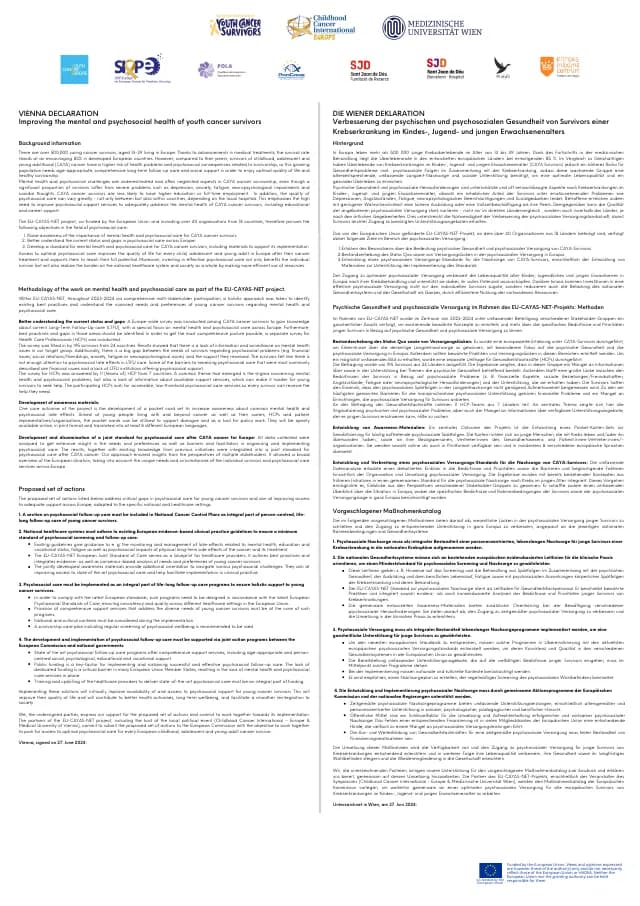
A közzétett PDF-ben a dátum alatti aláírási mező üresen marad. A nyilatkozat a következő EU-CAYAS-NET partnerszervezetek logóit tartalmazza:
- European Network of Youth Cancer Survivors
- Childhood Cancer International – Europe
- Medizinische Universität Wien
- Youth Cancer Europe
- SIOP Europe – the European Society for Paediatric Oncology
- POLA – Pagalbos onkologiniams ligoniams asociacija
- PanCare – Pan-European Network for Care of Survivors after Childhood and Adolescent Cancer
- SJD Sant Joan de Déu – Fundació de Recerca
- SJD Sant Joan de Déu – Barcelona Hospital
- Pintail
- Prinses Máxima Centrum kinderoncologie
Megjegyzés a nyelvekről
A PDF kétnyelvű: a fenti angol szöveg a bal oldali hasábban, egy német változat ("Die Wiener Deklaration – Verbesserung der psychischen und psychosozialen Gesundheit von Survivors einer Krebserkrankung im Kindes-, Jugend- und jungen Erwachsenenalters") pedig a jobb oldali hasábban szerepel.
Finanszírozás és felelősségkizárás
Az Európai Unió társfinanszírozásával. Az Európai Unió finanszírozásával. A kifejtett nézetek és vélemények azonban kizárólag a szerző(k) sajátjai, és nem feltétlenül tükrözik az Európai Unió vagy a HADEA álláspontját. Ezekért sem az Európai Unió, sem a támogatást nyújtó hatóság nem tehető felelőssé.
Ez a kiadvány ennek a része EU-CAYAS-NET – EU Network of Youth Cancer Survivors.