

Основна информация
В Европа живеят над 500 000 млади хора, преживели рак, на възраст 14–39 години. Благодарение на напредъка в медицинското лечение, преживяемостта достига обнадеждаващите 85% в развитите европейски държави. Съществуват обаче различия между европейските държави както по отношение на преживяемостта, така и на начина, по който се организират грижите след лечението.
75% от преживелите рак в детска, юношеска и млада възраст (CAYAS) развиват късни здравословни проблеми, които изискват проследяващи грижи през целия живот. В зависимост от вида на рака, неговия стадий и последващата терапия, тези късни ефекти могат да варират значително. Поради това персонализираните дългосрочни проследяващи грижи (LTFU) следва да бъдат стандарт, за да се сведе до минимум тежестта на тези късни ефекти и тяхното отрицателно въздействие върху качеството на живот на преживелите рак. За съжаление, по-голямата част от преживелите рак в Европа не получават адекватни LTFU грижи и съществуват големи различия между европейските държави. В резултат на това много преживели рак са "изгубени за проследяване" поради липсата на подходящи проследяващи грижи след лечението. Време е за промяна!
Проектът EU-CAYAS-NET, съфинансиран от Европейския съюз и включващ над 40 организации от 18 държави, има за цел да идентифицира както добрите практики, така и пропуските в LTFU грижите, за да разработи пътна карта за това как да се въведат оптимални LTFU грижи в цяла Европа. Освен това на младите хора, преживели рак, се предоставят на достъпен език основани на доказателства препоръки за проследяващи грижи за не по-малко от 45 различни вида късни ефекти след CAYA рак. Тези брошури PanCare PLAIN подпомагат преживелите рак в грижата за собственото им здраве, като им предоставят разбираема информация за техните потребности от LTFU грижи.
Достъпът до оптимални LTFU грижи подобрява качеството на живот на всяко дете, юноша и млад възрастен в Европа след лечението на рак и им дава възможност по-пълноценно да реализират потенциала си. Освен това инвестирането в ефективни дългосрочни грижи за преживелите рак не само е от полза за отделния човек, но също така ще намали тежестта върху националната здравна система и обществото като цяло чрез по-ефективно използване на ресурсите и по-нисък натиск върху социалните фондове.
Методология на работата по късните ефекти и дългосрочните проследяващи грижи като част от проекта EU-CAYAS-NET
В рамките на проекта EU-CAYAS-NET през периода 2023–2024 г., с широко участие на всички заинтересовани страни, беше възприет холистичен подход за идентифициране на съществуващите добри практики и за разбиране на специфичните нужди и предпочитания на младите хора, преживели рак, по отношение на късните ефекти и дългосрочните проследяващи грижи (LTFU). Това включваше проучване както сред преживели рак, така и сред здравни специалисти, работни срещи за определяне на нуждите, предпочитанията и бариерите при въвеждането на LTFU грижи с участието на преживели рак, родители и здравни специалисти, както и три партньорски посещения в утвърдени центрове за добри практики: The Princess Maxima Center в Утрехт, Нидерландия; Sant Joan de Déu в Барселона, Испания; и Medical University of Vienna, Австрия.
Проучването беше проведено сред преживели рак и здравни специалисти от цяла Европа, което позволи да се картографира текущата ситуация и потребностите от LTFU грижи в различните държави. Работните срещи дадоха по-задълбочена представа за възприеманите бариери и улесняващи фактори при въвеждането и ползването на LTFU грижи от гледната точка на преживелите рак, родителите и здравните специалисти. По време на партньорските посещения участниците се запознаха на място с практиките и средата на посетените институции. Използвайки формуляри за партньорско наблюдение, те документираха своите наблюдения, като отбелязваха както положителните аспекти, така и областите за подобрение. Този структуриран подход позволи детайлно разглеждане на наличните LTFU грижи. Наред с тези дейности проектът е насочен и към допълнително подобряване на съществуващите материали и разработване на информация за преживелите рак, която да им даде възможност да се грижат за собственото си здраве и потребностите си от LTFU грижи. Примери за това са уебинари за дългосрочните проследяващи грижи и фертилитета, както и подобряването на брошурите PanCare PLAIN, предоставящи лесна за разбиране информация за късните ефекти въз основа на насоките на PanCare FollowUp и IGHG. Тази информация е свободно достъпна на уебсайта на PanCare.
Всички данни, събрани от работните срещи, партньорските посещения и проучванията, бяха анализирани, за да се получи задълбочена представа за нуждите и предпочитанията, както и за бариерите и улесняващите фактори при организирането и прилагането на LTFU грижи. Тези резултати, заедно със съществуващите знания от насоки и предходни проекти на ЕС, бяха интегрирани в пътна карта и препоръки за въвеждането на оптимални LTFU грижи. Този подход осигури разбиране за нуждите и предпочитанията от гледната точка на множество групи заинтересовани страни и широк преглед на европейската ситуация, като същевременно се отчитат уникалните нужди и обстоятелства на отделните преживели рак и здравните системи в Европа.
Предложен набор от действия
Предложеният по-долу набор от действия е насочен към критичните пропуски в LTFU грижите за младите хора, преживели рак, за да се гарантира, че те имат достъп до адекватна подкрепа в цяла Европа, адаптирана към специфичните национални условия и условията на здравните системи.
-
Раздел за дългосрочните проследяващи грижи трябва да бъде включен в Националните планове за контрол на рака като неразделна част от ориентираните към човека проследяващи грижи през целия живот за младите хора, преживели рак.
-
Националните здравни системи трябва да се придържат към европейските основани на доказателства насоки за клинична практика, за да се гарантира минимален стандарт за качествени дългосрочни проследяващи грижи.
- Насоките на PanCare и IGHG предоставят насоки за проследяването и управлението на късните ефекти.
- Европейските насоки служат като рамка за доставчиците на здравни услуги, като очертават добри практики и протоколи за подкрепа на младите хора, преживели рак.
- Опирайки се на най-новите изследвания и експертен консенсус, насоките предлагат ясни препоръки за това кога и как да се проследяват преживелите CAYA рак.
-
Трябва да бъдат въведени програми за дългосрочни проследяващи грижи, за да се осигури персонализирана подкрепа за младите хора, преживели рак.
- За да съответстват на най-новите европейски стандарти, тези програми трябва да бъдат разработени в съответствие с препоръките на PanCare за дългосрочни проследяващи грижи, като се гарантират последователност и качество в различните условия на предоставяне на здравни услуги в Европейския съюз.
- Предоставянето на цялостни услуги за подкрепа, които отговарят на разнообразните нужди на младите хора, преживели рак, трябва да бъде в основата на тези програми.
- При въвеждането трябва да се вземат предвид националният и културният контекст.
- Препоръчва се използването на план за грижи за преживели рак, съдържащ история на лечението и препоръки за проследяване.
-
Разработването и въвеждането на дългосрочни проследяващи грижи трябва да бъдат подкрепени чрез съвместни програми за действие между Европейската комисия и националните правителства.
- Съвременните програми за дългосрочни проследяващи грижи предлагат цялостни услуги за подкрепа, включително подходяща за възрастта психосоциална подкрепа, обучение за управление на дългосрочните ефекти от рака и неговото лечение, правилен преход от педиатричната към здравната грижа за възрастни, както и насоки за ориентиране в системата на здравеопазване за възрастни.
- Публичното финансиране е ключов фактор за въвеждането и поддържането на успешни и ефективни дългосрочни проследяващи грижи. Липсата на целево финансиране е критична пречка в много държави — членки на Европейския съюз, което води до отсъствие на действащи планове за дългосрочни проследяващи грижи.
- Обучението и повишаването на квалификацията на доставчиците на здравни услуги за предоставяне на съвременни дългосрочни проследяващи грижи трябва да бъдат неразделна част от финансирането.
Прилагането на тези решения ще гарантира, че младите хора, преживели рак, ще имат достъп до потенциално животоспасяващи услуги за дългосрочни проследяващи грижи. Това ще подобри качеството им на живот и ще допринесе за по-добри здравни резултати, дългосрочно благополучие и по-плавна реинтеграция в обществото.
Ние, долуподписаните страни, изразяваме подкрепата си за предложения набор от действия и се ангажираме да работим заедно за неговото прилагане. Партньорите по проекта EU-CAYAS-NET, включително домакинът на местното политическо събитие (FSJD), се ангажират да представят предложения набор от действия на Европейската комисия с цел съвместна работа за насърчаване на достъпа до оптимални дългосрочни проследяващи грижи за всеки европейски човек, преживял рак в детска, юношеска или млада възраст.
Барселона, подписано на 22 октомври 2024 г.
Подписали
Декларацията носи логата на следните организации.
Партньори по проекта EU-CAYAS-NET
- Childhood Cancer International – Europe
- European Network of Youth Cancer Survivors
- Youth Cancer Europe
- SIOP Europe – the European Society for Paediatric Oncology
- SJD Sant Joan de Déu – Fundació de Recerca
- SJD Sant Joan de Déu – Barcelona Hospital
- POLA – Pagalbos onkologiniams ligoniams asociacija
- PanCare – Pan-European Network for Care of Survivors after Childhood and Adolescent Cancer
- Medizinische Universität Wien
- Pintail
- Prinses Máxima Centrum kinderoncologie
Подкрепящи организации
- ASION – Asociación Infantil Oncológica de Madrid
- Societat Catalana de Pediatria
- Candela – Polsera Solidària per la investigació del càncer infantil
- SEPO – Sociedad Española de Psicooncología (1997-2022, 25 años promoviendo la psicooncología)
- Aspanogi – Asociación de Familias de Menores con Cáncer de Gipuzkoa
- Asociación Española Contra el Cáncer
- La Fe – Hospital Universitari i Politècnic
- Fundació d'Oncologia Infantil Enriqueta Villavecchia
- Fundación Aladina
- Aspanovas
- IMIB – Instituto Murciano de Investigación Biosanitaria Pascual Parrilla (with Área I Murcia Oeste and Universidad de Murcia)
- AOEX – Asociación Oncológica Extremeña
- Argar – niños con cáncer
- ASANOG – Asociación de Ayuda a Niños Oncológicos de Galicia
- ADANO – Asociación de Ayuda a Niños y Niñas con Cáncer de Navarra
- Salut / ICO – Institut Català d'Oncologia
- Hospital General Universitario Gregorio Marañón (SaludMadrid)
- Niños con Cáncer – Federación Española de Padres
- Niños con cáncer – Afanion
- Niños con cáncer – Aspanion
- Niños con cáncer – ANDEX
- Niños con cáncer – ASPANOA
- Niños con cáncer – A.L.E.S.
Бележка относно езиците
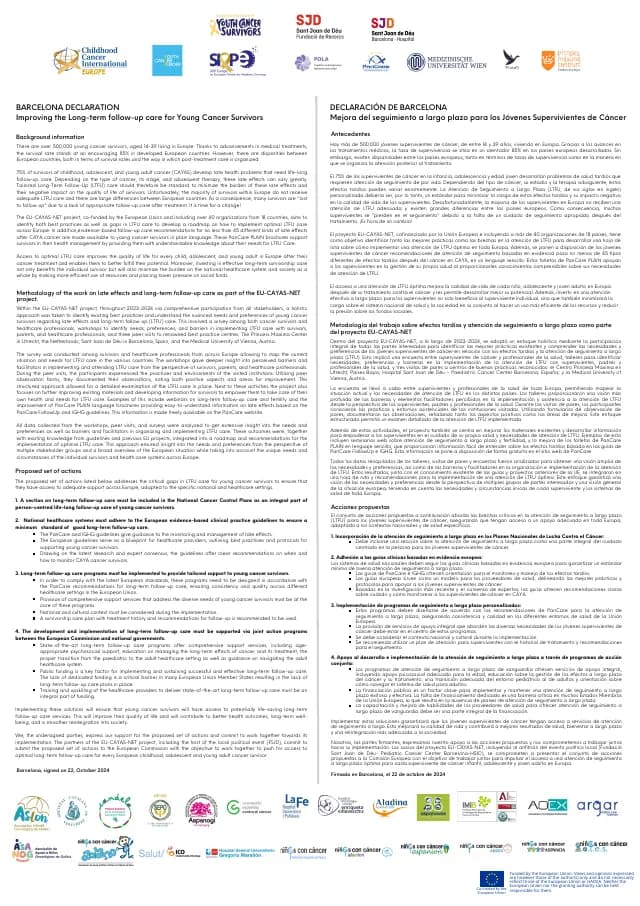
PDF документът е двуезичен: английският текст по-горе е отпечатан в лявата колона, а испанска версия ("Declaración de Barcelona – Mejora del seguimiento a largo plazo para los Jóvenes Supervivientes de Cáncer") в дясната колона.
Финансиране и отказ от отговорност
Съфинансирано от Европейския съюз. Финансирано от Европейския съюз. Изразените възгледи и мнения обаче принадлежат единствено на автора(ите) и не отразяват непременно възгледите и мненията на Европейския съюз или HADEA. Нито Европейският съюз, нито предоставящият финансирането орган могат да носят отговорност за тях.
Тази публикация е част от EU-CAYAS-NET – EU Network of Youth Cancer Survivors.