
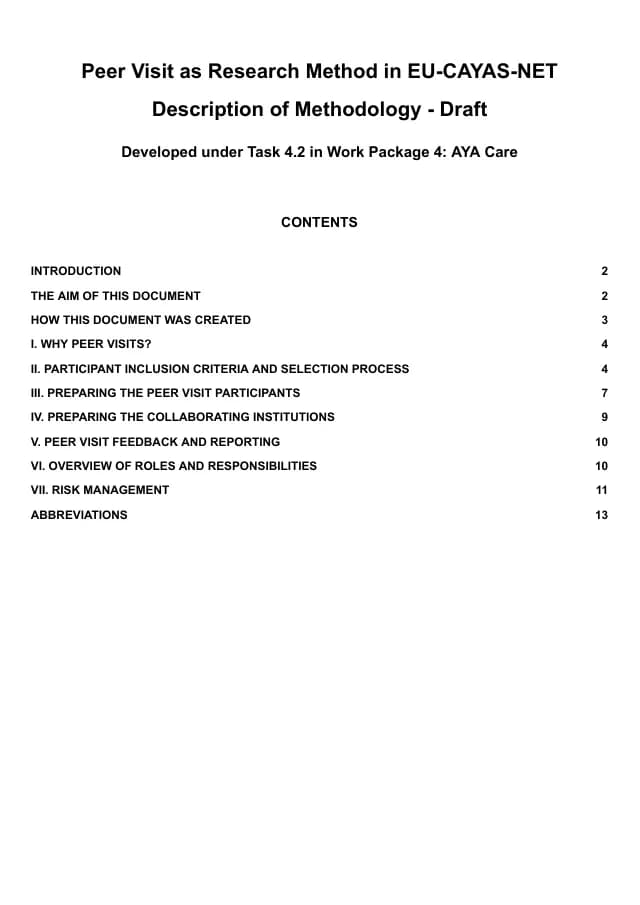
Razvijeno u okviru Zadatka 4.2 u Radnom paketu 4: AYA skrb
Uvod
Mreža EU-a mladih osoba koje su preživjele rak (EU-CAYAS-NET) projekt je koji sufinancira Europska unija iz programa EU4Health na temelju ugovora o dodjeli bespovratnih sredstava broj 101056918, a koji obećava poboljšati kvalitetu života djece, adolescenata i mladih odraslih osoba koje su preživjele rak kroz smisleno društveno umrežavanje među osobama s osobnim iskustvom raka, kao i socijalnim i zdravstvenim stručnjacima aktivnima u prevenciji raka i skrbi diljem Europske unije. Mreža će okupiti širok spektar dionika i uspostaviti internetsku Platformu kako bi podržala promicanje ciljanih aktivnosti i inicijativa, obuhvaćajući područja za koja je dokazano da doprinose kvaliteti života mladih osoba pogođenih rakom. Fokus će biti na trima temama koje su identificirale mlade osobe s osobnim iskustvom raka diljem Europe:
- Kvaliteta života (u Radnom paketu 3 - WP3),
- Skrb za adolescente i mlade odrasle osobe oboljele od raka (u Radnom paketu 4 - WP4),
- Jednakost, raznolikost i uključivost (u Radnom paketu 5 - WP5).
Mladi koji žive s rakom i nakon raka predvodit će suradnički pristup koji uključuje različite dionike kako bi se identificirale ciljane aktivnosti i inicijative koje će se promicati putem mreže i Platforme. Aktivnosti će uključivati peer posjete, sastanke, osposobljavanje, virtualni zajednički rad, kampanje na društvenim mrežama, webinare, preporuke/događanja za javne politike i druga nacionalna/međunarodna događanja vezana uz javne politike. Aktivnosti će se nadovezati na prethodne i tekuće inicijative, kao što su Europske referentne mreže (ERN) PaedCan i projekti Horizon 2020/Horizon Europe. Projekt će doprinijeti provedbi ključnih inicijativa Europskog plana za borbu protiv raka kao što su "Centar znanja o raku" i "Mreža EU-a nacionalnih sveobuhvatnih onkoloških centara". EU-CAYAS-NET također će se baviti mnogim ciljevima programa EU4Health, uključujući promicanje zdravlja i smanjenje opterećenja bolešću, smanjenje zdravstvenih nejednakosti i poboljšanje pristupa skrbi, unaprjeđenje prava pacijenata/osoba koje su preživjele rak i drugo.
Osim što će uspostaviti digitalnu Platformu na razini EU-a, utemeljenu na istraživanju i uključivanju dionika, EU-CAYAS-NET će također izravno doprinijeti smanjenju zdravstvenih nejednakosti, poboljšanju pristupa skrbi i resursima te promicanju prava mladih pacijenata i osoba koje su preživjele rak.
Cilj ovog dokumenta
Opći cilj i isporučivi rezultat Radnog paketa 4 (WP4) jest sukreiranje pozicijskog dokumenta "Minimalni standardi za specijalističke AYA jedinice". U tu svrhu, radna skupina WP4 provest će sekundarno istraživanje, peer posjete i okrugli stol sa zdravstvenim stručnjacima kako bi se informiralo pisanje pozicijskog dokumenta.
Ovaj dokument, razvijen u sklopu Zadatka 4.2, usmjeren je na opis peer posjeta kao istraživačke metode za EU-CAYAS-NET Zadatak 3.4.2, Zadatak 3.5.8 i Zadatak 4.3 te će pružiti okvir za:
- kriterije za odabir sudionika,
- postupak odabira i za sudionike (pacijente, osobe koje su preživjele rak, zdravstvene stručnjake, socijalne radnike, predstavnike drugih skupina dionika) i za suradničke institucije,
- pripremu peer posjeta i komunikaciju s lokalnim dionicima i članovima ekosustava AYA onkološke skrbi u ciljanim zemljama,
- provedbu peer posjeta uz uključivanje dodatnih ambasadora Mreže i većeg broja sudionika koji će biti pozvani sudjelovati na internetu putem rješenja za prijenos uživo u stvarnom vremenu
- analitički pristup.
Ovaj će dokument služiti kao temelj i smjernica za razvoj materijala za osposobljavanje predviđenih za uporabu u M6 projekta, događanju osposobljavanja za peer posjete za sve sudionike koji će provoditi peer posjete u zadacima T3.4.2, T3.5.8 i T4.3.
Kako je ovaj dokument izrađen
Ovaj su dokument izradili članovi skupine zadatka 4.2.1 ("Razviti metodologiju peer posjeta za ovaj projekt") istraživanjem postojećih smjernica i najboljih praksi. Prvi krug savjetovanja i uređivanja proveli su svi dionici i zainteresirane strane unutar WP4. Konačnu verziju prihvatila je cijela radna skupina WP4.
Vršnjački posjeti kao istraživačka metoda u EU-CAYAS-NET-u
I. Zašto vršnjački posjeti?
Koncept vršnjačkih posjeta ukorijenjen je u opservacijskom i participativnom istraživanju, u kojem istraživači (u našem slučaju članovi specifičnih radnih skupina u WP3 i WP4 projekta) mogu promatrati zdravstvene djelatnike i druge pružatelje usluga u njihovu prirodnom okruženju. Koristit će se tri vrste promatranja: naturalističko promatranje, pri kojem će članovi radne skupine (od sada: istraživači vršnjačkih posjeta) promatrati okruženje u kojem zdravstveni djelatnici rade; participativno promatranje, pri kojem će istraživači provoditi intervjue, voditi bilješke i fotografirati; te strukturirano promatranje, pri kojem će istraživači promatrati specifične aspekte skrbi za AYA, dugoročnog praćenja kasnih posljedica i prijelaza iz pedijatrijske u odraslu onkološku skrb, ispunjavajući strukturiranu izvještajnu karticu. (Na ovu izvještajnu karticu kasnije u ovom dokumentu upućivat će se kao na Obrazac za vršnjačko promatranje.)
Očekuje se i da će vršnjački posjeti rezultirati vrijednim povratnim informacijama za suradničku ustanovu, kao i primjenjivim zaključcima za istraživače (u našem slučaju vršnjake, odnosno članove specifičnih radnih skupina u WP3 i WP4 projekta koji mogu biti mlade osobe s iskustvom raka ili pružatelji zdravstvene skrbi itd.) radi potpore AYA inicijativama u njihovim matičnim državama.
Ovaj oblik vršnjačkog učenja osmišljen je kako bi potaknuo interakciju, suradničko učenje i izgradnju rješenja.
Uspješni vršnjački posjeti oslanjat će se na tri dobro planirane faze:
- Priprema za vršnjačke posjete (M2-M8, listopad 2022. do travanj 2023. u WP3 i WP4)
- a. Odabir sudionika (M4-M5, prosinac 2022. do siječanj 2023. u WP3 i WP4)
- b. Osposobljavanje sudionika (M6, veljača 2023.)
- Vršnjački posjeti u zemlji suradničke članske ustanove (M9-M11, svibanj 2023. do srpanj 2023. u WP3 i WP4)
- Povratne informacije i izvještavanje nakon vršnjačkih posjeta (M9-M13, svibanj 2023. do rujan 2023. u WP3 i WP4)
Jednako su važni praćenje i diseminacija rezultata, no to nije predmet ovog dokumenta ni opisa metodologije. U kontekstu projekta EU-CAYAS-NET tijekom mjeseci 18 - 24 bit će pripremljen Position Paper o potrebi za LTFU skrbi te jedan o mentalnom zdravlju i psihosocijalnoj skrbi nakon CAYA raka u WP3. U WP4 između M14-M24, od listopada 2023. do kolovoza 2024., održat će se online RoundTable s daljnjim raspravama o AYA skrbi, koji će, zajedno s nalazima vršnjačkih posjeta, poslužiti kao temelj za Position Paper o "Minimalnim standardima za specijalističke AYA jedinice".
II. Kriteriji uključivanja sudionika i postupak odabira
Ukupno 50 sudionika (20 sudionika za potporu WP3 i 30 sudionika za potporu WP4) sudjelovat će u edukaciji "Vršnjački posjet kao istraživačka metoda u EU-CAYAS-NET-u" u M6 projekta (veljača 2023.). Sudionike će odabrati radne skupine WP3 i WP4.
1. Vodeća načela
- a. Radne skupine WP3 i WP4 primijenit će svrhovito uzorkovanje kako bi osigurale zastupljenost različitih glasova i zajednica mladih oboljelih od raka. Odabir će poštovati načela jednakosti, raznolikosti i uključivosti (EDI) (kao što su uzimanje u obzir raznolike geografske zastupljenosti, roda, obrazovnog statusa, zdravstvenog statusa i invaliditeta itd.; više informacija vidi niže), a radne skupine obvezuju se na zaštitu i dobrobit tijekom edukacije i vršnjačkih posjeta (za više informacija molimo pogledajte istaknuti tekstualni okvir u nastavku).
- b. Kako bi se osigurala široka geografska zastupljenost, ključni pokazatelji uspješnosti EU-CAYAS-NET-a zahtijevaju sudionike vršnjačkih posjeta iz najmanje 15 država članica EU.
- c. Prednost pri razmatranju imat će Network Ambassadors odabrani u T1.6 [Ambassador Programme] projekta EU-CAYAS-NET.
- d. Sudjelovanje će biti u potpunosti dobrovoljno.
- e. U WP4 sudjelovanje uživo na vršnjačkim posjetima bit će ponuđeno mladim osobama s iskustvom raka. Drugi dionici (u tom smislu ne označavaju se kao "vršnjaci") moći će se istraživačkoj aktivnosti pridružiti online ili putem drugih inovativnih metoda koje primjenjuje radna skupina. U WP3 sudjelovanje uživo nudi se višestrukim dionicima.
2. Kriteriji uključivanja za edukaciju i vršnjačke posjete
Sudjelovanje kao "mlada osoba s iskustvom raka":
- a. Najmanje 18 godina starosti
- b. Dijagnoza primarnog raka prije ili najkasnije u dobi od 39 godina
- c. Dijagnoza primarnog raka postavljena je prije najmanje 2 godine
- d. Interes za barem jednu od specifičnih istraživačkih tema WP3 i WP4
- Onkološka skrb za adolescente i mlade odrasle osobe
- Dugoročno praćenje osoba koje su preživjele rak u dječjoj dobi
- Prijelaz iz pedijatrijske u odraslu onkološku skrb
- e. Razumijevanje engleskog jezika kao primarnog jezika komunikacije
- f. Mogućnost putovanja (u obzir će se uzeti i sudionici kojima su potrebni njegovatelji ili pomoć pri putovanju)
- g. Dostupnost za sudjelovanje na edukaciji za vršnjačke posjete u M6 (veljača 2023.), kao i dostupnost za sudjelovanje na trodnevnom vršnjačkom posjetu specifične teme u jednoj od identificiranih ustanova u M9-M11 (svibanj-srpanj 2023.).
- h. Sposobnost razumijevanja obveza koje proizlaze iz ovog istraživanja te vlastitih prava i odgovornosti (kao što su sudjelovanje u edukaciji i vršnjačkom posjetu, poštovanje kodeksa ponašanja, pridržavanje načela i obveza dovršetka izvješća o vršnjačkom posjetu nakon aktivnosti)
- i. Sposobnost davanja informiranog pristanka.
Sudjelovanje kao "roditelj ili njegovatelj":
- a. Roditelj djeteta, adolescenta ili mlade odrasle osobe (CAYA) koji su pacijenti ili osobe koje su preživjele rak, a dijagnoza je postavljena prije ili najkasnije u dobi od 39 godina
- b. Dijagnoza primarnog raka djeteta postavljena je prije najmanje 2 godine
- c. Interes za barem jednu od specifičnih istraživačkih tema WP3 i WP4
- Onkološka skrb za adolescente i mlade odrasle osobe
- Dugoročno praćenje osoba koje su preživjele rak u dječjoj dobi
- Prijelaz iz pedijatrijske u odraslu onkološku skrb
- d. Razumijevanje engleskog jezika kao primarnog jezika komunikacije
- e. Mogućnost putovanja (u obzir će se uzeti i sudionici kojima su potrebni njegovatelji ili pomoć pri putovanju)
- f. Dostupnost za sudjelovanje na edukaciji za vršnjačke posjete u M6 (veljača 2023.), kao i dostupnost za sudjelovanje na trodnevnom vršnjačkom posjetu specifične teme u jednoj od identificiranih ustanova u M9-M11 (svibanj-srpanj 2023.).
- g. Sposobnost razumijevanja obveza koje proizlaze iz ovog istraživanja te vlastitih prava i odgovornosti (kao što su sudjelovanje u edukaciji i vršnjačkom posjetu, poštovanje kodeksa ponašanja, pridržavanje načela i obveza dovršetka izvješća o vršnjačkom posjetu nakon aktivnosti)
- h. Sposobnost davanja informiranog pristanka.
Sudjelovanje kao "zdravstveni djelatnik":
- a. Liječnik, medicinska sestra/medicinski tehničar ili psihosocijalni stručnjak koji radi u području raka u CAYA populaciji / skrbi za osobe koje su preživjele rak u CAYA populaciji (pacijenti s rakom kojem je dijagnoza postavljena prije 39. godine života)
- b. Interes za barem jednu od specifičnih istraživačkih tema WP3 i WP4
- Onkološka skrb za adolescente i mlade odrasle osobe
- Dugoročno praćenje osoba koje su preživjele rak u dječjoj dobi
- Prijelaz iz pedijatrijske u odraslu onkološku skrb
- c. Razumijevanje engleskog jezika kao primarnog jezika komunikacije
- d. Mogućnost putovanja (u obzir će se uzeti i sudionici kojima su potrebni njegovatelji ili pomoć pri putovanju)
- e. Dostupnost za sudjelovanje na edukaciji za vršnjačke posjete u M6 (veljača 2023.), kao i dostupnost za sudjelovanje na trodnevnom vršnjačkom posjetu specifične teme u jednoj od identificiranih ustanova u M9-M11 (svibanj-srpanj 2023.).
- f. Sposobnost razumijevanja obveza koje proizlaze iz ovog istraživanja te vlastitih prava i odgovornosti (kao što su sudjelovanje u edukaciji i vršnjačkom posjetu, poštovanje kodeksa ponašanja, pridržavanje načela i obveza dovršetka izvješća o vršnjačkom posjetu nakon aktivnosti)
- g. Sposobnost davanja informiranog pristanka.
3. Postupak odabira
- a. Radne skupine WP3 i WP4 pozvat će članove da putem online obrazaca i e-pošte prijave svoj interes.
- b. Radne skupine WP3 i WP4 ocjenjivat će prijave interesa na temelju gore navedenih vodećih načela (točka 1), kao i uzimajući u obzir kriterije uključivanja (točka 2).
- c. Voditelji Work Package-a za WP3 i WP4 u konačnici su odgovorni za to da rezultati postupka odabira budu pravodobno i obzirno priopćeni svim prijaviteljima.
III. Priprema sudionika vršnjačkih posjeta
U M6 (veljača 2023.) Youth Cancer Europe organizirat će i voditi edukaciju "Vršnjački posjet kao istraživačka metoda u EU-CAYAS-NET-u" za mlade osobe koje su preživjele rak i pozvane predstavnike drugih skupina dionika identificiranih u WP3 i WP4.
Edukacija će se sastojati od jednodnevnog sastanka uživo, kojim će se sudionici pripremiti za njihovu ulogu vršnjačkih promatrača. Edukacija će:
- Postaviti očekivanja i opisati cilj vršnjačkih posjeta.
- Opisati očekivane aktivnosti koje će se odvijati tijekom vršnjačkih posjeta, uključujući procijenjeni vremenski raspored i nacrt dnevnog reda.
- Raspraviti načela zaštite i dobrobiti kako sudionika projekta tako i ranjivih populacija koje će se promatrati
- Pružiti pregled zakonodavnih odredbi i politika na razini EU-a, kao i poznatih nacionalnih programa u specifičnim istraživačkim temama WP3 (LTFU i Transition) i WP4 (AYA Care)
- Predstaviti svaku temu i trenutno dostupne istraživačke publikacije u podskupinama specifičnim za temu te zajedno sa sudionicima usuglasiti specifična istraživačka pitanja kroz suradnički proces određivanja prioriteta
- Prikazati nacrt obrasca za izvještavanje i prikupiti prijedloge za konačni format izvještavanja
- Omogućiti učenje osnovnih vještina promatranja, intervjuiranja i pisanja izvješća
Istraživačke aktivnosti vršnjačkih posjeta temelje se na aktivnom i učinkovitom slušanju, promatranju i postavljanju pitanja. Neke od istraživačkih aktivnosti za koje će se sudionici pripremati su sljedeće:
- Interaktivni vođeni obilasci suradničke ustanove omogućit će interakciju s različitim bolničkim osobljem, kao i s onkološkim pacijentima koji primaju skrb na posjećenom odjelu – gdje je to primjereno. Dopuštenja za fotografiranje i videografiju, kao i pristanak na posjet, tražit će se od ustanova, kao i od pojedinačnih ranjivih mladih osoba, prije snimanja bilo kakve interakcije.
- Individualni intervjui sa zdravstvenim osobljem (liječnici, medicinske sestre i drugi HCP), pacijentima ili članovima tima bolničkog menadžmenta koristit će otvorena pitanja. Intervjui će, kada je to primjereno i primjenjivo, biti audio snimani te će se zatražiti informirani pristanak. Uz suglasnost će se bilježiti i demografski podaci.
- Rasprave za okruglim stolom u okruženju "otvorenog prostora", radi lakše analize podataka uz pisani izlaz.
- Rasprave u fokusnim skupinama temeljene na otvorenim pitanjima. Fokusne skupine bit će audio i video snimane te će se zatražiti informirani pristanak. Uz suglasnost će se bilježiti demografski i medicinski podaci (ako je primjenjivo).
- Vanjski sastanci s dionicima ili drugim nevladinim organizacijama koje podupiru suradničku ustanovu ili politike AYA skrbi.
- Vanjski, neformalni sastanak s lokalnim mladim osobama koje žive s rakom i nakon raka. Poštovat će se načela zaštite i dobrobiti te će se prije snimanja bilo kakve interakcije tražiti pojedinačna dopuštenja.
- Sjednica za povratne informacije i debriefing.
IV. Priprema suradničkih ustanova
Sudionici se upoznaju s lokalnim kontekstom i uspješnim praksama kroz dinamične oblike vršnjačkog učenja osmišljene kako bi potaknuli interakciju, suradničko učenje i izgradnju rješenja. Suradnička ustanova domaćin takvih vršnjačkih posjeta trebala bi biti spremna:
- Odobriti sudionicima vršnjačkih posjeta promatranje aktivnosti ili postupaka koji se provode u onkološkoj ustanovi
- Uključiti osoblje koje razumije i govori engleski jezik (ili, alternativno, osigurati prevoditelje koji će prevoditi i pomagati u komunikaciji između sudionika i bolničkog osoblja i/ili onkoloških pacijenata)
- Pružiti praktičnu i tehničku podršku tijekom cijelog vršnjačkog posjeta
- Pomoći sudionicima da razumiju lokalnu kliničku praksu skrbi i politike liječenja AYA populacije
- Planirati i pomoći u organizaciji vršnjačkog posjeta
- Pripremiti dnevni red (ili dati preporuke za dnevni red)
- Predložiti predavače iz ustanove i identificirati zdravstvene djelatnike voljne pomoći vršnjačkim posjetima
- Identificirati AYA zdravstvene djelatnike voljne sudjelovati u polustrukturiranim individualnim intervjuima
Voditeljima radnih paketa i zadataka preporučuje se da rano započnu razgovore s ustanovama domaćinima kako bi usuglasili moguće vremenske okvire posjeta te osigurali potporu institucionalnog vodstva. Preporučuje se da za svaki vršnjački posjet postoji jedna posvećena kontakt osoba po ustanovi koja će voditi komunikaciju između koordinatora vršnjačkih posjeta EU-CAYAS-NET-a i bolnice domaćina. Sporazume o suradnji i medijske suglasnosti s ustanovama domaćinima, kao i pristanke pojedinaca za sudjelovanje u istraživanju, potrebno je zatražiti u ranoj fazi te pravodobno podijeliti nacrte dokumenata (a ako je moguće, konačne verzije odobriti i potpisati od strane svih uključenih) prije samog posjeta.
Nabava i rezervacije smještaja, najma prostora, hrane, putovanja itd. odgovornost su voditelja WP CCI-E (WP3) i YCE (WP4) te će se provoditi u skladu s potrebama aktivnosti i potrebama sudionika u zemljama u kojima će se vršnjački posjeti održavati. Priprema materijala za vršnjačke posjete, tisak i brendiranje realizirat će se od strane radne skupine u suradnji s YCE i CCI.
V. Povratne informacije i izvještavanje nakon vršnjačkih posjeta
Nakon svakog vršnjačkog posjeta od sudionika će se očekivati da dostave pisano izvješće s ishodima učenja na temelju predloška dostavljenog tijekom edukacije. To će se provesti putem anketne platforme dostupne putem poveznice dostavljene sudionicima nakon njihova posjeta. Na temelju izvješća sudionika, konačna opća izvješća napisat će voditelji Work Package-a i Task Leaderi. Opće izvješće podijelit će se s General Assembly, na sastancima EU Network of Youth Cancer Survivors, s Network Ambassadors i na Platform.
VI. Pregled uloga i odgovornosti
Svi pridruženi partneri (AP) i korisnici (BEN) konzorcija EU-CAYAS-NET pozvani su sudjelovati u planiranju vršnjačkih posjeta, pripremi metodologije i materijala za edukaciju (uključujući učinkovito sudjelovanje u edukaciji/vršnjačkim posjetima). Mogućnost sudjelovanja u vršnjačkim posjetima pruža se širem broju sudionika (uz prioritet za Network Ambassadors) putem prijenosa vršnjačkih posjeta uživo. Uloge i odgovornosti različitih dionika navedene su u nastavku:
Uloge i odgovornosti korisnika (BEN)
- Radit će tijekom cijelog trajanja projekta na provedbi edukacije i organizaciji vršnjačkih posjeta
- Koordinirat će događanja i sastanke uključene u zadatak i podzadatak za planiranje vršnjačkih posjeta te pripremu metodologije i materijala za edukaciju
- Izrađivat će sadržaj te razvijati i provoditi edukaciju, materijale, alate itd.
Uloge i odgovornosti pridruženih partnera (AP)
- Potiču se da se pridruže Network of Youth Cancer Survivors
- Potiču se da sudjeluju u projektnim sastancima i događanjima o planiranju vršnjačkih posjeta te pripremi metodologije i materijala za edukaciju i da aktivno doprinose
- Mogu pregledati Metodologiju vršnjačkih posjeta i dati povratne informacije o njoj
Uloge i odgovornosti voditelja WP4
- Istraživanje postojećih smjernica, objavljene literature i najboljih praksi diljem EU-a
- Izrada metodologije vršnjačkih posjeta
- Izrada materijala za edukaciju i priprema edukacijskog događanja
- Razvoj kriterija odabira za sudionike vršnjačkih posjeta
- Regrutiranje sudionika za edukaciju i vršnjačke posjete
- Priprema dnevnog reda posjeta u suradnji s ustanovama u suradničkim zemljama
- Nadzor procesa posjeta
- Osiguravanje provedbe dnevnog reda
- Planiranje i praćenje vršnjačkih posjeta
- Pomoć sudionicima pri ispunjavanju izvješća
- Prikupljanje izvješća od sudionika
- Izrada nacrta izvješća prema doprinosima sudionika
- Osiguravanje procesa praćenja i diseminacije ishoda vršnjačkih posjeta
Uloge i odgovornosti sudionika (istraživača)
- Sudjelovati osobno na edukaciji u veljači 2023. u Belgiji ili, ako to nije moguće, potvrditi da su pročitali i usvojili sve edukacijske materijale koje su organizatori učinili dostupnima nakon događanja
- Promatrati i učiti tijekom posjeta u suradničkoj ustanovi
- Sudjelovati u fokusnoj skupini s vršnjacima
- Ispuniti anonimno individualno izvješće na temelju iskustva tijekom vršnjačkog posjeta
- Pružiti sve dodatne povratne informacije tijekom sesija povratnih informacija
VII. Upravljanje rizicima
- Rizik: Mreža ne uspije učinkovito surađivati (mala vjerojatnost, velik utjecaj)
- WP: WP4 je uključen
- Predložene mjere ublažavanja rizika: Korisnici uključeni u mrežu imaju povijest uspješne međusobne suradnje i suradnje s dionicima koje predstavljaju (uključujući pridružene partnere), a aktivnosti projekta dobro su usklađene s njihovim strateškim prioritetima, što vjerojatnost ovog rizika čini niskom. Kako bi se rizik ublažio, Management Team održavat će redovit kontakt sa svim korisnicima i pridruženim partnerima radi ranog prepoznavanja mogućih problema. Konzorcij će održavati mjesečne konferencijske pozive radi lakše komunikacije te će nastojati sve sukobe riješiti konsenzusom.
- Rizik: Osobama koje su preživjele rak u mladosti nedostaju vještine uspješnog pisanja izvješća, što utječe na konačni position paper, koji bi tada mogao sadržavati nedovoljan doprinos pacijenata. (Mala vjerojatnost, velik utjecaj)
- WP: Samo WP4
- Predložene mjere ublažavanja rizika: Projekt predviđa ciljanu edukaciju za mlade osobe koje su preživjele rak i sudjeluju u aktivnostima, kako bi stekle vještine i kompetencije potrebne za uključivanje u vršnjačke posjete te korištenje smjernica i predložaka za izvještavanje. Njihov doprinos objedinit će iskusan zagovaratelj prava pacijenata s dubokim razumijevanjem konteksta, vodeći računa da se svi doprinosi vrednuju i izravno uključe u proces pripreme publikacije.
- Rizik: Povrede povjerljivosti podataka (mala vjerojatnost, velik utjecaj)
- Predložene mjere ublažavanja rizika: Sve postupke u kojima će se prikupljati osobni i osjetljivi podaci pregledat će i odobriti sveučilišno povjerenstvo za istraživačku etiku. Zatražit će se pristanak, a sudionici će biti upoznati s mogućnošću odbijanja sudjelovanja. Ciljevi će biti jasno navedeni, a podaci će se prikupljati putem sigurne anketne Platform LimeSurvey koja je usklađena s GDPR-om. IP adrese neće se pohranjivati i samo će anonimizirani podaci biti pripremljeni za upotrebu u analizama.
Kratice
- AYA - adolescenti i mlađe odrasle osobe
- CCI-E - Childhood Cancer International, Europe
- EDI - jednakost, raznolikost i uključivost
- ERN - Europske referentne mreže
- EU-CAYAS-NET - Europska mreža mladih osoba koje su preživjele rak
- GDPR - Opća uredba o zaštiti podataka
- LE - kasne posljedice
- LTFU - dugoročno praćenje
- M - mjesec
- WP - radni paket
- WP3 - radni paket EU-CAYAS-NET o kvaliteti života
- WP4 - radni paket EU-CAYAS-NET o skrbi za adolescente i mlađe odrasle osobe oboljele od raka
- WP5 - radni paket EU-CAYAS-NET o jednakosti, raznolikosti i uključivosti
- YCE - Youth Cancer Europe
O ovoj publikaciji
Ovaj dokument pregledali su:
| Ime | Organizacija (BEN/AP) | Datum |
|---|---|---|
| Katie Rizvi | YCE (BEN) | 23. stu 2022. |
| Elena Arsenie-Constantinescu | YCE (BEN) | 23. stu 2022. |
| Ana Țoțovînă | YCE (BEN) | 23. stu 2022. |
| Ana Amariutei | YCE (BEN) | 08. pro 2022. |
| Urska Kosir | YCE (BEN) | 09. pro 2022. |
| Oriana Sousa | CCI-E (BEN) | 02. pro 2022. |
| Tiago Costa | CCI-E (BEN) | 10. pro 2022. |
| Sonia Silva | YCE (BEN) | 11. pro 2022. |
| Víctor Royo | FSJD/SJD (BEN) | 05. pro 2022. |
| Victor Girbu | YCE (BEN) | 08. pro 2022. |
| Daliana Vigu | YCE (BEN) | 22. pro 2022. |
| Colette Ryan | YCE (BEN) YouCan Ireland (AP) | 22. pro 2022. |
| Hilda Hajdu | YCE (BEN) | 09. sij 2023. |
Financiranje i odricanje od odgovornosti
Mreža EU-a mladih osoba koje su preživjele rak (EU-CAYAS-NET) projekt je sufinanciran iz programa EU4Health Europske unije na temelju ugovora o dodjeli bespovratnih sredstava broj 101056918.
Ova publikacija dio je EU-CAYAS-NET – EU Network of Youth Cancer Survivors.