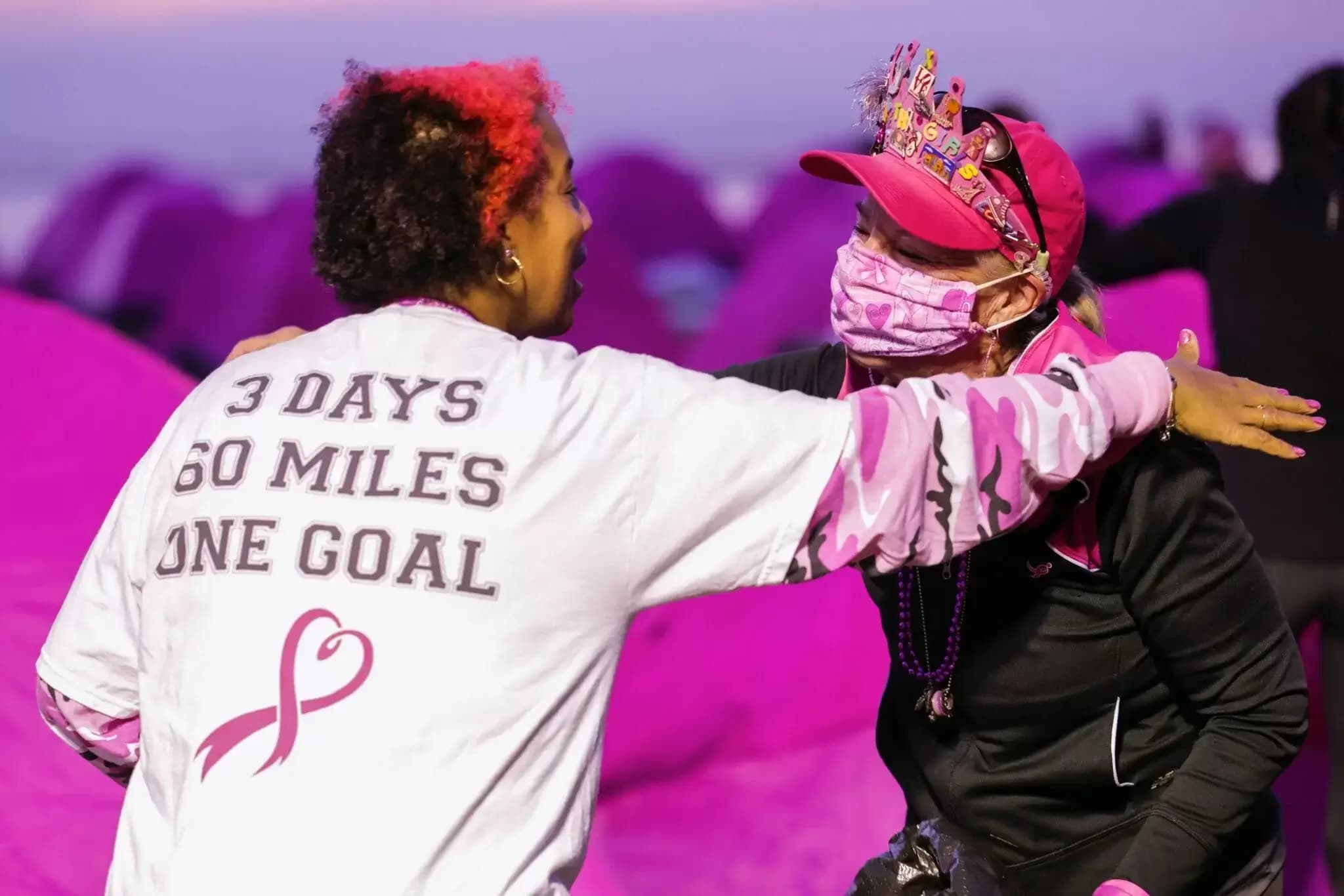

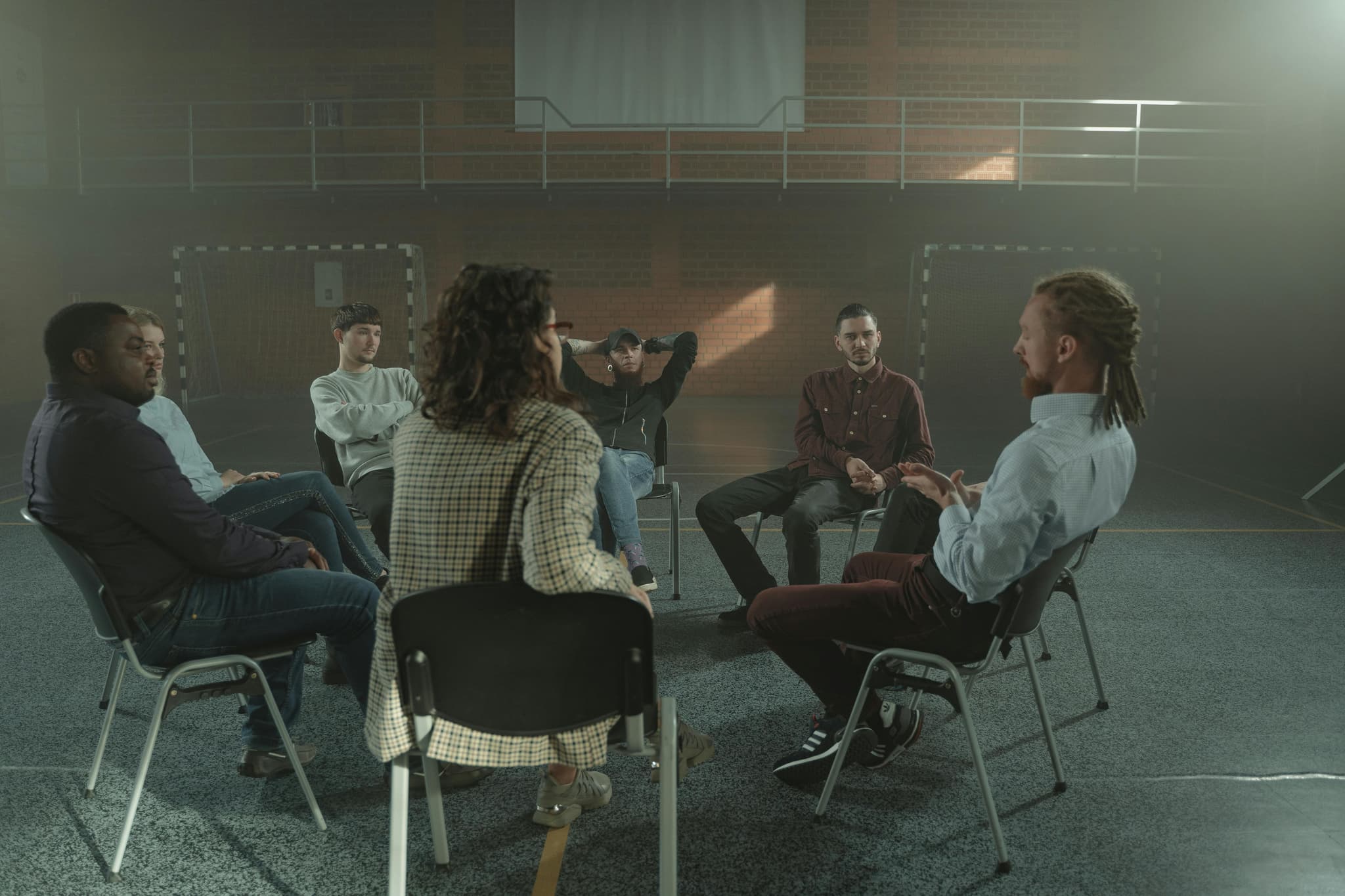
- Cancer support groups bring people affected by cancer together to help each other with emotional and practical support. Some meet face to face, and others mix in-person and online meetings [1].
- The research points to real but modest benefits. Studies link support groups and peer support with less anxiety and more confidence in coping, though some of the studies are small [2] [3].
- You don't have to talk or share your diagnosis details. Listening is a perfectly good way to take part. One London hospital says as much about one of its own groups: you can simply listen if you'd rather not share [4].
- Many groups welcome partners, family members or carers, and some focus on one type of cancer [1]. Finding the right fit sometimes means trying more than one.
You've probably imagined it already. A circle of plastic chairs under fluorescent lights. Everyone crying. Maybe someone at the oncologist's office handed you a flyer and you shoved it in your bag without looking at it. Or maybe you've been scrolling at 2 a.m. because the people in your life love you, but they don't quite get it.
Here's the thing about cancer support groups: they come in more shapes than that picture suggests. Some meet in community venues or cafes [1]. Some meet on Zoom, so you can join from your sofa in your pajamas [4]. And they aren't only for patients. Many groups welcome partners, family members or carers [1], and parents of children with cancer have their own groups too [5].
This guide walks through what support groups for cancer patients actually look like from the inside, how they help, and how to find one that fits you (or someone you love).
What are cancer support groups, and who are they for?
A cancer support group is a regular gathering where people affected by cancer talk openly about what they're going through with others in similar situations [1]. That's it. There's no script and no homework.
Groups may meet weekly or monthly [1]. At one London hospital, for example, a monthly group runs from 2pm to 4pm [4]. Some groups are facilitated by health professionals, such as a clinical nurse specialist [4]. Others are guided by peer facilitators, with cancer specialists in support [6].
The "who" is broader than you might think. Macmillan Cancer Support says a group can help at any stage of your cancer experience [1]. Some groups are open to anyone with any cancer. Others focus on a specific cancer, such as bowel cancer [1], or on a particular community, such as LGBTIQ+ people [6].
One thing worth saying directly: needing a support group doesn't mean your family and friends aren't enough. Cancer can be lonely in a particular way. The people closest to you may be trying so hard to stay positive that you feel like you can't be honest with them about how scared you are. If they keep reaching for the right words and missing, our guide on what to say to someone with cancer is one you could pass along. A support group is a place where you don't have to manage anyone else's feelings about your cancer.
How cancer support groups actually help
Talking to strangers about cancer probably sounds like the last thing you want to do. That's a fair reaction. Here's why it can still be worth a try.
The emotional benefits
You might not notice how alone you've been feeling until you're sitting with people who understand.
In a group, you can say "I'm terrified" without someone immediately trying to fix it. You can admit that you resent the cancer without anyone telling you to stay positive. Other members don't need the backstory. Some will know exactly what a port flush feels like, or what it's like to sit in a waiting room hoping the scan is clear.
Researchers in northern Italy who studied support groups for women with breast cancer and their family caregivers, using questionnaires and interviews, found something similar. They concluded that the groups gave emotional and relational support as well as information, and helped participants build a network and feel understood and reassured [2]. The cancer doesn't change, but carrying it alone is different from carrying it with people who get it.
The practical benefits
There's a practical side too. Macmillan describes groups as places where people help each other with practical support as well as emotional support [1]. Members swap the kind of tested-in-real-life detail that a short appointment may not leave time for.
What's easiest to eat on a queasy day. How to talk to your employer about a modified schedule during treatment. Which forms to fill in for sick pay or hospital travel costs where you live. Local resources for free transportation or meal delivery. This kind of peer knowledge comes from people who've tested it in real life, not read about it in a pamphlet.
What the research shows
A 2019 study at a hospital in northern Italy compared women with breast cancer who joined psychoeducational support groups (groups that combine information with emotional support) with women who received standard care. At the follow-up assessment, the women in the groups had lower anxiety, depression and psychological distress scores, and a stronger sense of positive change, than the women in standard care [2]. Caregivers in the groups had lower depression and distress scores than caregivers who were not. The study was small, with 28 women and 21 caregivers in total, and the authors list the small groups as a limitation [2].
A 2022 review pooled 27 randomized trials, with 7,742 participants, of psychoeducation for breast cancer (programs that teach people about their illness and how to cope with it). Psychoeducation reduced anxiety and improved quality of life, but it made no significant difference to depression [7].
Peer support has its own evidence base. A 2022 systematic review of 29 studies on peer-led cancer support found that most showed a small to medium increase in what researchers call psychological empowerment, measured most often as active coping, self-efficacy (confidence in your own ability to manage) and knowledge [3]. The authors describe the overall link as weak to moderate but positive, and they argue that peer support groups should be involved more systematically in cancer care [3].
Support from the people around you matters as well. A multicenter study in Germany followed people with cancer through the first year after diagnosis. Those with more positive social support had fewer symptoms of depression and anxiety and better mental quality of life over time. The links were weak to moderate overall, and because the study only observed people, it can't prove cause and effect [8].
None of this is a promise. The effects are modest, and two of these studies looked only at breast cancer. Still, the direction is encouraging.

Types of cancer support groups
"Cancer support group" is actually an umbrella term. There are several formats, and the right one depends on your schedule, your comfort level, and the kind of connection you're looking for.
In-person groups
According to Macmillan, groups usually meet in community venues or public places such as cafes [1]. Some hospitals run their own. University College London Hospitals, for example, lists groups held at its cancer center and facilitated by its specialist staff, and you book a place by phone or email [4]. Being in the same room has its own pull. You notice when someone looks thinner than last week. You can hug someone who just got bad news.
The tradeoff: you have to live near one, you have to get there, and your immune system has to cooperate.

Online and virtual groups
Some groups meet on Zoom [4], and some mix online and in-person meetings [1]. Video groups are especially good if you live in a rural area, have a compromised immune system, or find it easier to open up from the privacy of your own home.
There's also a second kind: forums, where you post when you have time and read replies on your own schedule. Macmillan's Online Community, for example, has more than 80,000 members and separate forums for cancers such as prostate, breast, lung and bowel cancer, and it says support is available 24 hours a day [9]. Before you join any forum, check who moderates it. A trained moderator can step in when someone posts medical advice that isn't sound.
Phone and one-to-one peer support
Not everyone wants a camera on or has an internet connection good enough for video. And not everyone is ready for a group. One-to-one peer support covers both: you're paired with one person who has been through cancer, and you talk privately.
In Ireland, for example, the Irish Cancer Society runs a free and confidential phone service that connects people with a trained volunteer who has had a similar cancer experience. You're referred through one of the charity's cancer nurses [10]. It's worth asking your own national cancer society whether it offers something similar. If you want peer support but aren't ready for a group, this is a strong alternative.
How the formats compare
| Format | Best for | Pros | Cons |
|---|---|---|---|
| In-person | Face-to-face connection seekers | Personal bonds; nonverbal support | Requires travel; limited local options |
| Online (live video) | Rural areas, immunocompromised, flexible schedules | Join from home; no travel needed | Screen fatigue; can feel less intimate |
| Online (forum) | Anytime access; reflective sharers | Post and read at any hour; time to think before responding | Less immediate connection; moderation varies |
| Phone or one-to-one peer support | Camera-shy; limited internet; not ready for a group | No video pressure; private, one-to-one connection | Only one perspective available |
Cancer support groups for caregivers and families
If you're caring for someone with cancer, you probably spend most of your energy managing their needs, their appointments, their emotions. Your own stress sits in the background until it doesn't.
Caregiver support groups exist for exactly this reason. In a caregivers' group, you might talk about the guilt of feeling exhausted, role changes in your relationship, financial strain, advocating for someone in medical settings when you're not the patient, and feelings (resentment, fear, grief) that you may feel ashamed to voice in front of the person you're caring for. Our guide to caring for caregivers has more on looking after yourself while you look after someone else.
Some groups are open to patients and the people close to them together. University College London Hospitals, for instance, lists groups that are open to family, friends and carers as well as patients [4]. Mixed groups can help you understand each other's experience. Parents of children with cancer have their own organizations across Europe: Childhood Cancer International Europe represents parents' and survivors' groups, with 67 member organizations in 38 countries [5]. And if you need a space where you don't have to perform strength for anyone, a group just for carers may suit you better.
Your next step: ask your loved one's care team (a specialist nurse, social worker or psycho-oncology service) about groups for caregivers, or contact your national cancer society. The Association of European Cancer Leagues links to its 35 member leagues and societies across 28 European countries [11].
How to find a cancer support group
Start with your cancer care team
The fastest route: at your next oncology appointment, say to your doctor, nurse, or social worker, "Can you connect me with a support group?" Your hospital may run groups itself, or know which local ones are good. This is one sentence, and it puts the search in someone else's hands.
National directories and helplines
If you want to search on your own, these are the major European organizations:
- Macmillan Cancer Support (UK): a free Support Line on 0808 808 00 00, open seven days a week from 8am to 8pm [12], plus a postcode search for support services near you [1].
- Association of European Cancer Leagues: a network of 35 cancer leagues and societies across 28 European countries, with a link to each member's website [11]. Your national league or society is a sensible first stop for groups in your own language.
- Youth Cancer Europe: a patient-led movement connecting young people affected by cancer across more than 40 countries [13].
- Europa Donna: the European Breast Cancer Coalition, with 47 member countries [14]. Each member country has a national forum, and the member countries page lists contact details for most of them [15].

Finding groups for specific needs
A general cancer support group is a fine starting place, but it may not be the best fit forever. If you have a less common cancer, connecting with people who share your specific diagnosis can be more helpful than a broad group.
Several European networks are organized by cancer type. Besides Europa Donna for breast cancer, Europa Uomo is a European advocacy movement for men with prostate cancer, representing 31 national patients' groups [16]. Lung Cancer Europe brings together national lung cancer organizations from across Europe [17]. Digestive Cancers Europe unites patient organizations working on colorectal, gastric and esophageal, liver and pancreatic cancers, and its website has a tool for finding your local patient organization [18]. Macmillan's Online Community also has forums for specific cancers [9].
Age matters, too. ESMO and SIOPE, the European societies for medical and pediatric oncology, use 15 to 39 as the age range for adolescents and young adults, and more than 150,000 people in that range are diagnosed with cancer in Europe each year [19]. Their joint position paper names possible infertility as a major concern for survivors of cancer at this age, notes that many people this age don't yet have a career or financial independence, and calls for age-specific psychological support [20]. If that sounds like you, a group of people your own age may be the better fit. Youth Cancer Europe, listed above, is a patient-led network for young people affected by cancer [13].
If you're LGBTIQ+, OUTpatients, the UK's only LGBTIQ+ cancer charity [21], runs online and in-person support groups. Its monthly Zoom group is for people of any LGBTIQ+ identity, with any kind of cancer, at any stage [6]. For support in your own language, your national cancer league or society is the place to ask. And if nothing local fits, online groups widen your options a lot.
What to expect at your first cancer support group meeting
If you're hesitating, it may not be the logistics holding you back. It's not knowing what happens when you walk through the door or log on.
Before you go
Wear whatever you like. You don't need to prepare anything or bring anything. Check whether you need to book. If it's virtual, test your link ahead of time. If it's in person, arrive a few minutes early so you're not walking in while someone is mid-sentence.
Let yourself feel nervous. That's not a sign you shouldn't go.
During the meeting
The facilitator might welcome everyone, set some ground rules (confidentiality, respect for all experiences, no medical advice-giving) and start with a brief check-in round. Each person might share their name and a sentence about where they are in their journey. Some meetings have a topic. Others are open.
Here's the thing you might be worrying about most: you do not have to talk. Listening counts. One London hospital describes one of its groups as a safe space where you can talk, "share experiences or simply listen" [4]. A good facilitator won't put you on the spot. If you do speak, you can share as little as feels comfortable. One sentence is fine. Your name and nothing else is fine. Silence is fine.
You might be surprised by how much laughter happens in these rooms. Cancer is awful, but the people dealing with it can be funny, sharp, and deeply honest.
After the meeting
It's normal to feel a lot of things afterward. Relief. Exhaustion. Sadness. Sometimes an unexpected sense of hope. Give yourself time. You might know right away that the group is right for you, or you might need two or three visits before it clicks.
If the first group doesn't feel like a fit, that's useful information, not a verdict on support groups as a concept. Try a different format, a different facilitator, or a group focused on your specific diagnosis. There may well be a better match elsewhere.
First meeting DOs and DON'Ts
| ✗ DON'T | ✓ DO |
|---|---|
| Feel pressured to share your full story on day one | Listen as much as you want before speaking |
| Give medical advice to other members | Ask the facilitator questions before or after the meeting |
| Judge the whole concept by one meeting | Try at least two or three sessions before deciding |
| Compare your experience as "better" or "worse" than others' | Respect confidentiality: what's shared stays there |
| Feel obligated to attend every session | Bring a notebook if writing helps you process |
How to choose the right cancer support group for you
Now that you know the types, the benefits, and what the first meeting looks like, here's how to narrow it down.
Ask yourself:
- Do I want people with my exact diagnosis, or would a general group feel less clinical?
- Am I more comfortable face-to-face, or would a screen make it easier to be honest?
- Do I want structure (set topics, professional facilitator) or a more informal conversation?
- Am I looking for emotional processing, practical tips, or both?
- Is my schedule reliable enough for a recurring commitment, or do I need something drop-in?
Ask the group coordinator:
- How many people typically attend?
- Who facilitates the meetings, and are they professionally trained?
- Is the group open (drop-in) or closed (set membership, defined period)?
- What's the mix of participants? (Newly diagnosed, in treatment, survivors, caregivers?)
- Is there any cost?
- Can I attend once to try it before committing?
The answers will tell you a lot. A group of 25 people with a peer facilitator is a completely different experience from a group of 6 with a social worker. Neither is better. The right one is the one where you feel safe enough to breathe.
When a support group isn't the right fit
Support groups aren't for everyone, and that's not a failure.
You might find it overwhelming to absorb others' struggles while managing your own. You might be private by nature and not open up well in groups. Or you might attend a few meetings and realize the group's dynamic doesn't match your needs. All of these are valid reasons to look for something different.
Other options to consider:
- Individual counseling with an oncology social worker or therapist, for deeper, private processing
- One-to-one peer support, such as the Irish Cancer Society's phone service described above [10]
- Online forums such as Macmillan's Online Community, where you can take part on your own time [9]
- Wellness programs such as yoga, meditation, art therapy or cooking classes, if your cancer center or a local cancer charity runs them
- Faith-based support through hospital chaplaincy or your own congregation
These aren't either-or. You can use a support group and individual counseling at the same time, or rotate between options as your needs shift through treatment and into recovery. The goal isn't to find the "right" kind of support. The goal is to stop carrying this alone.
You don't have to do this alone
The hardest part of joining a cancer support group may be deciding to try.
If this article has you considering it, here's one next step. At your next appointment, say six words to your care team: "Can you recommend a support group?" Or contact your national cancer league or society today. The Association of European Cancer Leagues lists its members [11], and in the UK the Macmillan Support Line is free on 0808 808 00 00 [12].
You don't need to be brave or articulate or ready. You just need to show up.
References
[1] Macmillan Cancer Support. (n.d.). Cancer self-help and support groups. Retrieved October 21, 2026, from https://www.macmillan.org.uk/cancer-information-and-support/get-help/emotional-help/local-support-groups
[2] Cipolletta, S., Simonato, C., & Faccio, E. (2019). The effectiveness of psychoeducational support groups for women with breast cancer and their caregivers: A mixed methods study. Frontiers in Psychology, 10, Article 288. https://doi.org/10.3389/fpsyg.2019.00288
[3] Ziegler, E., Hill, J., Lieske, B., Klein, J., von dem Knesebeck, O., & Kofahl, C. (2022). Empowerment in cancer patients: Does peer support make a difference? A systematic review. Psycho-Oncology, 31(5), 683-704. https://doi.org/10.1002/pon.5869
[4] University College London Hospitals. (n.d.). [Cancer support groups run by the Macmillan Support and Information Service]. Retrieved October 21, 2026, from https://www.uclh.nhs.uk/supportgroups
[5] Childhood Cancer International Europe. (n.d.). CCI Europe - Childhood Cancer International - Europe. Retrieved October 21, 2026, from https://ccieurope.eu/
[6] OUTpatients. (n.d.). Support. Retrieved October 21, 2026, from https://outpatients.org.uk/support/
[7] Setyowibowo, H., Yudiana, W., Hunfeld, J. A. M., Iskandarsyah, A., Passchier, J., Arzomand, H., Sadarjoen, S. S., de Vries, R., & Sijbrandij, M. (2022). Psychoeducation for breast cancer: A systematic review and meta-analysis. The Breast, 62, 36-51. https://doi.org/10.1016/j.breast.2022.01.005
[8] Sauer, C., Weis, J., Faller, H., Junne, F., Hönig, K., Bergelt, C., Hornemann, B., Stein, B., Teufel, M., Goerling, U., Erim, Y., Geiser, F., Niecke, A., Senf, B., Weber, D., & Maatouk, I. (2019). Impact of social support on psychosocial symptoms and quality of life in cancer patients: Results of a multilevel model approach from a longitudinal multicenter study. Acta Oncologica, 58(9), 1298-1306. https://doi.org/10.1080/0284186X.2019.1631471
[9] Macmillan Cancer Support. (n.d.). Macmillan Online Community. Retrieved October 21, 2026, from https://community.macmillan.org.uk/
[10] Irish Cancer Society. (n.d.). Peer support. Retrieved October 21, 2026, from https://www.cancer.ie/our-services/peer-support
[11] Association of European Cancer Leagues. (n.d.). Members. Retrieved October 21, 2026, from https://www.cancer.eu/members/
[12] Macmillan Cancer Support. (n.d.). Ways to contact Macmillan. Retrieved October 21, 2026, from https://www.macmillan.org.uk/about-us/contact-us
[13] Youth Cancer Europe. (n.d.). Youth changing Europe. Retrieved October 21, 2026, from https://youthcancereurope.org/
[14] Europa Donna. (n.d.). Europa Donna - European Breast Cancer Coalition. Retrieved October 21, 2026, from https://www.europadonna.org/
[15] Europa Donna. (n.d.). Member countries. Retrieved October 21, 2026, from https://www.europadonna.org/about-us/member-countries/
[16] Europa Uomo. (n.d.). Home. Retrieved October 21, 2026, from https://www.europa-uomo.org/
[17] Lung Cancer Europe. (n.d.). Lung Cancer Europe | Advocacy and access for lung cancer in Europe. Retrieved October 21, 2026, from https://lungcancereurope.eu/
[18] Digestive Cancers Europe. (n.d.). Digestive Cancers Europe homepage. Retrieved October 21, 2026, from https://digestivecancers.eu/
[19] European Society for Medical Oncology. (2021, April 8). Experts urge to remove care inequalities for adolescents and young adults (AYA) with cancer [Press release]. https://esmo.org/newsroom/press-office/experts-urge-to-remove-care-inequalities-for-adolescents-and-young-adults-aya-with-cancer
[20] Ferrari, A., Stark, D., Peccatori, F. A., Fern, L., Laurence, V., Gaspar, N., Bozovic-Spasojevic, I., Smith, O., De Munter, J., Derwich, K., Hjorth, L., van der Graaf, W. T. A., Soanes, L., Jezdic, S., Blondeel, A., Bielack, S., Douillard, J.-Y., Mountzios, G., & Saloustros, E. (2021). Adolescents and young adults (AYA) with cancer: A position paper from the AYA Working Group of the European Society for Medical Oncology (ESMO) and the European Society for Paediatric Oncology (SIOPE). ESMO Open, 6(2), Article 100096. https://doi.org/10.1016/j.esmoop.2021.100096
[21] OUTpatients. (n.d.). OUTpatients - LGBTIQ+ cancer charity. Retrieved October 21, 2026, from https://outpatients.org.uk/
This article provides informational support only and is not a substitute for professional medical advice, diagnosis, or treatment. Always consult your healthcare provider for medical decisions.

This content was created during the YARN project, co-funded under the EU4Health Programme in 2025-2028 (Grant Agreement No. 101219053).