Maintaining and strengthening the European Youth Cancer Network by providing quality information in a user-friendly way, fostering social connections, and empowering young people affected by cancer across Europe.
EU4Health project · 2025–2028
YARN is an EU co-funded health project that brings together 19 beneficiary organisations and 39 associated partners across 28 European countries to improve the lives of children, adolescents and young adults affected by cancer. BeatCancer.eu is its official platform.
Project at a glance
Funding programme
EU4Health Programme (2021–2027) of the European Union
Grant agreement
101219053, call EU4H-2024-PJ-02-4
Duration
1 July 2025 – 30 June 2028 (36 months)
Budget
€6,242,806 in total, of which €4,994,245 (80%) is the EU contribution
Coordinator
Youth Cancer Europe, Cluj-Napoca, Romania
Consortium
19 beneficiaries, 1 affiliated entity and 39 associated partners
Countries
25 EU Member States and 3 eligible neighbouring countries
Youth Cancer Council
100 young people with lived cancer experience
Structure
8 interconnected work packages
Frequently asked questions
What does YARN stand for?
YARN is the short name of the European Youth Cancer Network. The European Commission describes YARN as a project that weaves together and builds on the earlier EU-CAYAS-NET and OACCUs projects.
Is YARN an EU project?
Yes. YARN is co-funded by the European Union under the EU4Health Programme (grant agreement 101219053) and is listed by the European Commission among the projects financed under Europe's Beating Cancer Plan. The EU covers 80% of the €6.24 million budget.
Who runs the YARN health project?
Youth Cancer Europe, based in Cluj-Napoca, Romania, coordinates a consortium of 19 beneficiary organisations: patient organisations, hospitals, universities and health authorities in 12 countries, supported by 39 associated partners.
How is YARN related to EU-CAYAS-NET and beatcancer.eu?
EU-CAYAS-NET (2022–2025) created the European Network of Youth Cancer Survivors and this website. YARN (2025–2028) is its successor project, and beatcancer.eu is YARN's official platform.
How can I get involved?
Young people with lived cancer experience can apply to the Youth Cancer Council. Organisations can become associated partners by contacting the coordinator. Anyone can join the community, use the free tools and share the resources.
To maintain and further strengthen the European Youth Cancer Network, making quality information available in a user-friendly way to young people affected by cancer, their carers, healthcare professionals, and all stakeholders. We envision a Europe where every young person has access to comprehensive support, social networking, and digital tools throughout their cancer journey.
Our Mission
We build on previous EU co-funded projects to advance and expand the European Youth Cancer Network into a multi-actor collaborative platform. Through peer support, user-friendly resources, communication campaigns, and high-visibility events across Member States and associated countries, we empower young people to be actively engaged in decision-making, improve their quality of life, and advocate for enhanced cancer care.
YARN Project
What is YARN?
The European Youth Cancer Network (YARN) is an EU co-funded project bringing together 19 beneficiary organisations and over 40 associated partners across Europe. YARN focuses on peer support, mental health, education and career reintegration, long-term follow-up, and equity in cancer care for children, adolescents, and young adults. At its core is the Youth Cancer Council - a pan-European advisory group of 100 young people with lived cancer experience shaping project decisions and outcomes. The project delivers evidence-based frameworks, digital tools, training programmes, and public awareness campaigns through eight interconnected Work Packages.
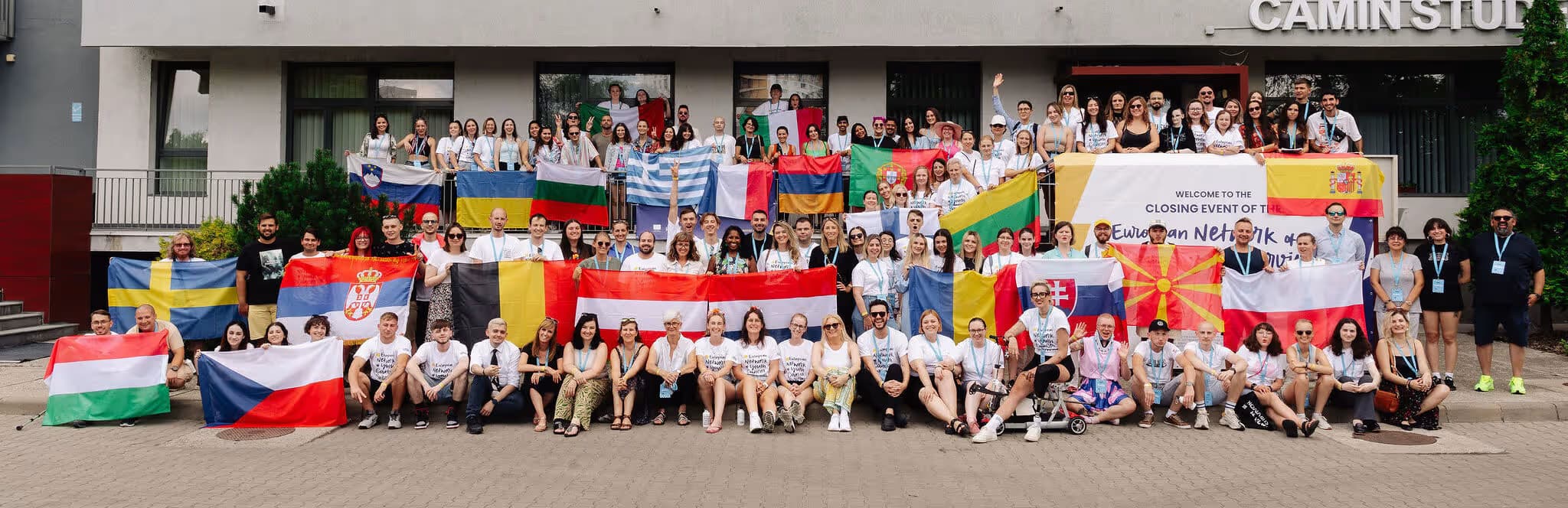
Spanning 25 EU Member States and 3 eligible neighbouring countries, and delivered by 19 Beneficiaries, 1 Affiliated Entity, and 39 Associated Partners, YARN is the largest multi-stakeholder, lived experience-driven effort of its kind in Europe to improve quality of life for children, adolescents, and young adults affected by cancer.
19
Beneficiary Organizations
39
Associated Partners
28
European Countries
By the end of the project, YARN will have:
Trained 100 youth cancer advocates
Reached 50 million people through awareness campaigns
Implemented EDI standards in 10 healthcare institutions and 10 patient organisations
Implemented and evaluated the Transition of Care Guideline in two best-practice centres
Hosted policy events across Europe, including the European Parliament and national governments
Delivered a multilingual digital platform providing high-quality, user-friendly information and resources
The project's legacy will be a stronger, more inclusive system for young people affected by cancer—designed with them, for them.
YARN Project Overview
The European Youth Cancer Network (YARN) is an EU co-funded project bringing together 19 beneficiary organisations and over 40 associated partners across Europe. YARN focuses on peer support, mental health, education and career reintegration, long-term follow-up, and equity in cancer care for children, adolescents, and young adults. At its core is the Youth Cancer Council - a pan-European advisory group of 100 young people with lived cancer experience shaping project decisions and outcomes. The project delivers evidence-based frameworks, digital tools, training programmes, and public awareness campaigns through eight interconnected Work Packages.
Download our comprehensive leaflet to learn more about the YARN project, its objectives, and how it supports young people affected by cancer across Europe.
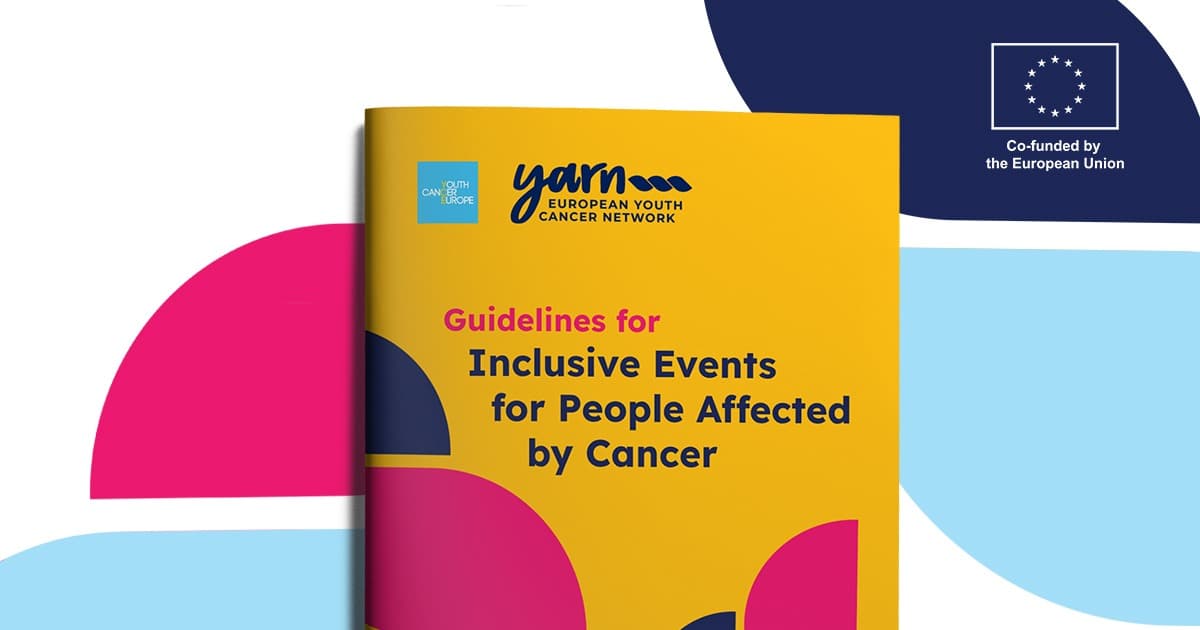
Guidelines for Inclusive Events for People Affected by Cancer
This booklet brings together practical, lived experience-informed recommendations to help patient organisations, healthcare organisations, researchers, public institutions, companies, and anyone organising meetings, workshops, conferences, or other events for people affected by cancer make them more inclusive and accessible.
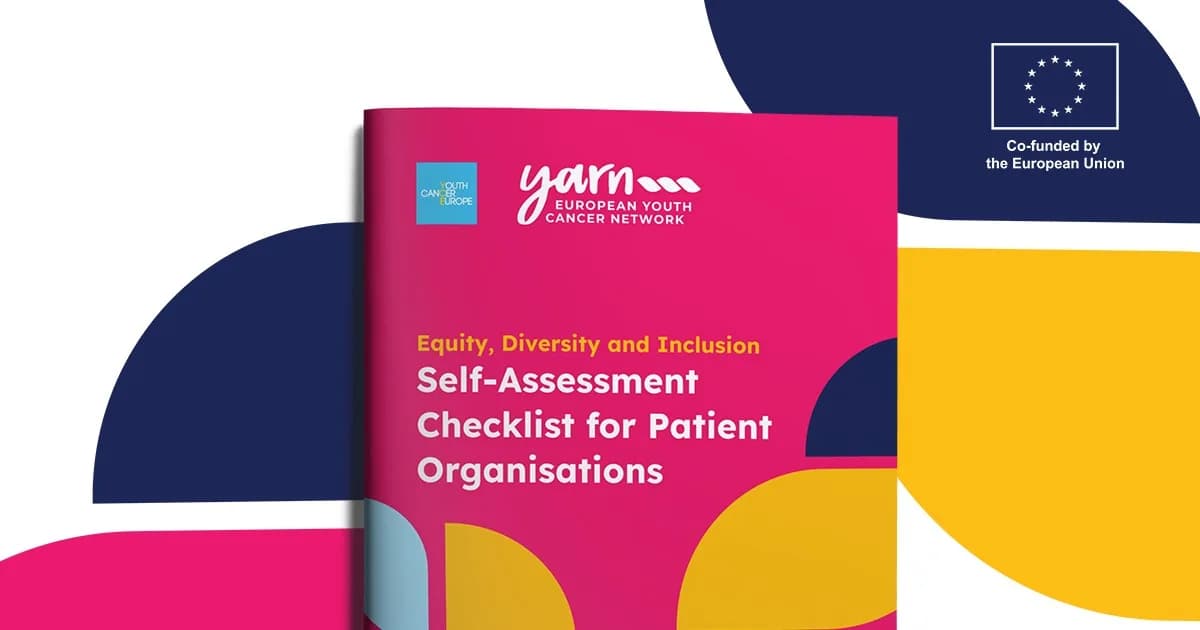
EDI Self-Assessment Checklist for Patient Organisations
Equity, Diversity and Inclusion (EDI) means making sure that people are not excluded or disadvantaged because of factors such as disability, age, gender, language, ethnicity, where they live, or their financial circumstances.
The EDI Self-Assessment Checklist developed by Youth Cancer Europe helps patient organisations reflect on whether people can access, participate in, and benefit from their activities and services equally, and identify practical areas for improvement.
We are grateful to the volunteers and partner organisations (LIGA, UBB, CF IF, UCA, EDS, POLA, PMC, HCS, SKCF, PanCare) who supported the translation of the checklist, helping make this resource accessible to more communities across Europe.
This publication was developed by Youth Cancer Europe within the European Youth Cancer Network project, with input from the Youth Cancer Council, whose lived experience and feedback helped shape this publication.
Its content and framing draw on the Recommendations for Equitable, Diverse and Inclusive Cancer Care and the EDI Train-the-Trainer Toolkit. The checklist is also aligned with the Recommendations and Implementation Roadmap for Minimum Standards of Specialist Adolescent and Young Adult Cancer Care Units, ensuring coherence with broader standards for equitable, person-centred cancer care.
This PanCare PLAIN language brochure (hereafter referred to as summary) is intended for CAYA cancer survivors, their families and caregivers, healthcare professionals seeking to improve long-term follow-up (LTFU) care, and anyone else interested in optimising the organisation of LTFU care. This summary is primarily based on the evidence-based PanCareSurFup guidelines for organisation of LTFU care for CAYA cancer survivors[1].
Why Long-Term Follow-Up (LTFU) Care Matters
About 2 in 3 survivors of childhood, adolescent and young adult (CAYA) cancer experience health issues later in life caused by the cancer or its treatment (called ) [2]. Well structured long-term follow-up (LTFU) care can help detect late effects early and provide treatment and support, if necessary. LTFU care can have a positive impact on the quality of life of CAYA cancer survivors and the health system as a whole.
In many countries in Europe structured LTFU care still needs to be established or improved [3]. This PLAIN summary provides an overview of key elements of LTFU care and how you can get started or improve already existing care.
General recommendations for LTFU care:
All survivors of CAYA cancer should have life-long access to LTFU care.
LTFU care should start no later than 5 years after diagnosis.
All survivors of CAYA cancer should be considered equal partners in decisions regarding their LTFU care.
LTFU care should follow a structured approach and .
LTFU care should cover all domains of life (physical, mental and social wellbeing) and be provided by a multidisciplinary team.
The needs and preferences of survivors and caregivers should be central in decisions about the organisation of LTFU care in their country/region.
What are key elements of the organisation of LTFU care?
The PanCare network formulated for the organisation of LTFU care [1]. These recommendations cover three areas: Structure of care, Personnel involved and Components of care.
Multidisciplinary setting: LTFU care should follow a holistic approach and include different medical specialties. Specific attention should also be given to mental health and psychosocial care and lifestyle advice.
Led by expert centre: There are . No matter which model is or will be implemented in your country, LTFU care should be under the guidance of an expert LTFU care clinic.
Shared-decision making: Survivors and healthcare professionals should work together to make decisions about the best care for the survivor at each stage. Survivors should be supported and empowered to actively shape their LTFU care in partnership with their healthcare professionals.
Systematic commitment to LTFU care: National healthcare systems, health insurers and care providers should be committed to providing LTFU care. This should include sufficient consultation time and coverage of care costs. As healthcare financing varies across Europe, implementation should be adapted to national contexts while ensuring access to LTFU care for all CAYA cancer survivors.
Survivors can choose their healthcare provider: After expert counselling by an LTFU specialist and considering the available options, survivors should be able to choose their healthcare provider. When available, a specialised LTFU care clinic is preferred for health concerns regarding late effects.
One key worker is coordinating the care: A key worker/coordinator should coordinate the care. This responsibility can be assigned to an existing healthcare provider (e.g. nurse practitioner or medical doctor) or established as part of a newly created role. The key worker should also be the first main point of contact for the survivor, if they have questions or concerns related to late effects.
LTFU care teams should include: A key worker/coordinator, a medical doctor specialised in late effects, a nurse practitioner, a and possibly other specialists.
Surveillance of late effects: The main goal of LTFU care is the (early) detection and treatment of late effects that may occur after CAYA cancer. In order to do this, healthcare professionals need to follow.
: It is important that involved healthcare professionals have knowledge and experience of dealing with late effects and cancer survivorship topics.
Education for survivors and their families: As well as expert counselling by an LTFU specialist, survivors and their families should receive and why LTFU care is important for them.
Coordination of research: LTFU care clinics should be involved in scientific research about late effects and LTFU care.
An individualised: LTFU care clinics should provide individualised SCPs for all survivors no later than at entry into LTFU care. An SCP includes a and recommendations for surveillance of potential late effects.
Plan for care transitions: Successful LTFU care involves three key transitions: from active treatment to LTFU care, from a survivorship expert centre to primary care (for low-risk survivors), and from paediatric to adult health services.
What can I do?
In this PLAIN summary, we discussed the importance of LTFU care and key elements of organisation of LTFU care. It can feel overwhelming to read these recommendations, especially if LTFU care in your country still needs to be established or improved. Systemic changes take a long time and are a huge undertaking. However, small steps can already make a difference.
If you are a healthcare professional or a patient advocate and involved in organising or improving LTFU care in your country, you can use the PanCare Implementation Resources to help make changes. You do not have to start from zero – use what is already there!
If you want to get involved in systemic changes in your country, we recommend that you get in touch with national or European organisations (PanCare, SIOP-E, CCI-E and YCE) for healthcare professionals, survivors, caregivers or patients.
If you are a survivor and want to improve your personal LTFU care, you may find it useful to take a look at the resources available onpancare.eu, beatcancer.eu and the OACCUs Toolbox. If you do not have a yet, it may also be helpful to ask your LTFU care clinic, if available, to provide one to you.
Where can I find more information?
You can use the resources linked below to explore further information and additional materials on the organisation of LTFU care:
Implementing Survivorship Care (PanCare) – Materials that can be used for the implementation of LTFU care in your country/clinic. Among other resources, this includes:
PanCare LTFU Guidelines for Surveillance of Late Effects – Annually updated evidence-based and consensus-based guidelines for surveillance of late effects after CAYA cancer
PanCare PLAIN language summaries – Annually updated information about late effects and LTFU care in lay-language for survivors, families and non-specialist healthcare providers
[1] Michel G et al. Evidence-based recommendations for the organization of long-term follow-up care for childhood and adolescent cancer survivors: a report from the PanCareSurFup Guidelines Working Group. Journal of Cancer Survivorship. 2019;13(5):759-772. doi: https://doi.org/10.1007/s11764-019-00795-5
[2] Hudson M et al. Long-term Follow-up Care for Childhood, Adolescent, and Young Adult Cancer Survivors. Pediatrics. 2021;148(3). doi: https://doi.org/10.1542/peds.2021-053127
[3] Essig S et al. Follow-Up Programs for Childhood Cancer Survivors in Europe: A Questionnaire Survey. PLoS One. 2012;7(12):e53201. doi: https://doi.org/10.1371/journal.pone.0053201
Materials about Transition and Long-Term Follow-Up Care
About the PanCare Survivorship Care Plan (SCP)
The PanCare Survivorship Care Plan (SCP) is a personalized document for childhood and adolescent cancer survivors. It provides a summary of treatment received and tailored recommendations for long-term follow-up care and healthy living. The SCP is designed to help you better understand and manage your long-term health and to support communication with healthcare professionals.
The PanCare Transition of Care Plan is designed to support survivors through key moments in their healthcare journey after pediatric or young adult cancer. It provides survivors with a clear overview of the entire transition process and offers a structured, step-by-step, personalized guide with topics for discussion.
Click on countries to explore our beneficiary partners across Europe
European Youth Cancer Network
Explore our network across Europe - beneficiary organizations implementing YARN and associated partners collaborating to strengthen youth cancer support
Beneficiary Countries
Associated Partners
Beneficiary & Associated
Other Countries
Network Overview
Beneficiary Organizations:19
Associated Partners:39
European Countries:28
Our Beneficiary Partners
Organizations directly implementing YARN across Europe
YARN builds upon the foundation laid by EU-CAYAS-NET, the European project that created the beatcancer.eu platform and established the European Network of Youth Cancer Survivors. Learn more about this pioneering initiative that brought together organizations across 18 European countries.
OACCUs was an EU-funded project (2021-2024) that brought together fourteen partners from six EU member states to develop an EU-wide network for young cancer survivors, focusing on quality of life through healthy lifestyle and peer connection.
Be part of a community-driven network that empowers young people with lived cancer experience across Europe. Connect with peers, access user-friendly resources, participate in communication campaigns and events, and help shape the future of cancer care for young people.