

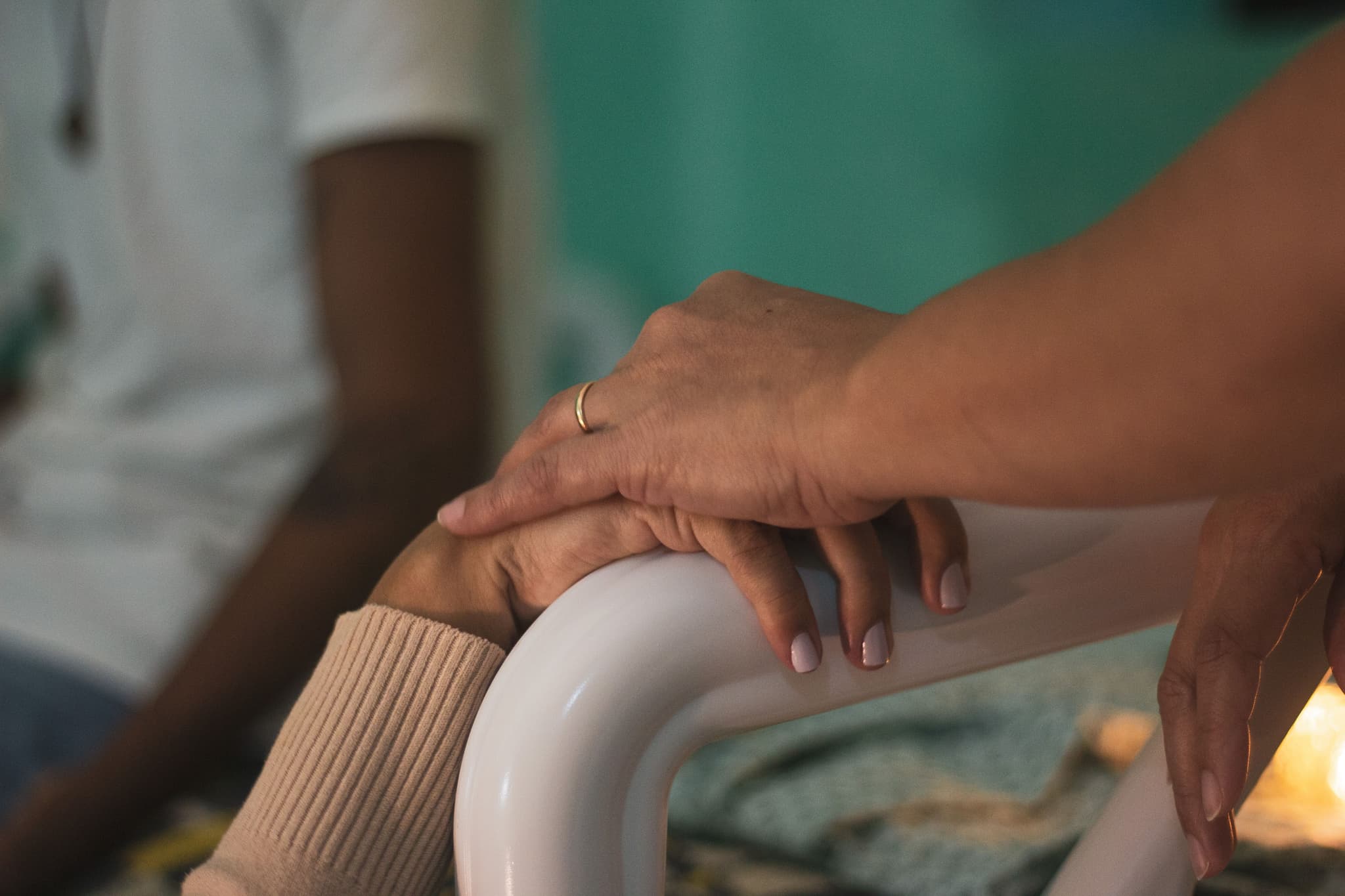
If your oncologist mentioned "palliative care" or "hospice" and your stomach dropped, take a breath. You're in the right place, and asking what these words mean is one of the smartest, most loving things you can do right now — for yourself or for someone you love.
That initial fear, confusion, or sense of being overwhelmed is incredibly common, and Emotional Stages of a Cancer Diagnosis: What to Expect explains why these reactions are a normal part of processing difficult medical news.
Here's the short version before anything else: when people compare palliative care vs hospice, the real difference comes down to timing. Palliative care can start at any stage of a serious illness, even the day you're diagnosed, and it can run right alongside treatment meant to cure or control your cancer. Hospice care is for the final months of life, when the goal shifts fully to comfort. That's it. Everything else in this article just unpacks that one idea so you can walk back into that doctor's office knowing exactly what you're being offered.
Key Takeaways
- Palliative care can begin at any stage of a serious illness — even right after diagnosis — and it works alongside treatments like chemotherapy, not instead of them.
- Hospice care is a specific type of palliative care for people whose doctor estimates six months or less to live, when curative treatment has stopped.
- Palliative care does not mean you are dying. It means you're getting an extra layer of support to feel better and live as fully as possible.
- The two differ mainly on timing, treatment goals, eligibility, who pays, and how long they last.
- Research links early palliative care to better quality of life, fewer hospital stays, and — in some cancers — even longer survival.
- Asking your oncologist about either option is proactive, not premature. It won't change how hard your team fights for you.
The One-Sentence Answer: Palliative Care vs Hospice
Most articles bury this under three paragraphs of jargon. We're not going to do that to you.
Palliative care is specialized support for symptoms, stress, and quality of life that can be given at any stage of a serious illness, alongside treatment aimed at curing or controlling it. Hospice care is comfort-focused care for the last six months of life, after curative treatment has stopped.
Read that twice if you need to. The thing to hold onto is the timing. Palliative care is something you can have while you're still fighting the illness. Hospice is for when fighting the illness is no longer the goal, and comfort becomes everything.
There's one more sentence worth memorizing, because it clears up almost every bit of confusion people have: all hospice care is palliative, but not all palliative care is hospice. Hospice is one room inside the larger house of palliative care — the room you only enter near the end. Plenty of people receive palliative care for years and never set foot in it.
What Is Palliative Care for Cancer?
So what is palliative cancer care, exactly? It's an added layer of support, delivered by a specialized team, that focuses on how you feel and live while your oncology team focuses on treating the cancer itself.
It is not a replacement for your cancer treatment. It runs in parallel. You can be on your second round of chemotherapy and seeing a palliative care nurse the same week — the two teams talk to each other, and both are working for you.
Palliative care is for any age and any stage. You don't have to be advanced, terminal, or out of options to qualify. In fact, the people who benefit most are often those who start it early, while they're still deep in active treatment.
What palliative care actually helps with
This is where it stops being abstract. Palliative care helps manage the things that make serious illness so exhausting:
- Physical symptoms: pain, nausea, fatigue, shortness of breath, appetite loss, and constipation.
- Treatment side effects: the misery that chemo, radiation, and surgery can bring.
- Emotional weight: anxiety, depression, fear, and the sheer mental load of being sick.
- The logistics: coordinating appointments, explaining your options in plain language, and helping you and your family make decisions.
Here's a real example of how quietly useful it is. A woman in chemotherapy develops anemia and crushing fatigue. Her palliative care specialist arranges a blood transfusion to manage it. Her energy returns enough that she can stay on her chemotherapy schedule instead of pausing it. Treating that fatigue was palliative care — and it helped her keep going, not stop.
Who's on a palliative care team
You're not handed off to one stranger. Palliative care is interdisciplinary, which is a clinical way of saying "a whole team shows up for you." That usually includes:
- Palliative care doctors and nurses who specialize in symptom relief
- Social workers who help with practical and emotional needs
- Dietitians, chaplains, and counselors as needed
Most often your oncologist makes the referral. But if no one has offered it and you think it might help, you are completely within your rights to ask for one.


What Is Hospice Care?
Hospice care is comfort-focused care for the final stage of a serious illness — the point where curative treatment is no longer working, or where its burdens have come to outweigh its benefits, or where someone simply decides they no longer want to pursue it.
The goal here shifts. Instead of trying to cure or slow the disease, the entire focus becomes comfort, dignity, and quality of time. That includes the patient and the family — hospice wraps support around everyone, not just the person who's ill.
And it's not a place so much as an approach. Most hospice care happens at home, where people most often want to be, surrounded by the people they love. It can also be provided in nursing homes, hospitals, or dedicated hospice centers when that's what someone needs.
The six-month prognosis rule, explained simply
You've probably heard the "six months" figure. Here's what it really means: to qualify for hospice, a doctor generally has to estimate that a person has six months or less to live if the illness follows its usual course.
Notice the word estimate. This is not a countdown clock, and it is not a deadline. Doctors are honest about how hard it is to predict how long a seriously ill person will live.
Two things people rarely get told, and both are reassuring. First, plenty of people live longer than six months and simply stay enrolled — as long as the doctor keeps certifying they're eligible, the care continues. Second, hospice is not a one-way door. You can leave hospice if your condition improves or if you decide you want to try treatment again, and you can return later. People do exactly this.
What hospice includes
Hospice is comprehensive, and in many places much of it comes at little or no extra cost to the family. It typically covers:
- Regular nursing visits and expert pain and symptom management
- Medications and equipment related to the illness (a hospital bed, wheelchair, oxygen)
- A 24/7 phone line so you're never alone with a crisis at 3 a.m.
- Coaching for family caregivers on how to care for their loved one
- Spiritual support and counseling
- Bereavement support for the family after a death
Side-by-Side: Palliative Care vs Hospice Comparison
Sometimes you just need to see it laid out. Here's how the two compare across the dimensions that matter most.
| Palliative care | Hospice |
|---|---|
| Main goal | Relieve symptoms and improve quality of life |
| Eligibility | Any serious illness, any stage, any age |
| Keep treating the cancer? | Yes — runs alongside chemo, radiation, surgery |
| What's included | Symptom management, counseling, care coordination |
| Where it happens | Home, hospital, clinic, nursing home |
| Care team | Doctors, nurses, social workers, chaplains |
| Who pays | Varies by plan; some out-of-pocket costs |
| How long | As long as you need it |
The two biggest practical differences are right there in the top rows: when the care starts, and whether you keep treating the disease. Hold onto those two and the rest falls into place.
Does Palliative Care Mean Dying? (No — Here's Why)
Let's name the fear directly, because almost everyone has it: no, palliative care does not mean you're dying.
I understand exactly why people believe it does. The words "palliative" and "hospice" get used interchangeably in casual conversation, and palliative care is too often introduced late — sometimes only when things are already grim. So people connect the dots and assume the dots mean the end. They don't.
Palliative care is an added layer of support. It's there to make you more comfortable and your life more livable while your medical team treats your illness. Accepting it doesn't change your prognosis, doesn't signal that your doctors have given up, and doesn't mean you have.
We've sat with many people who refused palliative care for months because they thought saying yes meant surrendering. It doesn't. There's no surrender here — there's just more support. Choosing comfort and choosing to keep going are not opposites. You're allowed to want both.
Why Starting Palliative Care Early Matters
This is the part the subtitle is about — the "now, not later."
For a long time, palliative care was treated as a last resort, something you called in once everything else had failed. That thinking has changed, and the research is the reason why.
A landmark study of patients with metastatic lung cancer found that those who received palliative care early — right alongside their standard cancer treatment — reported better quality of life and less depression than those who didn't. Remarkably, they also lived longer on average, even though they often chose less aggressive treatment near the end. Studies since then have echoed the pattern across several serious illnesses: better symptom control, fewer unnecessary hospital trips, and care that lines up more closely with what patients actually want.
The takeaway isn't that palliative care is a treatment for cancer — it isn't, and you should always talk through specifics with your own care team. The takeaway is that waiting until you're desperate may mean missing the window where this support does the most good. Earlier tends to be better.
When Is Palliative Care Recommended?
People often ask when palliative care is recommended, expecting the answer to be some dire milestone. It usually isn't. Here are the common, entirely normal moments it gets offered:
- At or shortly after diagnosis of a serious or advanced illness
- When symptoms or side effects are hard to control and starting to wear you down
- During demanding treatment, to keep you strong enough to continue it
- When you or your family need help weighing options, planning, or coordinating care
If your oncologist recommends it, try not to read it as a warning. More and more, it's simply considered good, standard care for anyone living with a serious illness. Being offered support is not the same as being out of time.
When Does Hospice Become the Right Choice?
This is a harder, more personal turn, and there's no formula for it. But there are signs that a shift toward hospice may be worth discussing with your care team:
Curative treatment has stopped working, or the side effects have come to cost more than the treatment gives back. Hospital and ER visits are becoming more frequent. Or — and this one matters as much as the medical signs — the person's own priorities have quietly shifted toward comfort, presence, and time at home rather than more procedures.
Choosing hospice is a decision you make with your team and your family, not a verdict handed down to you. And remember what we said earlier: it's reversible. Saying yes to hospice now doesn't lock you in forever.
A short checklist for thinking it through
These aren't questions with a "right" answer or a score. They're just things worth sitting with, honestly, when the time comes:
- What matters most right now — more treatment, or more comfortable time?
- Where does this person want to be? Home? Somewhere else?
- Are the current treatments helping more than they're hurting?
- Has the person told me, in words or in actions, what they want?
If you're unsure, that's normal. Bring these questions to your care team and let them help you think it through.
Who Pays for Palliative Care vs Hospice?
Here's where most articles wave their hands and say "insurance may cover it." You deserve more specifics than that.
Hospice is broadly covered. In the United States, the great majority of hospice care is paid through the Medicare hospice benefit, which covers nursing, medications related to the illness, medical equipment, and support services — often at little to no out-of-pocket cost. Medicaid and many private plans cover hospice too.
Palliative care coverage is more of a patchwork. Because palliative care happens alongside regular treatment, its pieces get billed like other medical care — so office visits, consultations, and prescriptions may carry copays or out-of-pocket costs depending on your plan. It's worth asking specifically what your insurer covers before you assume anything.
One detail to know: when you elect the hospice benefit, it changes how your other care is billed, since the focus moves away from curative treatment. Veterans may have specific pathways, and Medicaid recipients have their own routes. The honest bottom line is that coverage varies by country, plan, and situation — so confirm the details with your own insurer and care team rather than guessing.
How to Ask Your Oncologist About Palliative Care or Hospice
You don't need perfect words. You just need to start the conversation, and starting it is a sign of strength, not defeat.
Here's the reassurance worth repeating: raising either topic will not change how your oncologist treats your cancer. They won't pull back. Asking about comfort does not signal that you're quitting on the treatment.
Try opening with something simple and specific:
- "Could palliative care help me manage these side effects?"
- "What would palliative care look like alongside my current treatment?"
- "I want to understand all my options — can we talk about what's ahead?"
- "If treatment stops working, how would we know it might be time for hospice?"
Bring a family member or caregiver if you can. Bring a written list of your hardest symptoms. And give yourself permission to take the information home and think — you don't have to decide anything in the room.
Do's and Don'ts for the conversation
| ✓ Do | ✗ Don't |
|---|---|
| Ask early — even right after diagnosis | Wait for a crisis to bring it up |
| Bring a list of your hardest symptoms | Assume palliative care means stopping treatment |
| Bring a family member or caregiver | Feel you have to decide on the spot |
| Ask exactly what your insurance covers | Confuse "palliative" with "hospice" |
| Write down your questions beforehand | Stay quiet because you're afraid of the answer |

Frequently Asked Questions
Is palliative care the same as end-of-life care?
No. Palliative care can be given at any stage of a serious illness, including alongside treatment meant to cure it. End-of-life care is just one part of what palliative care can include, much later on.
Can I keep getting chemotherapy during palliative care?
Yes. That's the whole point — palliative care runs alongside your cancer treatment to help you tolerate it and feel better while you receive it.
What are the signs it's time for hospice?
When curative treatment is no longer working or its burdens outweigh its benefits, when hospital visits keep increasing, or when comfort and time at home have become the priority. It's a conversation to have with your care team.
Can you leave hospice and go back to treatment?
Yes. Hospice is not permanent. If your condition improves or you choose to pursue treatment again, you can leave — and return later if you become eligible again.
Does palliative care mean I'm dying?
No. It means you're getting extra support to manage symptoms and live better, at any stage of your illness.
Who pays for each?
Hospice is largely covered, mostly through the Medicare hospice benefit in the U.S. Palliative care coverage varies more by plan and may involve some out-of-pocket costs.
Is hospice only for the last few days of life?
No, and waiting that long is a common mistake. Hospice is designed to support people for the final months, and starting earlier often means more meaningful, comfortable time.
A Calm, Clear Path Forward
One more time, because it's worth carrying with you: palliative care can start at any stage and works alongside treatment, while hospice is comfort care for the final months once treatment stops. That single distinction is the heart of the whole palliative care vs hospice question.
The most useful next step isn't a big decision — it's one honest conversation with your care team about what you're feeling, what you're afraid of, and what matters most to you right now. Today, not "later." That conversation tends to give people something they were missing: a sense of control, and a little more room to breathe.
You don't have to navigate this alone, either. Connecting with others who are walking the same road — through support communities and trusted resources — can make a heavy season lighter. Understanding these two words was the hard part, and you've already done it.
If you're looking for people who understand what you're going through, you're welcome to join the Beat Cancer Discord community — a supportive space where you can connect with others navigating the same emotions, share your experience, and know that you're not carrying this alone.
Medical disclaimer: This article is for educational purposes only and is not medical advice. Eligibility, insurance coverage, and clinical recommendations vary by country, insurer, and individual circumstances. Please consult your own physician and care team for guidance specific to your situation.
This article provides informational support only and is not a substitute for professional medical advice, diagnosis, or treatment. Always consult your healthcare provider for medical decisions.

This content was created during the YARN project, co-funded under the EU4Health Programme in 2025-2028 (Grant Agreement No. 101219053).