
Key Takeaways
- A prayer chain is a coordinated group of people who commit to pray for a specific person or need. For someone facing cancer, it becomes a lifeline of spiritual and emotional support that stretches well past the first hard week.
- Always ask the patient first. What to share, who to include, and how often to send updates are their decisions, not yours.
- Modern chains don't need a phone tree. Texts, WhatsApp, email, and dedicated apps like Prayer Mate or Echo Prayer make coordination straightforward.
- Healthy chains have one coordinator, a clear rhythm, and a long-haul plan. Cancer treatment is measured in months and years, not weeks.
- Mixed-faith and non-religious loved ones belong too. Reframe it as a "circle of support" and let each person contribute in their own way.
- Copy-paste templates are included below. You shouldn't have to write from scratch during one of the hardest seasons of your life.
Your phone buzzes with news you weren't ready for. A diagnosis. Someone you love, a sibling or a parent or your closest friend, has cancer, and in the space of a single sentence the map of your life changes. Now you're trying to figure out how to help while your own heart is still catching up.
One of the most meaningful things you can organise, right now, is a prayer chain. Spiritual and religious support is one of the recognised dimensions of psychosocial care in oncology, and reviews of the research consistently link it with better quality of life, reduced distress, and stronger coping for people going through cancer [1]. A chain of prayer is a simple but powerful structure: a group of people who commit to pray for your person over the weeks and months ahead, carried along by a coordinator who keeps everyone gently informed.
This guide walks you through exactly how to set one up. Consent conversations. Tools. Templates you can copy. How to keep the chain going when treatment stretches into its second, third, or fifth month. You don't need to be a pastor. You don't need to be the most religious person in the family. You just need to be willing to organise the love that's already there.
What Is a Prayer Chain and How Does It Work?
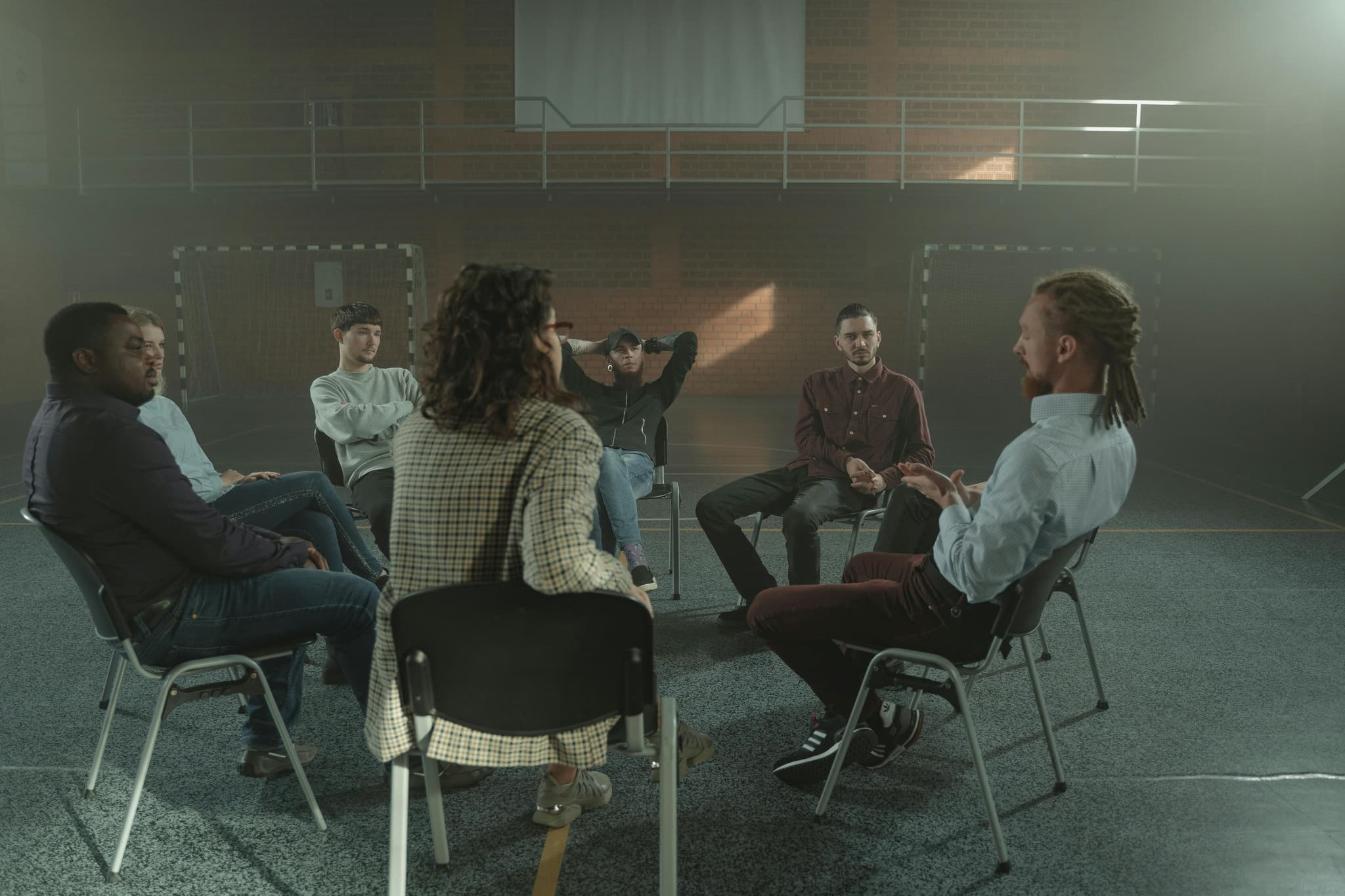
A prayer chain is a group of people who agree to pray for a specific person or need, passing requests along so that prayer happens quickly and continues over time. When someone you love is diagnosed with cancer, a prayer chain becomes one of the most practical forms of community care you can organise. It mobilises dozens of people around one person, keeps them informed through treatment, and holds the patient in steady, collective attention for as long as they need it.
The word "chain" here is about connection, not superstition. Each person is a link. The strength comes from sustained collective intention over time, not from hitting some magic number of participants or forwarding a message within 24 hours.
You may have seen two things that look similar to a prayer chain but aren't. The first is the forwarded chain prayer, those "send this to 12 people or something bad will happen" messages that land in your inbox. Those are superstitious chain letters dressed up in religious language, and they have nothing to do with what we're talking about. The second is the UCKG-style chain of prayer, a personal devotional practice of attending prayer services for consecutive weeks. That's a different thing entirely.
This guide is about the third and most common meaning: an organised group of people praying for someone going through cancer treatment.
Two groups make a prayer chain work. There's the inner circle (family, close friends, maybe a pastor or chaplain) who will organise and coordinate. And there's the wider community (church members, coworkers, extended family, small groups, online friends) who will participate. Your job as organiser is logistics, privacy, and consistency. Their job is to show up and pray when you ask.
What a prayer chain is not: It's not a gossip channel. It's not a guarantee of a specific outcome. It's not a replacement for practical help like meals, rides, or childcare. And it's definitely not permission to broadcast someone's diagnosis without asking them first.
Getting the Patient's Consent and Preferences First
This is the section most articles skip, and it's the one that matters most. Nothing else in this guide works if you get this part wrong.
Health information is deeply personal, and European law is unusually clear about how sensitive it is.
Under the EU General Data Protection Regulation (GDPR), information about a person's physical or mental health falls into a special category of personal data, and sharing it requires the person's explicit consent [2]. The regulation is written for organisations rather than for a family group chat, but the underlying principle applies just as directly to a prayer chain: health information belongs to the patient, and it moves only where they've said it can.
Well-meaning prayer chains have caused real harm. Patients have had diagnoses reach their employers through leaky prayer networks. People have been outed to estranged family members they weren't ready to tell. Intimate medical details have been discussed in parking lots after church. The intentions were good. The execution wasn't. Before you send a single message, you need an explicit conversation with the patient.
If you sit down with your loved one, four questions cover almost everything:
- What can we share? Just "please pray for them," or the specific diagnosis, stage, treatment plan, and test results?
- Who should be included? Immediate family only, close friends, the whole congregation, coworkers, social media?
- Who should not be included? Any specific names to exclude: an ex, an estranged parent, a gossipy aunt, a boss who doesn't need to know yet?
- How often do you want updates sent out? Weekly? Only around scans and major treatment dates? Only when the patient specifically asks?
Write the answers down. Memory is unreliable during crisis weeks, and you want something to refer back to when you're tempted to share "just a little more" during a hard moment.
| ✓ DO | ✗ DON'T |
|---|---|
| Ask the patient to approve the exact wording before you send anything. | Assume "they'd want people praying" without asking first. |
| Let the patient set their own privacy level, even if it feels too restrictive to you. | Share lab results, scan findings, or prognosis without explicit permission. |
| Offer an easy way for the patient to pause or change what goes out. | Post the diagnosis on social media "to reach more people" without asking. |
| Re-check consent at major treatment transitions such as surgery, recurrence, or a move to palliative care. | Mention the patient's condition to anyone who isn't on the approved list. |
If the patient is too unwell or too overwhelmed to answer these questions, their designated health proxy or closest family member speaks for them. The principle doesn't change. Ask first. Share later. When in doubt, share less.

How to Organise Your Prayer Chain: Step-by-Step
Here's the practical sequence. If you do these seven things in order, you'll have a functional prayer chain up and running within 48 hours.
Step 1: Choose One Coordinator
Every prayer chain needs one person who receives updates from the patient, decides what goes out, and sends the messages. That's it. Trying to run a prayer chain by committee slows everything down and multiplies the risk of a consent slip.
The right coordinator is organised, discreet, available (meaning they check their phone regularly), and close enough to the patient to make judgment calls without being so enmeshed in the crisis that they're too emotionally overwhelmed to function. Often this is a sibling, a best friend, or an adult child rather than the spouse, who usually has their hands full just being at appointments.
Step 2: Pick Your Communication Channel
The right channel depends on your group's age, tech comfort, and size. A group of 25 thirty-somethings might thrive on WhatsApp. Your grandma's parish circle probably needs email. A mixed group might need two channels running in parallel.
A full comparison is in the next section, but the short answer: pick the channel most people will actually check, not the one you think is most sophisticated.
Step 3: Build Your List
Start with the people the patient specifically named. Then add close family and friends, the patient's small group or parish circle, close coworkers (only if the patient okayed it), and online community if relevant.
Aim for 20 to 50 people as a starting size. That's enough for real coverage during long treatment, and small enough that everyone stays connected to the actual human being at the centre rather than a prayer request floating in the abstract. Bigger isn't always better. A chain of 200 strangers is often less powerful than a chain of 30 people who love the patient by name.
Step 4: Send the Invitation
Don't drop people into a prayer chain without asking. Send a clear invitation that explains the commitment, names the patient (with permission), and gives an easy way to decline. Template coming up in the samples section.
Step 5: Set a Communication Rhythm
A weekly update, plus ad-hoc messages around big moments like scans, surgery, hospital admissions, and results, works for most situations. Avoid both extremes: silence for three weeks makes the chain fade, while five messages a day makes people mute the thread.
Step 6: Establish a Response Norm
Decide upfront whether you want replies (quick "Praying" confirmations) or whether messages are one-way broadcasts. Both are fine. What matters is that everyone knows the norm, so quiet participants don't feel guilty for not replying and chatty ones don't flood the channel with their own updates.
Step 7: Plan for the Long Haul
Cancer treatment often lasts 6 to 18 months, sometimes more. Design the chain to last. Name a backup coordinator from day one. Plan to refresh the list around the three-month mark. Commit to sending a "we're still here" message during the quiet stretches when nothing dramatic is happening but the patient still needs support.
Quick-Reference Checklist: 7 Steps to Start a Prayer Chain
- Choose one coordinator.
- Pick your communication channel.
- Build your list (aim for 20 to 50 people).
- Send a clear invitation.
- Set a communication rhythm.
- Establish a response norm.
- Plan for the long haul: backup coordinator and a 3-month list refresh.
Tools and Apps That Make It Easier
Most articles stop at "email or text." You deserve a bit more than that. Here's an honest comparison of what's actually out there:
| Tool | Best for | Pros | Cons |
|---|---|---|---|
| Group text (SMS/iMessage) | Small groups under 20, immediate family | Everyone already has it; instant; good for urgent messages | Most carriers cap at 20; no threading; accidental "reply all" risk |
| WhatsApp or Signal group | Medium groups, international reach | Free; end-to-end encrypted; threaded replies; easy media sharing | Requires the app; older participants may not use it |
| Email list or Google Group | Large groups, detailed updates | No size cap; long-form works; searchable archive | Slower; can land in spam; people check less often |
| Facebook private group | Wider church or community circles | Built-in community feel; photo and video sharing | Privacy concerns; algorithmic feed |
| Prayer Mate (app) | Structured personal prayer | Organized lists; reminders; no social clutter | Learning curve; not everyone will install |
| Echo Prayer (app) | Church-wide coordination | Request management; push notifications; shared lists | Works best when the whole church adopts it |
| CaringBridge | Medical updates and prayer together | Purpose-built for illness; centralized journal; strong privacy | One-way broadcast rather than back-and-forth |
For most cancer patients, the strongest combination is a WhatsApp group of 20 to 40 close people (for the immediate prayer chain) paired with a CaringBridge journal (for the wider circle who want updates but don't need to be in the core chain). The WhatsApp group handles the intimate, rapid communication. CaringBridge handles the broadcast to extended family and colleagues.
The best tool is the one the group will actually use. A sophisticated app no one opens is worse than a simple group text everyone reads.
Sample Messages and Prayer Request Templates
Copy these. Adapt them. You shouldn't be writing from a blank page in the middle of a crisis week.
Template 1: The Invitation Message
Invitation (send when first building the chain)
Hi. I'm reaching out because [Patient's first name] was recently diagnosed with cancer and has asked a small group of people to pray for them during treatment. I'm helping coordinate.
If you're open to being part of this, I'll send updates roughly once a week plus short messages before scans, surgery, or hard days. No pressure to reply to each message. Just to hold [Patient] in your prayers when you can.
If this isn't the right season for you, just let me know and I'll take you off the list, no explanation needed. If you're in, reply "in" and I'll add you to the group.
Template 2: The First Update
First update (sent after everyone has confirmed they're in)
Thank you all for being part of this. [Patient] asked me to share a few specific things to pray for this week:
- Clear results on Tuesday's biopsy.
- Strength for [spouse/parent/caregiver] as they manage appointments.
- Peace at night. Sleep has been hard.
I'll send the next update on Sunday unless something comes up sooner. Thank you for walking this with us.
Notice how specific those prayers are. "Pray for clear scan results on Tuesday" lands harder than "pray for healing." Specifics help your people actually pray, and they help the patient feel seen in the particulars of what they're going through.
Template 3: The Scan or Surgery Day Message
Morning of a big day
Quick note. [Patient] goes in for surgery at 7am tomorrow (Thursday). Please pray for:
- Steady hands and focus for the surgical team.
- That the operation goes smoothly, with no complications.
- Calm and peace for [Patient] as they head into surgery.
I'll send an update as soon as we know how it went. Thank you.
And the follow-up, in two versions:
Good news follow-up
Surgery went well. The surgeon was pleased with how it went and said it looks like they were able to remove everything they needed to. We'll know more once the full lab results come back next week. [Patient] is in recovery and comfortable. Thank you for every single prayer today. We felt them.
Hard news follow-up
The surgery was more complicated than we hoped. [Share only what the patient has okayed you to share.] [Patient] is stable and resting. The next step is [X]. We really need your prayers right now. Please keep praying. I'll update again once we know more.
Template 4: The "We're Still Here" Message
Sent during the long quiet middle of treatment
I know it's been quiet from me. [Patient] is in the middle stretch of treatment where nothing dramatic is happening but the grind is real. Chemo round 4 is next Friday.
If you're still praying, thank you. This is the part that's hardest to sustain, and it matters more than any of us realise. Please keep praying for endurance: [Patient]'s, and [caregiver]'s, and honestly mine too.
This is the message people forget to send. The chain goes quiet because nothing newsworthy is happening, and then participants drift away because they assume things must be fine. They're usually not fine. They're just not dramatic.
What to Say and What Not to Say
A few principles from oncology chaplains and patients themselves. Avoid "God has a plan" language unless you know the patient's theology. Don't turn updates into mini-sermons. Skip comparisons to other cancer stories, especially ones that ended badly. Never promise outcomes. Keep messages focused on the patient's own words and their specific asks, not your interpretation of what they must be going through.
Keeping the Prayer Chain Going During Long Treatments
Most prayer chains die somewhere around week six. Not from malice, from attention fatigue. The white-hot concern of diagnosis week fades, life reasserts itself, and the patient is still there, still in treatment, still needing support. Building a chain that survives that fade is the single hardest part of this work.
The pattern shows up in the research, too. In a UK cohort study following patients treated for colorectal cancer, around 29% experienced a measurable decline in perceived social support during the two years after diagnosis, and lower support was linked with poorer wellbeing, anxiety, and depression [3]. Attention fades faster than treatment ends. That's what a well-run chain has to push back against.
Three tactics that actually work:
- Rotate the ask. Same person, different prayer focus each week. This week, pray for the patient's spouse. Next week, their kids. The week after, their oncologist. The week after that, their mental health. This keeps participants engaged and surfaces needs the patient might not articulate out loud.
- Mark the milestones. Chemo round four complete. Halfway through radiation. First clear scan. End of active treatment. These become rallying moments that re-energise the chain. Send a message. Name what you're celebrating. Let people feel the progress they've been part of.
- Name the hard middle out loud. Between diagnosis (intense) and end of treatment (cathartic) is a long middle stretch of scans-and-waiting that drains everyone. A message that simply says "This is the hard middle. We're all tired. Thank you for staying" is often more valuable than another prayer request. It tells participants that what they're feeling, the fatigue and the sense that they should be doing more, is normal.
One more thing: plan for coordinator burnout. The person running a prayer chain is often also driving the patient to appointments, wrangling insurance, or parenting alone while a spouse recovers. European data on informal cancer carers backs this up. A five-country survey (France, Germany, Italy, Spain, and the UK) found substantial impact on carers' quality of life, work productivity, and mental health compared with non-carers [4]. Build in a co-coordinator from day one, or designate a backup who can take over for two to four weeks when you need to step back.
And if you as the coordinator are finding you have no one to lean on, our guide on Cancer Support Groups: How They Help and How to Find One covers formats designed for family members and carers, not just patients. Some of the strongest support networks for people in your role are the ones you don't have to invent from scratch.
Including People of Different Faiths (or No Faith)
Most cancer patients have loved ones across a range of beliefs. A Catholic grandmother. An evangelical sister. A Buddhist best friend. An atheist colleague. A Jewish neighbour. Someone who's spiritual but not religious. All of them want to help. Many articles on prayer chains pretend this reality doesn't exist. Let's not.
A small shift in language does most of the work. Call it a circle of support in your external messaging, with prayer as one form of contribution among several. This doesn't water down the patient's own faith. It respects the breadth of the support network and meets each person where they are.
Offer a menu people can choose from:
- Prayer in the tradition of their choice, whether Christian, Jewish, Muslim, Hindu, Buddhist, or interfaith.
- Meditation or sitting in silence with the patient in mind at a set time.
- Lighting a candle, keeping a photo on an altar, or visiting a sacred site.
- Sending a direct message of encouragement to the patient.
- Practical support such as meals, rides, childcare, or a handwritten note.
- Simply holding the patient in their thoughts at a set moment each week.
For concrete ideas on the practical side, our guide on What to Put in a Cancer Care Package: Thoughtful Ideas That Actually Help walks through what actually helps at each stage of treatment, from chemo comfort items to what to skip, so people who want to "do something" have a clear place to start.
Here's a single opening line that invites everyone in without excluding or presuming:
"However you pray, meditate, or hold hope for someone, we'd love you to do that for [Patient] on a regular basis."
That sentence lets a grandmother pray a rosary, a Buddhist friend light incense, and a secular colleague pause at their desk on a Friday afternoon, all under the same umbrella.
A note on mixed-faith family dynamics: the patient's own tradition sets the tone for explicitly religious moments (bedside prayers, chaplain visits, liturgical language). The outer circle of support can be as wide as the patient wants it to be. When in doubt, the answer is the same as in the consent section: what does the patient want?
What to Do When Prayer Requests Feel Overwhelming
This one is for the participants, not just the coordinator.
Sometimes a prayer chain turns into an emotional firehose. The updates are relentless, the news is hard, and you're starting to feel like you can't carry it. This is especially true if you yourself are dealing with illness, grief, or burnout. If that's you, read this carefully: feeling overwhelmed doesn't mean you're failing at prayer.
Four permissions:
- You don't have to read every message the moment it arrives. Batch-reading on a set day (Sunday afternoon, say) is completely legitimate.
- You can pray in thirty seconds. A single sentence counts. Length isn't the metric. "God, be with [Patient] today" is a real prayer.
- You can step back temporarily without leaving the chain entirely. Tell the coordinator you need a pause. They'll understand. You can rejoin anytime.
- You can grieve the hard updates without it meaning your faith is failing. Sitting with difficulty, feeling it and letting it move through you, is itself a form of prayer in most traditions.
A note to coordinators: build in an occasional "this is heavy, thank you for staying" message every few months. The people praying need care too.
Frequently Asked Questions
How many people do I need to start a prayer chain?
You don't need a specific number. Even a handful of committed people works. Most effective chains land between 20 and 50 participants, which is big enough for coverage during long treatment and small enough that everyone stays connected to the patient as a real person rather than an abstract request.
Do I need to be religious to organise a prayer chain for someone?
No. Plenty of people organise prayer chains for religious loved ones without sharing that faith themselves. Your job as coordinator is logistics, consent, and consistency. The participants bring the prayer.
Is it okay to ask people to pray without telling them the person has cancer?
Yes, and it's often the right call. "Please pray for [name], they're going through something hard and have asked for prayer" respects privacy while still mobilising support. Share details only with the patient's explicit permission.
How often should prayer chain updates go out?
Roughly weekly during ongoing treatment, plus short messages around major events such as scans, surgery, hospital stays, and results. More than every other day tends to feel like too much. Less than every two weeks, and the chain starts to fade.
What's the difference between a prayer chain and a chain prayer?
A prayer chain is a coordinated group of people praying for a specific need over time. A "chain prayer" is a forwarded message claiming something bad will happen if you don't pass it to a set number of people. Those are superstitious chain letters and have nothing to do with legitimate prayer chains.
Can I include people from different religions in the same prayer chain?
Absolutely. Most cancer patients have loved ones across traditions. Use inclusive language like "however you pray, meditate, or hold hope for someone," and let each participant contribute in the way that fits their own practice.
How do I end a prayer chain respectfully when treatment is over?
Send a clear closing message. "[Patient] finished treatment last week and is doing well. They asked me to let you know how grateful they are. We're pausing regular updates. I'll reach out if something comes up." Then actually follow through during follow-up scan seasons, which are often when the patient needs prayer most.
What if the patient dies?
Continue the chain briefly for the family. Grief prayer is real prayer, and the people left behind need the community too. Send a final, simple message when the family is ready. You don't need to be eloquent. You need to be honest.
A Final Word
If you're organising a prayer chain for someone you love, you're probably exhausted and scared, doing this on top of appointments, insurance calls, casserole logistics, and trying to hold ordinary life together. The fact that you're reading this guide at all is already an act of love. Let that count for something.
Three things matter most. Ask the patient first. Pick one coordinator. Plan for the long haul. Everything else, which app, how many people, what the messages say, is secondary detail. A prayer chain is not really about logistics. It's about letting someone in crisis feel the weight of a community carrying them, week after week, through a stretch of life that no one should walk alone.
Here's your next step. Pick up your phone. Call or text the patient. Ask the four consent questions: what to share, who to include, who to exclude, how often to update. That conversation is chapter one of this chain. Everything in this guide follows from there.
References
[1] Nagy, D. S., Isaic, A., Motofelea, A. C., Popovici, D. I., Diaconescu, R. G., & Negru, S. M. (2024). The role of spirituality and religion in improving quality of life and coping mechanisms in cancer patients. Healthcare, 12(23), 2349. https://doi.org/10.3390/healthcare12232349
[2] Regulation (EU) 2016/679 of the European Parliament and of the Council of 27 April 2016 on the protection of natural persons with regard to the processing of personal data and on the free movement of such data, and repealing Directive 95/46/EC (General Data Protection Regulation), Article 9. Official Journal of the European Union, L 119, 1-88. https://eur-lex.europa.eu/eli/reg/2016/679/oj/eng
[3] Haviland, J., Sodergren, S., Calman, L., Corner, J., Din, A., Fenlon, D., Grimmett, C., Richardson, A., Smith, P. W., Winter, J., & Foster, C. (2017). Social support following diagnosis and treatment for colorectal cancer and associations with health-related quality of life: Results from the UK ColoREctal Wellbeing (CREW) cohort study. Psycho-Oncology, 26(12), 2276-2284. https://doi.org/10.1002/pon.4556
[4] Goren, A., Gilloteau, I., Lees, M., & daCosta DiBonaventura, M. (2014). Quantifying the burden of informal caregiving for patients with cancer in Europe. Supportive Care in Cancer, 22(6), 1637-1646. https://doi.org/10.1007/s00520-014-2122-6
This article provides informational support only and is not a substitute for professional medical advice, diagnosis, or treatment. Always consult your healthcare provider for medical decisions.

This content was created during the YARN project, co-funded under the EU4Health Programme in 2025-2028 (Grant Agreement No. 101219053).