Key Takeaways
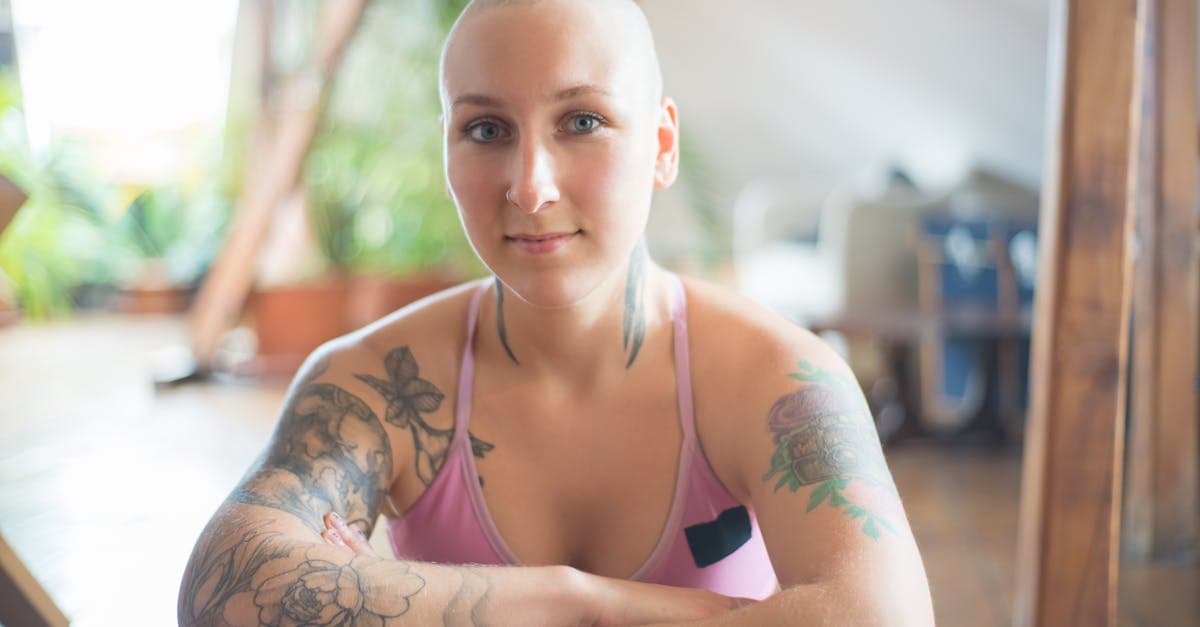
- A meaningful cancer survivor tattoo is a deeply personal tribute — whether you're marking survival, healing, or the memory of someone you've lost. There's no single right reason.
- Popular designs reach well beyond the classic ribbon: phoenixes, lotus flowers, semicolons, dates, coordinates, and custom script all carry weight when tied to your story.
- Ribbon colors map to specific cancers — pink for breast, teal for ovarian, gold for childhood, lavender for all cancers — and most survivors don't realize how many options exist.
- Scar cover-up tattoos and 3D nipple/areola tattoos are a specialty field. In the US, post-mastectomy nipple tattoos are often insurance-covered under the Women's Health and Cancer Rights Act.
- Timing matters medically. Most oncology teams recommend waiting 6 to 12 months after chemotherapy, avoiding radiated skin for a year, and skipping the lymphedema-risk limb entirely.
- Whether you're celebrating survival or honoring someone lost, this guide covers 40+ design ideas plus the medical and practical details most articles skip.
A friend of mine got her first tattoo three months after her last chemo infusion. It's a small lotus on the inside of her wrist, and she told me she looks at it every morning when she brushes her teeth — not to remember the cancer, but to remember the person she became because of it.
A meaningful cancer survivor tattoo is exactly that: a private conversation between you and your own skin about what you've been through. Some of you are reading this in remission, some of you are still in treatment thinking ahead, some of you are years out and finally ready. And some of you aren't survivors at all — you're here because you loved someone who fought cancer, and you want a way to carry them with you.
All of that is valid. This guide covers design ideas, symbolism, scar cover-ups, memorial tattoos, and — crucially — the medical safety piece that most articles on cancer survivor tattoo ideas skip entirely. Take your time with it. The tattoo will still be there when you're ready.
Before You Book: 5 Things to Do First
- Get oncology clearance. Don't book anything without your team confirming timing and placement are safe for you.
- Wait the full window. Most teams recommend 6 to 12 months after your last chemo infusion — longer for stem cell transplants.
- Check your insurance. If it's a nipple/areola tattoo after mastectomy, call your insurer — the WHCRA often covers it in the US.
- Vet the artist for scar work. Not every tattoo artist can work on scar tissue or radiated skin. Ask to see healed examples.
- Give yourself time on the design. Especially for memorial tattoos. The right design still feels right in ten years. Start with one of these, not all at once. The rest of this guide walks you through everything else.
Why a Cancer Survivor Tattoo Carries So Much Meaning
Cancer changes how you see your own body. For months or years, your skin has been something doctors access, needle, scar, and irradiate. A tattoo is one of the first things you choose to put on that skin yourself.
That's why these tattoos carry weight that other tattoos don't. You're not just decorating your body — you're reclaiming authorship of it. The scars are part of the story now, but so is whatever you choose to put next to them.
If you want to see how others make meaning out of that experience, these Cancer Survivor Stories: Real People, Real Hope show the many different ways people carry and express what they've been through.
People get these tattoos for three main reasons, and often more than one at once. Some mark their own survival. Some cover or integrate scars from surgery, ports, or radiation. Others honor someone they lost to cancer — a parent, a partner, a child, a friend.
None of those reasons is louder or braver than the others. And if you're not ready to "celebrate" anything yet, that's fine too. A meaningful survivor tattoo doesn't have to be a victory lap. Sometimes it's just a quiet acknowledgment that you're still here.
Popular Symbols and What They Mean
Certain designs come up again and again in the cancer survivor tattoo world. Each one carries layered meaning you can customize — the symbol is the starting point, not the whole conversation.
The Phoenix: Rebirth After Treatment
The phoenix rising from ashes is probably the single most-chosen symbolic design for cancer survivors, and for good reason. Treatment burns a lot away — hair, energy, certainty about the future, sometimes entire versions of yourself. The phoenix says: what came back isn't what went in.
Popular placements are the back, shoulder blade, or ribs, where there's room for detail. Many people pair a phoenix with their diagnosis or remission date, or with feathers that trail into a ribbon in their cancer color.

The Lotus Flower: Growing Through Hard Ground
The lotus grows out of mud. It's hard to think of a cleaner metaphor for what a survivor does.
In Eastern symbolism, the lotus represents spiritual growth through suffering, which is why survivors across faith backgrounds gravitate toward it. Popular variations include fine-line lotus tattoos, watercolor lotuses with soft color bleeds, and lotuses paired with mandala work for a meditative, grounded feel.
The Semicolon: Your Story Isn't Over
You've probably seen the semicolon tattoo. It started with Project Semicolon and mental health advocacy, but cancer survivors have adopted it widely — because a semicolon is the punctuation mark a writer uses when they could have ended a sentence but chose to continue it.
It's small, minimalist, and easy to place on a wrist, finger, or behind the ear. That makes it a popular first tattoo for survivors who want something meaningful but understated.
The Butterfly: Transformation
The butterfly is a natural fit — it's the animal kingdom's clearest example of becoming something new through a destructive process. Inside the chrysalis, the caterpillar literally dissolves before it rebuilds. A lot of survivors will tell you that hits close to home.
Butterflies are also a frequent choice for childhood cancer survivors and for memorial tattoos honoring children lost to cancer. They pair beautifully with names, dates, and flowers.
Animals, Birds, and Personal Totems
Many survivors choose an animal that feels tied to their specific story. Hummingbirds represent joy and resilience in something fragile. Doves symbolize peace and survival. Lions stand for courage. Wolves for family and pack loyalty through the hardest moments. Elephants for memory and strength. Dragonflies for change.
Sometimes the choice is based on a specific moment during treatment — a bird that showed up outside the hospital window, a pet who slept on the bed during chemo weeks, a deer you saw on the drive home from your last infusion. Those tattoos hit differently because they're rooted in a real memory.
Words, Quotes, and Script
Word tattoos are simple and powerful. Common choices include "Survivor," "Warrior," "Still here," "Fearless," and "Fight like a girl."
Faith-based script is popular too — Philippians 4:13, Psalms 18:32, and Isaiah 40:31 come up often among Christian survivors. If you're secular or come from a different faith tradition, know that a line from a poem, a song lyric, a family saying, or a phrase you came up with during treatment can carry just as much weight.
One of the most powerful versions of this category: handwriting from a loved one who stayed with you through treatment, or from someone you've lost. A parent's note, a child's scrawled "I love you," a partner's signature — traced into your skin exactly as they wrote it.
Dates, Coordinates, and Milestones
Sometimes you don't want an image at all. You just want the day.
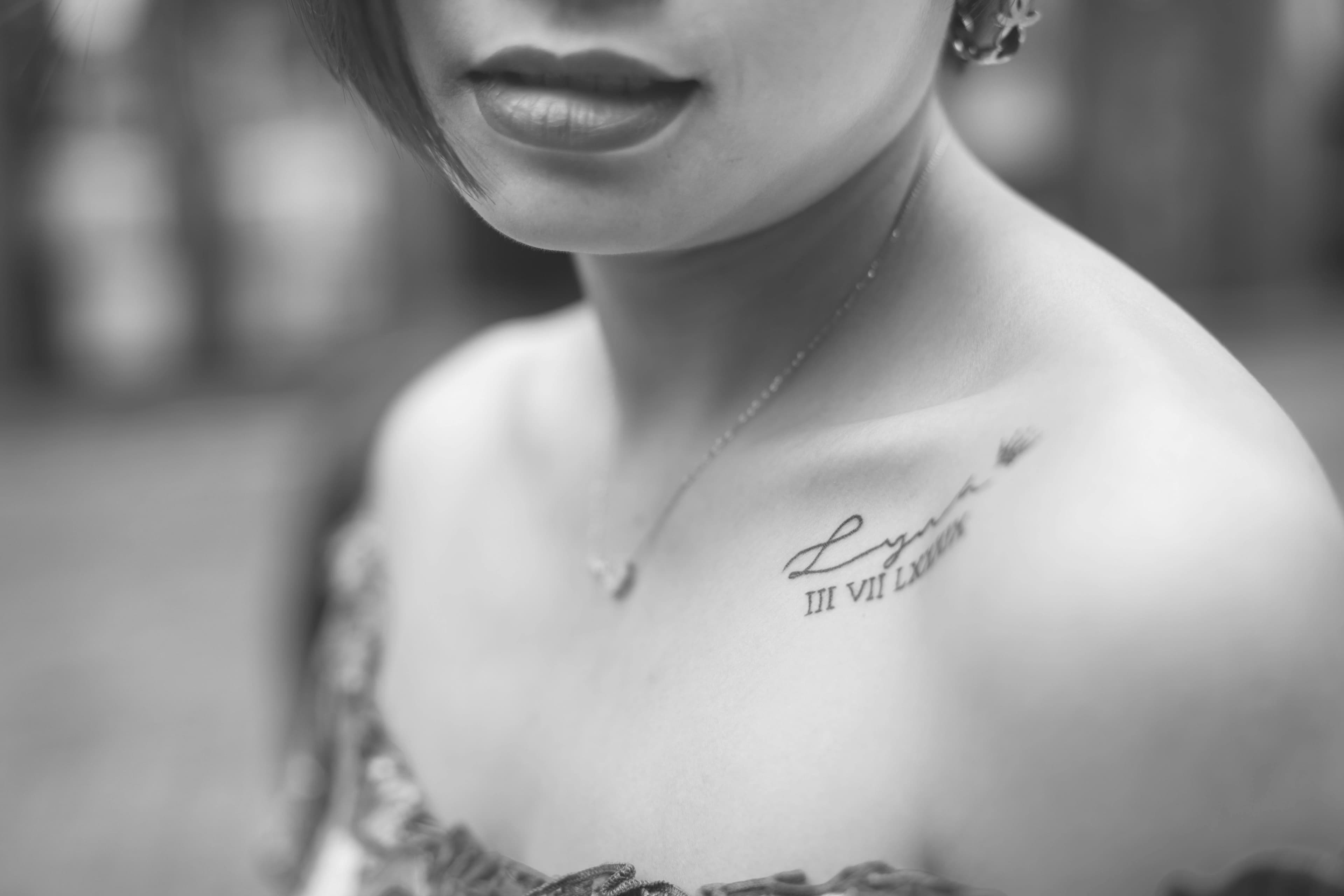
Diagnosis dates, last-chemo dates, remission dates, and "cancer-free since" marks are often done in Roman numerals or minimalist line work. Some survivors use the GPS coordinates of the hospital where they were treated, or of a meaningful place — the home they went back to, the lake where they took their first real walk post-treatment. These tattoos are deeply personal without announcing themselves to anyone who doesn't already know the story.
Cancer Ribbon Tattoos — Beyond the Basic Pink
The ribbon is the most recognizable cancer tattoo on earth, which is exactly why some people dismiss it as generic. I'd push back on that. A ribbon becomes meaningful the moment you customize it with color, context, or personal detail — and most survivors don't realize how much customization is possible.
Cancer Ribbon Colors by Type
Here's the full color key. Save this one — it's the most common question I get from people starting to think about a meaningful cancer ribbon tattoo.
| Ribbon Color | Cancer Type / Awareness |
|---|---|
| Pink | Breast cancer |
| Teal | Ovarian, cervical |
| Gold | Childhood cancer |
| Gray | Brain cancer |
| Pearl / White | Lung cancer |
| Light Blue | Prostate cancer |
| Dark Blue | Colon cancer |
| Purple | Thyroid, pancreatic, testicular, and general survivors |
| Orange | Leukemia, kidney cancer |
| Lime Green | Non-Hodgkin's lymphoma |
| Violet | Hodgkin's lymphoma |
| Yellow | Bone cancer, sarcoma, bladder |
| Lavender | All cancers |
| Black | Melanoma |
| Burgundy | Multiple myeloma, head and neck cancer |
Some cancers share colors, and dual-color or split ribbons exist for people who've had multiple cancers or who want to honor both their own diagnosis and a loved one's.
Creative Ways to Customize a Ribbon
If a plain ribbon feels too expected, try one of these. Watercolor ribbons with soft color bleeds feel modern and less clinical. Ribbons woven with a semicolon — the story isn't over. Ribbons shaped as an infinity loop. Ribbons dissolving into flowers, birds, or feathers at one end.
You can also have a ribbon formed from a loved one's handwritten word, or paired with a date, coordinates, or a heartbeat line running through it. A ribbon can become a bracelet, an ankle band, or part of a larger sleeve. It's only as generic as you let it be.
When You're Honoring Someone Else
Many of you are reading this because you want a ribbon for a parent, partner, or child — not for yourselves. That's a whole category of its own, and I cover memorial tattoos in depth below.
Tattoos That Cover Scars, Ports, and Radiation Marks
This is one of the biggest real-world reasons survivors get tattooed, and it's almost completely missing from most articles on cancer survivor tattoos. Treatment leaves marks, and a tattoo is one way people reclaim that skin.
Scar cover work is a specialty, though. Not every tattoo artist can or should do it — you need someone who understands how scar tissue takes ink, which is different from unaffected skin.
Mastectomy Scar Cover-Ups
Florals across the chest, mandalas, vine work, and full "garden" pieces are the most common approaches to mastectomy scar cover-ups. The design choice is personal, but the technical rules are consistent: scar tissue accepts ink differently — sometimes lighter, sometimes unevenly, sometimes with more trauma than normal skin — and an experienced artist will usually do a consultation and a small patch test before committing.
Most survivors wait at least 12 months after surgery for scar tissue to fully mature. Rushing this part rarely ends well.
3D Nipple and Areola Tattooing After Mastectomy
This is a specialty unto itself, and it's one of the most important things to know about if you've had a mastectomy. Paramedical artists use careful shading to create a remarkably realistic 3D nipple and areola on a reconstructed breast — not an illusion, but close enough that most people don't realize it's tattooed.
Here's the part nobody tells you: in the US, nipple and areola tattooing is often covered by insurance under the Women's Health and Cancer Rights Act (WHCRA) when it's part of mastectomy reconstruction. Call your insurance directly with the CPT codes your reconstruction surgeon provides. In the UK, the NHS covers nipple tattooing as part of reconstruction. Always ask — many survivors pay out of pocket for a service their plan would have covered.
Quick win: Before paying out of pocket, ask your reconstruction surgeon's office for the CPT codes and call your insurer. Most US survivors are surprised to learn this is covered.
Port Scars and PICC Line Marks
The chest port scar is often the first thing a survivor sees in the mirror every morning, and it's emotionally loaded in a way people who haven't had one don't always understand. It's not a big scar — usually an inch or two near the collarbone — but it carries a lot.
Popular covers include small florals, a bird mid-flight, a single meaningful word, minimalist geometric designs, or a small ribbon. Just know the skin near the collarbone is sensitive, so the session will feel sharper there than on a forearm.
Radiation Tattoo Dots — Covering or Removing
Here's something a lot of survivors don't realize: those small blue or black dots the radiation team gave you are permanent medical tattoos. They were used to line up the radiation beam precisely, and they don't fade.
You have three options. Cover them with a small design — a star constellation is a popular choice, literally connecting the dots. Have them laser-removed. Or leave them as part of your story. Whatever you choose, radiated skin needs extra time before being tattooed over, which brings us to the next section.
Memorial Tattoos: Honoring Someone You've Lost to Cancer
Some of you are here because you lost someone. A parent, a child, a spouse, a sibling, a best friend. Memorial tattoos are every bit as meaningful as survival tattoos, and in some ways more — you're carrying someone who can't carry themselves anymore.
A gentle caution: grief tattoos often feel urgent in the weeks right after a loss. The impulse to mark it immediately, to do something, is real and understandable. But many people find that if they wait 6 to 12 months, the design they eventually choose reflects the enduring memory rather than the raw grief. Take your time. You won't forget them.
Design Ideas for Memorial Tattoos
Some of the most meaningful memorial designs are also the simplest:
- Their actual handwriting — a signature from a birthday card, "I love you" from a note, a phrase they said often
- Their voice waveform — a saved voicemail converted into a sound-wave line tattoo
- Their favorite flower
- A portrait in fine-line realism (choose an artist with portrait experience for this)
- Birth and death dates in Roman numerals
- A song lyric that was theirs
- The ribbon color of the cancer that took them, sometimes combined with their initials
- An empty chair, empty swing, or empty bench silhouette
- Matching tattoos shared across family members who all loved the same person
What Feels Different About Memorial Tattoos
Memorial tattoos tend to live in more private places — the rib cage, inner arm, over the heart, back of the neck. That's not a rule, just a pattern. These tattoos are for you first, the world second.
Some people incorporate ashes. Memorial tattooing with a small amount of cremated remains mixed into the ink is a real practice, usually called morning ink or commemorative tattooing. It's not widely advertised, and you'll need to find an artist who specifically offers it. If that resonates with you, know the option exists.
Grief is non-linear. Some people want their memorial tattoo within weeks; others need years. Both are right.
When Is It Safe to Get a Tattoo After Cancer Treatment?
This is the question almost no other article answers well, and it matters more than any design question you'll make. Treatment changes your body's ability to handle a tattoo — immune function, skin healing, infection risk, and scar maturity all shift after what you've been through.
Every answer here ends with "talk to your oncology team," because individual circumstances vary a lot. But these are the general guidelines most oncologists work from.
How Long to Wait After Chemotherapy
Most oncology teams recommend waiting 6 to 12 months after your last chemotherapy session before getting a tattoo. That window lets your white blood cell count, platelets, and general immune function recover. Tattooing while immunosuppressed significantly raises your infection risk.
Some chemo regimens have longer recovery windows, and blood cancer treatments — especially stem cell transplants — often require waiting 12 to 24 months. If you've had a transplant, get your hematologist to sign off specifically.
Tattooing on Radiated Skin
Radiation permanently changes skin. Even when it looks healed, radiated skin is often thinner, more pigmented, more fragile, and slower to heal than the skin next to it.
Most radiation oncologists recommend waiting at least 12 months after radiation ends before tattooing radiated skin, and some advise against it on heavily irradiated areas entirely. A good tattoo artist will always want to see the skin in person before agreeing to work on it.
Lymphedema Risk — Which Limbs to Avoid
If you've had lymph nodes removed — axillary dissection for breast cancer, groin dissection for melanoma, or similar procedures — the limb on that side has lifetime lymphedema risk. A tattoo on that limb can trigger lymphedema that may be permanent.
This is not a small risk, and it's not one most tattoo artists will know to ask about. Most oncology teams recommend avoiding tattoos on the at-risk limb entirely. If you've had bilateral node dissection, have a specific conversation with your team before any arm or leg tattoo.
Questions to Ask Your Oncology Team Before Booking
Bring this list to your next appointment or call your oncology nurse line:
- Are my blood counts — white blood cells, platelets — in a safe range for a tattoo right now?
- How long after my last treatment do you recommend waiting?
- Are there any areas of my body I should avoid tattooing? (Lymphedema risk, radiation sites, near a port, near reconstruction.)
- Am I on any medications that affect bleeding or healing?
- Do I need prophylactic antibiotics?
- What specific signs of infection should I watch for given my history?
- Is there any reason I shouldn't get a tattoo at all right now?
DO / DON'T — A Quick Reference for Survivors Getting Tattooed
Before you book, here's the condensed version of everything above. If nothing else sticks, this table should.
| ✓ DO | ✗ DON'T |
|---|---|
| Get clearance from your oncology team before booking | Book before your first post-treatment follow-up |
| Wait at least 6 to 12 months after chemotherapy ends | Get tattooed while immunosuppressed or neutropenic |
| Choose an artist with scar-work experience for cover-ups | Assume any tattoo artist can work on scar tissue |
| Avoid the lymphedema-risk limb entirely | Tattoo the arm or leg where lymph nodes were removed |
| Wait at least 12 months before tattooing radiated skin | Tattoo directly over fresh scars or a healing port |
| Ask about infection signs specific to your situation | Ignore redness, warmth, or swelling — call your team fast |
| Sit for a consultation before the appointment | Book same-day on a whim, especially for memorial tattoos |
| Protect the tattoo from sun long-term | Forget that radiated skin needs lifelong sun protection |
How to Choose the Right Tattoo Artist
Getting the design right matters less than getting the artist right. And for cancer survivors, the standard "find someone clean and licensed" advice doesn't go far enough. You may need someone with specific training in scar tissue, paramedical work, or post-mastectomy tattooing.
What to Look for in a Portfolio
Look for healed-work photos, not just fresh tattoos. Fresh tattoos always look good. Healed work — 6 months or a year on — is where you see how their lines hold, how their color ages, how the tattoo actually lives on skin over time.
Check for consistency in their line weight, color saturation, and — if relevant to your design — scar cover examples and variety of skin tones in their portfolio. If you can't find healed work on their page, just ask. A confident artist will send you photos.
Red Flags: Hygiene, Licensing, and Attitude
The studio should be licensed per your local regulations, use single-use needles, sterilize non-disposable equipment in an autoclave, and have clear cross-contamination protocols. You can ask to see their setup. A professional won't be offended.
The attitudinal red flags matter just as much. An artist who dismisses your medical history, rolls their eyes at your oncologist's guidance, or pressures you into a bigger or different design than you wanted is not the right artist. Walk out. This is a permanent decision about your body, and you get final say.
Finding a Paramedical or Scar-Work Specialist
Paramedical tattooing is its own discipline. These artists train specifically in 3D nipple and areola work, scar camouflage, stretch-mark blending, and surgical-scar cover.
Three good starting points for finding them:
- Personal Ink (P.ink) runs volunteer days across the US pairing breast cancer survivors with tattoo artists who donate their work for mastectomy cover-ups, free of charge.
- The Association for Intradermal and Inclusive Cosmetics (AIIC) maintains a directory of trained paramedical artists.
- Your breast surgeon's office — most have a list of local paramedical artists they share with patients. Ask. They won't be surprised by the question.
Placement Considerations Specific to Survivors
Generic "wrist vs. shoulder" advice doesn't really cut it for cancer survivors. Placement intersects with lymphedema risk, radiation sites, scar maturity, and the visibility choices that mean something to you emotionally.
Visible vs. Private — What You Want the Tattoo to Do
A visible placement — forearm, wrist, back of the hand — makes the tattoo a daily reminder for you and an open door for conversations with other survivors. You'll get asked about it. Some survivors love that. Others want nothing to do with it.
Private placements — ribs, inner bicep, over the heart, back of the neck, shoulder blade — keep the tattoo yours. It's not hidden out of shame; it's held close. Neither choice is braver than the other. It's about what you need the tattoo to do for you on a Tuesday morning five years from now.
Medically Informed Placement
Avoid the lymphedema-risk limb. Avoid heavily radiated skin. Avoid skin directly over reconstruction unless a paramedical artist has cleared it. Be cautious with areas that have lost sensation post-surgery — you won't feel pain during the tattoo, but the skin may heal unpredictably.
Good placements for cover-up work include over mastectomy scars once healed, across the upper chest for port-scar covers, and across the décolletage for radiation-dot constellations. Ask your artist to mark the stencil in place, take a photo, and show your oncology team before you sit for the actual session. Five minutes of extra confirmation is worth it.
Aftercare — What's Different When You're a Cancer Survivor
Standard tattoo aftercare is on every shop's handout. This is the aftercare-plus list that matters when your immune system has been through what yours has.
Standard Aftercare, Briefly
Keep it clean with unscented soap and a fragrance-free moisturizer your artist recommends. No soaking — no pools, baths, hot tubs, or ocean — for 2 to 3 weeks. No direct sun. Don't pick at scabs. Follow your artist's specific written instructions, not a blog post.
Survivor-Specific Aftercare
Watch for infection signs harder than the average person would. Call your oncology team — not just your tattoo artist — at the first hint of spreading redness, warmth, fever, or pus. Your threshold for "call the doctor" should be lower than theirs.
Expect healing to take longer than the standard 2 to 3 weeks, especially on radiated or scar tissue. Some survivors see full healing at 4 to 6 weeks. Sun protection matters for life on radiated skin, and on any new tattoo — SPF 50+, physical sunblock, and full coverage. If you're on immunosuppressants, biologics, or hormone therapy, ask your oncology team whether any of those change your aftercare plan.
Cost, Insurance, and Free Mastectomy Tattoo Programs
Money is a real question, and a real barrier for many survivors — especially after the financial hit of treatment. The good news: some of the most common survivor tattoos are either free or insurance-covered, and almost nobody talks about this.
Typical Tattoo Costs
In the US, small simple designs start around $80 to $150. Larger custom work typically runs $150 to $250 per hour, and full scar cover pieces can run $500 to $3,000 or more depending on size, detail, and artist reputation. Prices vary widely by country, city, and specialty.
Insurance Coverage for Nipple and Areola Tattoos
In the US, the Women's Health and Cancer Rights Act (WHCRA) requires health plans that cover mastectomies to also cover all stages of reconstruction — and that includes nipple and areola tattooing. Call your insurance with the CPT codes from your reconstruction surgeon. In the UK, the NHS covers nipple tattooing as part of reconstruction. Ask. Don't assume you have to pay for this out of pocket.
Free Programs
Personal Ink (P.ink) runs volunteer days across the US where tattoo artists donate full days of work for free mastectomy cover-ups. Their waiting lists move fast during awareness months. Some local tattoo shops also offer free or reduced-cost survivor tattoos, especially during October for Breast Cancer Awareness Month and during other awareness months throughout the year. It's worth asking your local shop — many want to give back and just don't advertise it.
Frequently Asked Questions
How long after chemotherapy can I get a tattoo?
Most oncology teams recommend waiting 6 to 12 months after your last chemotherapy session so your blood counts and immune function fully recover. Always confirm with your specific oncology team — some treatments, especially stem cell transplants, require longer.
Can I get a tattoo during cancer treatment?
Most oncologists advise against it. Active treatment lowers your white blood cell count and slows healing, which significantly raises infection risk. Wait until you've completed treatment and your team has cleared you.
Is it safe to tattoo over a mastectomy scar?
Yes, once the scar has fully matured — typically at least 12 months post-surgery. Work with an artist experienced in scar tissue, since scarred skin takes ink differently than unaffected skin.
Does insurance cover nipple tattoos after mastectomy?
In the US, the Women's Health and Cancer Rights Act requires insurance that covers mastectomy to also cover reconstruction, including nipple and areola tattooing. Call your insurance with your surgeon's CPT codes. The UK's NHS also covers this as part of reconstruction.
What's a paramedical tattoo?
A specialty tattoo focused on medical-related work: 3D nipple and areola tattooing, scar camouflage, stretch-mark blending, and cover-ups for surgical scars. Paramedical artists train specifically in these techniques and are different from most standard tattoo artists.
Can I tattoo over my radiation marks?
Usually yes, but wait at least 12 months after radiation ends. Heavily radiated skin may be thinner and heal unpredictably, so consult your radiation oncologist and an experienced artist first.
What ribbon color represents my type of cancer?
Colors vary by cancer type — pink for breast, teal for ovarian, gold for childhood, gray for brain, and many more. See the full ribbon color chart earlier in this guide.
I want a memorial tattoo for someone I lost. How soon is too soon?
There's no "right" timeline, but many artists recommend waiting at least a few months so the design reflects enduring memory rather than raw grief. Take the time to settle on something that will still feel right in ten years.
Will a tattoo trigger lymphedema?
It can, if it's placed on a limb where lymph nodes were removed. The risk is lifelong, so most oncology teams recommend avoiding tattoos on that limb entirely.
Final Thoughts: It's Your Body and Your Story
There's no right way to get a meaningful cancer survivor tattoo. Some of you are marking survival. Some of you are reclaiming a body that treatment changed. Some of you are carrying someone you loved through every day that's left. All of it counts.
The tattoo isn't really about the image you choose. It's about the moment you decide what your body says about what you've been through — and who gets to decide that. The answer, finally, is you.
Two things are non-negotiable. Get your oncology team's clearance on timing and placement. Find an artist who understands your skin's history and respects it. Beyond that, take your time. The tattoo will still be there next month, next year, or whenever you're ready. The right design, the right artist, and the right moment are worth waiting for.
When you sit down in that chair, you'll know. If you're looking for people who understand what you're going through, you're welcome to join the Beat Cancer community — a supportive space where you can connect with others navigating the same emotions, share your experience, and know that you're not carrying this alone.