
Europæisk netværk for unge med kræft
Maintaining and strengthening the European Youth Cancer Network by providing quality information in a user-friendly way, fostering social connections, and empowering young people affected by cancer across Europe.
Vores vision
To maintain and further strengthen the European Youth Cancer Network, making quality information available in a user-friendly way to young people affected by cancer, their carers, healthcare professionals, and all stakeholders. We envision a Europe where every young person has access to comprehensive support, social networking, and digital tools throughout their cancer journey.
Vores mission
We build on previous EU co-funded projects to advance and expand the European Youth Cancer Network into a multi-actor collaborative platform. Through peer support, user-friendly resources, communication campaigns, and high-visibility events across Member States and associated countries, we empower young people to be actively engaged in decision-making, improve their quality of life, and advocate for enhanced cancer care.
Hvad er YARN?
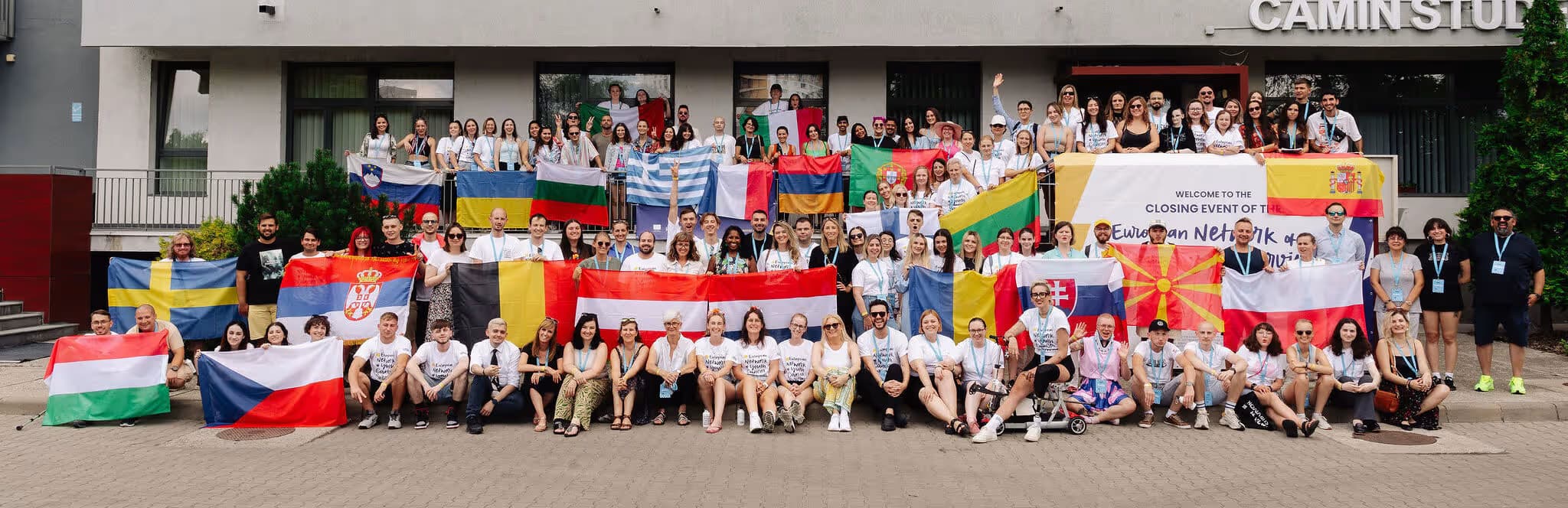
European Youth Cancer Network (YARN) er et EU-medfinansieret projekt, der samler 19 støttemodtagerorganisationer og over 40 associerede partnere på tværs af Europa. YARN fokuserer på ligemandsstøtte, psykisk sundhed, uddannelse og reintegration i arbejdslivet, langtidsopfølgning samt lighed i kræftbehandlingen for børn, unge og unge voksne. Kernen i projektet er Youth Cancer Council - en paneuropæisk rådgivende gruppe bestående af 100 unge med egne erfaringer med kræft, som er med til at forme projektets beslutninger og resultater. Projektet leverer evidensbaserede rammer, digitale værktøjer, uddannelsesprogrammer og offentlige oplysningskampagner gennem otte indbyrdes forbundne arbejdspakker.
Omfatter 25 EU-medlemslande og 3 berettigede nabolande, og gennemføres af 19 modtagere, 1 associeret enhed, og 39 associerede partnere, er YARN den største fleraktør- og erfaringsbaserede indsats af sin slags i Europa for at forbedre livskvaliteten for børn, unge og unge voksne berørt af kræft.
Ved projektets afslutning vil YARN have:
- Uddannet 100 unge kræftambassadører
- Nået 50 millioner mennesker gennem oplysningskampagner
- Implementeret EDI-standarder på 10 sundhedsinstitutioner og 10 patientorganisationer
- Implementeret og evalueret retningslinjer for overgang til voksenbehandling på to best-practice-centre
- Afholdt politiske arrangementer i hele Europa, herunder i Europa-Parlamentet og nationale regeringer
- Leveret en flersproget digital platform med højkvalitets, brugervenlig information og ressourcer
Projektets arv vil være et stærkere og mere inkluderende system for unge berørt af kræft—udviklet med dem, for dem.
YARN projektoversigt
European Youth Cancer Network (YARN) er et EU-medfinansieret projekt, der samler 19 støttemodtagerorganisationer og over 40 associerede partnere på tværs af Europa. YARN fokuserer på ligemandsstøtte, psykisk sundhed, uddannelse og reintegration i arbejdslivet, langtidsopfølgning samt lighed i kræftbehandlingen for børn, unge og unge voksne. Kernen i projektet er Youth Cancer Council - en paneuropæisk rådgivende gruppe bestående af 100 unge med egne erfaringer med kræft, som er med til at forme projektets beslutninger og resultater. Projektet leverer evidensbaserede rammer, digitale værktøjer, uddannelsesprogrammer og offentlige oplysningskampagner gennem otte indbyrdes forbundne arbejdspakker.
Download projektoversigt (PDF)YARN-projektfolder
Download vores omfattende brochure for at få mere at vide om YARN-projektet, dets mål og hvordan det støtter unge, der er berørt af kræft, i hele Europa.
Download folder (engelsk)Tilgængelige oversættelser
EDI-selvevalueringstjekliste for patientorganisationer
Lighed, mangfoldighed og inklusion (EDI) betyder at sikre, at mennesker ikke udelukkes eller stilles dårligere på grund af faktorer som handicap, alder, køn, sprog, etnicitet, hvor de bor, eller deres økonomiske forhold.
EDI-selvevalueringstjeklisten, som er udviklet af Youth Cancer Europe, hjælper patientorganisationer med at reflektere over, om mennesker kan få adgang til, deltage i og drage lige stor nytte af deres aktiviteter og tjenester, samt identificere praktiske områder, der kan forbedres.
Vi er taknemmelige over for de frivillige og partnerorganisationer (LIGA, UBB, CF IF, UCA, EDS, POLA, PMC, HCS, SKCF, PanCare), som støttede oversættelsen af tjeklisten og dermed bidrog til at gøre denne ressource tilgængelig for flere fællesskaber i hele Europa.
Denne publikation er udarbejdet af Youth Cancer Europe inden for rammerne af projektet European Youth Cancer Network med input fra Youth Cancer Council, hvis egne erfaringer og feedback har bidraget til at forme denne publikation.
Dens indhold og udformning bygger på Recommendations for Equitable, Diverse and Inclusive Cancer Care og EDI Train-the-Trainer Toolkit. Tjeklisten er også afstemt med Recommendations and Implementation Roadmap for Minimum Standards of Specialist Adolescent and Young Adult Cancer Care Units, hvilket sikrer sammenhæng med bredere standarder for retfærdig, personcentreret kræftbehandling.
Organisation of Long-term Follow-up (LTFU) care
– PLAIN language summary
All languages
This PanCare PLAIN language brochure (hereafter referred to as summary) is intended for CAYA cancer survivors, their families and caregivers, healthcare professionals seeking to improve long-term follow-up (LTFU) care, and anyone else interested in optimising the organisation of LTFU care. This summary is primarily based on the evidence-based PanCareSurFup guidelines for organisation of LTFU care for CAYA cancer survivors [1].
Why Long-Term Follow-Up (LTFU) Care Matters
About 2 in 3 survivors of childhood, adolescent and young adult (CAYA) cancer experience health issues later in life caused by the cancer or its treatment (called ) [2]. Well structured long-term follow-up (LTFU) care can help detect late effects early and provide treatment and support, if necessary. LTFU care can have a positive impact on the quality of life of CAYA cancer survivors and the health system as a whole.
In many countries in Europe structured LTFU care still needs to be established or improved [3]. This PLAIN summary provides an overview of key elements of LTFU care and how you can get started or improve already existing care.
General recommendations for LTFU care:
- All survivors of CAYA cancer should have life-long access to LTFU care.
- LTFU care should start no later than 5 years after diagnosis.
- All survivors of CAYA cancer should be considered equal partners in decisions regarding their LTFU care.
- LTFU care should follow a structured approach and.
- LTFU care should cover all domains of life (physical, mental and social wellbeing) and be provided by a multidisciplinary team.
- The needs and preferences of survivors and caregivers should be central in decisions about the organisation of LTFU care in their country/region.
What are key elements of the organisation of LTFU care?
The PanCare network formulated for the organisation of LTFU care [1]. These recommendations cover three areas: Structure of care, Personnel involved and Components of care.
What can I do?
In this PLAIN summary, we discussed the importance of LTFU care and key elements of organisation of LTFU care. It can feel overwhelming to read these recommendations, especially if LTFU care in your country still needs to be established or improved. Systemic changes take a long time and are a huge undertaking. However, small steps can already make a difference.
If you are a healthcare professional or a patient advocate and involved in organising or improving LTFU care in your country, you can use the PanCare Implementation Resources to help make changes. You do not have to start from zero - use what is already there!
If you want to get involved in systemic changes in your country, we recommend that you get in touch with national or European organisations ( PanCare, SIOP-E, CCI-E and YCE) for healthcare professionals, survivors, caregivers or patients.
If you are a survivor and want to improve your personal LTFU care, you may find it useful to take a look at the resources available on pancare.eu, beatcancer.eu and the OACCUs Toolbox. If you do not have a yet, it may also be helpful to ask your LTFU care clinic, if available, to provide one to you.
Where can I find more information?
You can use the resources linked below to explore further information and additional materials on the organisation of LTFU care:
- Implementing Survivorship Care (PanCare) - Materials that can be used for the implementation of LTFU care in your country/clinic. Among other resources, this includes:
- PanCare LTFU Guidelines for Surveillance of Late Effects - Annually updated evidence-based and consensus-based guidelines for surveillance of late effects after CAYA cancer
- PanCare PLAIN language summaries - Annually updated information about late effects and LTFU care in lay-language for survivors, families and non-specialist healthcare providers
- PanCare Survivorship Care Plan (SCP) Long Version - A treatment summary and recommendations for surveillance of late effects
- PanCare Survivorship Care Plan (SCP) Short Version - A shorter SCP including a treatment summary and recommendations for surveillance of late effects
- Joint Recommendations for Mental Health and Psychosocial Care in CAYA Cancer Survivorship - Recommendations for mental health and psychosocial care developed by healthcare professionals and CAYA cancer survivors
- European Standards of Care for Children and Adolescent with Cancer - Chapter 6 on Survivorship Care and Transition Practices - Information on care for children and adolescents with cancer, specifically best practices for LTFU care and transition
- Health-care transitions for young people living beyond childhood and adolescent cancer: recommendations from the EU-CAYAS-NET consortium - Evidence-based recommendations for transition of care
- Barriers and facilitators associated with long term follow-up care for childhood, adolescent, and young adult cancer survivors: a systematic review - Information on barriers and facilitators associated with LTFU care
[1] Michel G et al. Evidence-based recommendations for the organization of long-term follow-up care for childhood and adolescent cancer survivors: a report from the PanCareSurFup Guidelines Working Group. Journal of Cancer Survivorship. 2019;13(5):759-772. doi: https://doi.org/10.1007/s11764-019-00795-5
[2] Hudson M et al. Long-term Follow-up Care for Childhood, Adolescent, and Young Adult Cancer Survivors. Pediatrics. 2021;148(3). doi: https://doi.org/10.1542/peds.2021-053127
[3] Essig S et al. Follow-Up Programs for Childhood Cancer Survivors in Europe: A Questionnaire Survey. PLoS One. 2012;7(12):e53201. doi: https://doi.org/10.1371/journal.pone.0053201
Vores europæiske netværk
Klik på landene for at udforske vores modtagerpartnere i Europa
Europæisk ungdoms-kræftnetværk
Udforsk vores netværk i hele Europa – modtagerorganisationer, der implementerer YARN, og associerede partnere, der samarbejder om at styrke støtte til unge med kræfterfaring
Netværksoverblik
Vores modtagerpartnere
Organisationer, der direkte implementerer YARN i Europa

Youth Cancer Europe

CCI Europe

Pagalbos Onkologiniams Ligoniams Asociacija (POLA)

Centro Internazionale per la Promozione dell'Educazione e Sviluppo (CEIPES)

Liga Portuguesa Contra o Cancro

Universidad de Cádiz

Europa Donna Slovensko

Universitatea Babeș-Bolyai

European Regional and Local Health Authorities (EUREGHA)

PanCare

Medical University of Vienna

Saving Kids with Cancer Foundation

Hellenic Cancer Society

SIOP Europe

European Oncology Nursing Society

Charity Foundation Inspiration Family

European Cancer Organisation

Fundació Sant Joan de Déu
Associerede partnere
Organisationer, der samarbejder om at styrke støtten til unge med kræfterfaring

CanTeen Ireland

Childhood Cancer Foundation

YouCan Cancer Support Network Ireland

Deutsche Leukämie-Forschungshilfe - Aktion für krebskranke Kinder e.V

On Est Là

European Network Of Medical Residents In Public Health

Survivors Österreich

Kom op tegen Kanker

Foundation Gold

Krijesnica

Pagkyprios Syndesmos Karkinopathon Kai Filon 1986

Spolecne k usmevu, z.s.

Region Midtjylland

Sylva ry

Suomen Syöpäpotilaat ry

Karkinaki

Kyttaro

Magyar Gyermekonkologiai Halozat

Érintettek Egyesület

Lega Italiana Per La Lotta Contro I Tumori - Sezione di Palermo

Latvian Association of Oncology Patient Organizations OncoAlliance

Onkologines ligos paliesto jaunimo asociacija

Survivors Lëtzebuerg

Erasmus Universitair Medisch Centrum Rotterdam

Fundacja Pani Ani

Marzena Wieczorek-Przybylo M-Powered

Fundacja Urszuli Smok

Uniwersytet Medyczny W Lublinie

ACREDITAR

Instituto Portugues De Oncologia De Lisboa Francisco Gentil EPE

Unidade Local De Saude De Coimbra EPE
%20(3).png&w=256&q=75)
Asociatia Little People Romania

Detom s rakovinou, n. o.

Foundation Little Knight

Ung Cancer

Viata fara leucemie, Asociatie Obsteasca

Asociatia Little People Moldova

Ung Kreft

Universitetet I Oslo
Kontakt os
Har du spørgsmål eller ønsker du at engagere dig? Vi vil meget gerne høre fra dig.
Kontaktinformation
Hjemmeside
www.beatcancer.euFølg os
Hold dig opdateret og bliv en del af vores fællesskab på sociale medier
Viderebygning på EU-CAYAS-NET
YARN bygger videre på fundamentet fra EU-CAYAS-NET, det europæiske projekt, der skabte beatcancer.eu-platformen og etablerede det europæiske netværk af unge kræftoverlevere. Læs mere om denne banebrydende indsats, der samlede organisationer fra 18 europæiske lande.
OAC Connects Us (OACCUs)
OACCUs var et EU-finansieret projekt (2021-2024), der samlede fjorten partnere fra seks EU-lande for at udvikle et EU-dækkende netværk for unge kræftoverlevere med fokus på livskvalitet gennem sund livsstil og peer-forbindelser.
Bliv en del af det europæiske ungdoms-kræftnetværk
Vær med i et fællesskabsdrevet netværk, der styrker unge med kræfterfaring i hele Europa. Få kontakt med ligesindede, få adgang til brugervenlige ressourcer, deltag i kampagner og arrangementer, og vær med til at forme fremtidens kræftbehandling for unge.
🔒 Privat fællesskab • 🌍 28 lande • 💰 Altid gratis • 🚪 Forlad når som helst